 13 citations
,
August 2013 in “Journal of pharmaceutical sciences”
13 citations
,
August 2013 in “Journal of pharmaceutical sciences” This study found that a transdermal delivery system using 3% azone and P407 gel may enhance the skin permeation of doxazosin and finasteride for treating benign prostatic hyperplasia.
 12 citations
,
April 2005 in “Mycoses”
12 citations
,
April 2005 in “Mycoses” This study found that 1-day itraconazole therapy was more effective for acute vulvovaginal candidosis than for recurrent cases, where relapses occurred despite no yeast resistance.
 53 citations
,
September 2007 in “Veterinary dermatology”
53 citations
,
September 2007 in “Veterinary dermatology” This study suggests that Malassezia spp. overgrowth may contribute to pruritus and skin lesions in allergic cats, with antifungal treatments alone providing substantial improvements.
January 1985 in “Clinical research” This study found that topical alpha-terthienyl combined with UVA radiation rapidly induced dose-dependent cutaneous photosensitization in guinea pigs, suggesting potential for photochemotherapy in skin disorders without future carcinogenic risks.
 8 citations
,
October 1989 in “International Journal of Dermatology”
8 citations
,
October 1989 in “International Journal of Dermatology” This review discusses the role of Cytochrome P-450 in dermatology and reports no new clinical results.
 March 2021 in “Jurnal Biomedik : JBM”
 This literature review found that systemic antifungals, including griseofulvin, terbinafine, and azole derivatives, are effective against dermatophytosis, though their effectiveness varies with the type of infection and treatment duration.
 109 citations
,
March 2011 in “Journal of controlled release”
109 citations
,
March 2011 in “Journal of controlled release” This study found that econazole nitrate delivered via MPEG-dihexPLA micelles significantly increased skin deposition compared to Pevaryl® cream, potentially enhancing drug bioavailability and clinical efficacy.
 42 citations
,
September 2018 in “Journal of Fungi”
42 citations
,
September 2018 in “Journal of Fungi” This study highlights the challenges in treating Microsporum canis infections due to variable antifungal drug efficacy and potential resistance, emphasizing the need for standardized methods to assess drug susceptibility.
 165 citations
,
January 2014 in “Dermatology Research and Practice”
165 citations
,
January 2014 in “Dermatology Research and Practice” This review discusses the various dermatological applications of zinc, including its use in treating infections, inflammatory dermatoses, pigmentary disorders, and neoplasias, and reports no new clinical findings.
 46 citations
,
August 1990 in “The Journal of clinical endocrinology and metabolism/Journal of clinical endocrinology & metabolism”
46 citations
,
August 1990 in “The Journal of clinical endocrinology and metabolism/Journal of clinical endocrinology & metabolism” In this study, ketoconazole treatment improved acne in all women and reduced hirsutism in some, but it caused several side effects and requires careful monitoring.
 18 citations
,
May 1988 in “Journal of The American Academy of Dermatology”
18 citations
,
May 1988 in “Journal of The American Academy of Dermatology” In this study, itraconazole was reported to effectively alleviate clinical symptoms in patients with recalcitrant Trichophyton rubrum infections, though toenail infections often recurred, indicating the need for further research on long-term efficacy and safety.
 10 citations
,
January 2015 in “Przeglad Menopauzalny”
10 citations
,
January 2015 in “Przeglad Menopauzalny” This review discusses the effects and selection criteria of different progestogens in various treatments but reports no direct clinical comparisons of their metabolic effects.
 7 citations
,
May 2016 in “SpringerPlus”
7 citations
,
May 2016 in “SpringerPlus” This review suggests that treating endocrine therapy-induced hair loss in breast cancer patients with topical 5-alpha reductase inhibitors and supplements like Vitamin C and omega-3 fatty acids may be effective, but further studies are needed.
Use the least toxic, most specific treatments for skin diseases, considering side effects and individual patient needs.
 July 1988 in “Journal of The American Academy of Dermatology”
 This article reviews therapeutic advances published between December 1986 and December 1987 but reports no new research findings; readers are advised to consult the original articles before considering new therapies.
 60 citations
,
September 2013 in “Alimentary Pharmacology & Therapeutics”
60 citations
,
September 2013 in “Alimentary Pharmacology & Therapeutics” This review discusses the dermatological adverse events from immunosuppressive and anti-TNF therapy in IBD, finding increased risks of non-melanoma skin cancer and other skin conditions, and recommends regular cancer screening.
 1 citations
,
November 2018 in “Therapeutic Delivery”
1 citations
,
November 2018 in “Therapeutic Delivery” This industry update reports on various advancements in therapeutic delivery during July 2018, highlighting active mergers, collaborations, and potential developments across fields like gene therapy, immuno-oncology, and rare diseases treatment; however, no new clinical results are presented.
This source provides medical information intended solely for licensed professionals and emphasizes that it is not a substitute for medical advice, diagnosis, or treatment decisions, which remain the responsibility of treating physicians.
 October 2025 in “International Journal of Cell and Biomedical Science”
 In this study, the application of human umbilical cord mesenchymal stem cell secretome significantly increased hair follicle count in fluconazole-induced alopecia in rats, although changes in epidermal thickness were not significant, suggesting a novel approach for hair restoration.
 June 2023 in “Indian Journal of Canine Practice”
 This study reports a case of a Persian cat with Malassezia pachydermatis infection, treated with fluconazole, topical miconazole shampoo, and a skin tonic. The cat showed remarkable clinical improvement after one week and fully recovered after four weeks.
 4 citations
,
July 1996 in “Annals of Internal Medicine”
4 citations
,
July 1996 in “Annals of Internal Medicine” This article discusses a report on reversible alopecia associated with fluconazole therapy and mentions other possible causes of hair loss but presents no new findings.
 1 citations
,
January 2022 in “Advances in animal and veterinary sciences”
1 citations
,
January 2022 in “Advances in animal and veterinary sciences” In this study, topically applying 2% ketoconazole cream twice daily for 21 days was found effective in treating dermatophytosis caused by Microsporum canis in cats, showing approximately 85% improvement in skin lesions and the disappearance of the fungi.
 90 citations
,
May 2019 in “Drugs”
90 citations
,
May 2019 in “Drugs” Long-term use of azole antifungals can cause hair loss, hormonal imbalances, and severe skin reactions.
 151 citations
,
July 2011 in “Archives of Dermatological Research”
151 citations
,
July 2011 in “Archives of Dermatological Research” This review discusses various strategies to enhance drug delivery through the skin barrier, highlighting liposomes as promising carriers for increased dermal concentrations in topical therapies, but reports no new research results.
 3 citations
,
September 1989 in “Journal of Investigative Dermatology”
3 citations
,
September 1989 in “Journal of Investigative Dermatology” This study found that methyl nonanoate and methyl caprate significantly enhanced the skin penetration of minoxidil compared to solutions with other common enhancers like Azone, DMSO, or DEET.
 February 2010 in “Journal of The American Academy of Dermatology”
 This study found that NB-002 demonstrated clear antifungal activity and clinically significant nail clearing in subjects with distal subungual onychomycosis and ≤50% nail involvement, compared to a vehicle treatment.
21 citations
,
November 2022 in “Clinical Cosmetic and Investigational Dermatology” This review highlights the potential of several medicinal plants as treatments for seborrhea dermatitis by inhibiting Malassezia growth and reducing symptoms like itching and redness, amid challenges of drug adherence and side effects in existing therapies.
 20 citations
,
July 2008 in “Dermatologic Therapy”
20 citations
,
July 2008 in “Dermatologic Therapy” This review discusses various nonfollicular scalp conditions causing secondary scarring or permanent alopecia and highlights the importance of specific diagnoses and treatments but reports no new results.
 5 citations
,
September 2012 in “Springer eBooks”
5 citations
,
September 2012 in “Springer eBooks” Nanoparticles can be used to deliver drugs to hair follicles, potentially improving treatments for conditions like acne and alopecia, and could also be used for vaccine delivery and gene therapy.
 4 citations
,
December 2013 in “Veterinární medicína”
4 citations
,
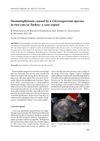
December 2013 in “Veterinární medicína” In this report, two Persian cats and their owner with low immunity due to chemotherapy were identified with a rare dermatophytic infection caused by Chrysosporium spp., and the infection improved following fluconazole treatment.