May 2018 in “Journal of Sun Yat-sen University” This study found that local injections of botulinum toxin A improved hair density in male patients with androgenetic alopecia over a 6-month period, showing similar effectiveness to the control group.
7 citations
,
October 2018 in “South African journal of botany” This study found that the plant Clausena anisata exhibited promising antimicrobial, antioxidant, and anti-inflammatory activities against acne-causing bacteria and inflammation, suggesting its potential as a candidate for further anti-acne treatment research.
 2 citations
,
January 2021 in “JAAD Case Reports”
2 citations
,
January 2021 in “JAAD Case Reports” This article reviews potential causes for angiolymphoid hyperplasia with eosinophilia, a benign vascular tumor often found in middle-aged adults, and reports no new clinical findings.
 January 2026 in “Zenodo (CERN European Organization for Nuclear Research)”
 This study reports the discovery of LX-38, a new high-affinity non-steroidal antagonist that could provide the therapeutic benefits of current BPH and AGA treatments without the hormonal side effects, utilizing a distinct "Orthogonal T-Stacking" scaffold for binding.
 January 2024 in “Wiadomości Lekarskie”
 In this study, wounds treated with a combination of 0.02% Decamethoxine and Blastomunil showed enhanced healing and epithelization by the 14th day, leveraging the immunomodulatory and antimicrobial properties of the agents.
 65 citations
,
February 2015 in “Neuro-Oncology”
65 citations
,
February 2015 in “Neuro-Oncology” In this study, four children with recurrent atypical teratoid rhabdoid tumors experienced disease stabilization or regression after treatment with alisertib, suggesting its potential role in future trials for this condition.
This article provides an overview of the indications, interactions, and various potential adverse reactions associated with several drugs, but it reports no specific new results.
 June 2025 in “Natural Product Communications”
 This study successfully synthesized novel cercidin analogues from Cercidophyllum japonicum, confirming their structure via NMR data. The researchers suggest these compounds could facilitate future antibiotic development by advancing structure-activity-relationship studies.
 3 citations
,
January 2022 in “Journal of Cosmetic Dermatology”
3 citations
,
January 2022 in “Journal of Cosmetic Dermatology” This study found that for treating androgenetic alopecia, LC hair essence serum injections provided excellent results with fewer side effects compared to botulinum toxin A, which also showed significant efficacy but with higher associated costs and more frequent side effects.
 January 2026 in “Buletin Veteriner Udayana”
 This study documented a case of Dipylidium caninum infection in a 4-month-old female dog, effectively treated with a deworming medication, resulting in significant improvement and no worms detected after five days. Routine deworming and maintaining hygienic conditions are recommended to prevent reinfection and transmission.
 26 citations
,
March 2015 in “American journal of clinical dermatology”
26 citations
,
March 2015 in “American journal of clinical dermatology” This study found that systemic mycophenolate mofetil and topical clobetasol were equally effective at reducing lichen planopilaris activity over six months, but satisfaction differed between the treatments.
9 citations
,
January 2015 in “Veterinary record case reports” This study reports the first successful treatment of a dog infected with Mycobacterium avium subspecies hominissuis using antibiotics, with no zoonotic transmission observed.
227 citations
,
April 2023 in “The Lancet” Ritlecitinib effectively treats alopecia areata and is well-tolerated.

This study introduced a customizable ELISA for detecting antibodies against botulinum neurotoxin that matches or surpasses other tests in sensitivity and allows for more efficient and animal-friendly testing when combined with the hemidiaphragm assay.
12 citations
,
August 2004 in “Veterinary Dermatology” This study found that treating cats infested with Lynxacarus radovskyi using Fipronil resulted in complete resolution of the infestation by day 15.
February 2026 in “ACS Omega” This study developed a multifunctional hydrogel, QTMP-Gel, which significantly accelerated wound healing in an oral mucositis hamster model by providing antioxidant and antibacterial effects, reducing inflammation, and controlling infection.
 8 citations
,
January 2013 in “Medicinal chemistry”
8 citations
,
January 2013 in “Medicinal chemistry” This study reported that among 10 tested 2-(4-chlorophenyl)-5-aryl-1,3,4-oxadiazole compounds, compound 4c showed the highest activity against cancer cell lines, with a 95.37% average growth rate.
January 2026 in “Deutsches Ärzteblatt international” This case study reports a rare instance of sacroiliitis due to Brucella melitensis in a patient who experienced symptom relief after a 12-week treatment with doxycycline and rifampicin.
165 citations
,
May 2023 in “Science Advances” In this study, the researchers developed a living microecological hydrogel containing Chlorella and Bacillus subtilis that showed potential in promoting the healing of infected diabetic wounds by providing continuous oxygen delivery and anti-infective properties.
 2 citations
,
February 2020 in “Rivista Urologia”
2 citations
,
February 2020 in “Rivista Urologia” Both terazosin and baclofen effectively reduce pain in young men with chronic testicular pain, with no difference in their effectiveness.
September 2023 in “Journal of the American Academy of Dermatology” In this study, a cleanser gel with salicylic acid, vitamin C, and Lens esculenta seed extract reduced facial oiliness by 44.9% after 2 hours and by 19.1% after 4 hours in subjects with oily skin, using a novel facial oiliness mapping method.
 September 2025 in “Tạp chí Da liễu học Việt Nam”
 This study found that both 2.5 mg/mL and 5 mg/mL concentrations of intralesional triamcinolone acetonide are effective for treating patchy alopecia areata, but the higher concentration promoted greater hair regrowth and density with more side effects.
February 2012 in “Hospital Pharmacy” This article discusses the importance of raising awareness about specific adverse drug reactions, methods of prevention, and the significance of reporting them to the FDA's MedWatch program, but reports no new clinical results.
July 2024 in “Journal of Investigative Dermatology” ATR04-484 ointment shows promise for treating skin issues from cancer therapies.
September 2025 in “Al-Nahrain Journal of Science” In this research, the authors found that green-synthesized zinc oxide nanoparticles (GS-ZnONPs) exhibited antibacterial activity against Staphylococcus species isolated from alopecia patients, but also showed cytotoxic effects on human dermal fibroblast cells at a 400 mg/mL concentration.
 134 citations
,
January 2019 in “American journal of clinical dermatology”
134 citations
,
January 2019 in “American journal of clinical dermatology” This review summarizes recent research on the skin microbiome's role in acne development and how antibiotic treatments affect skin microbes, but it reports no new clinical results.
December 2025 in “Actas Dermo-Sifiliográficas” This review analyzes the mechanism and evidence supporting the approved use of ritlecitinib, a JAK3/TEC kinase inhibitor, for treating severe alopecia areata in patients aged 12 and older, highlighting its role in the changing therapeutic landscape of this immune-mediated disease.
 52 citations
,
February 2006 in “Archives of Dermatology”
52 citations
,
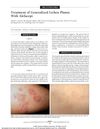
February 2006 in “Archives of Dermatology” This case report describes a 25-year-old woman with widespread lichen planus who did not respond to multiple systemic treatments, including antihistamines, hydroxychloroquine sulfate, and corticosteroids.
 June 2025 in “Indian Journal of Veterinary Medicine”
 In this case report, a persistent skin infection in a Bullykutta dog was resolved with a 10-day treatment regimen of Sulphamethoxazole, trimethoprim, omega fatty acids, and topical therapy after previous treatments failed.
 1461 citations
,
March 2004 in “Annals of oncology”
1461 citations
,
March 2004 in “Annals of oncology” This study found that in first-line treatment of metastatic breast cancer, pegylated liposomal doxorubicin (PLD) provided similar progression-free survival to doxorubicin with significantly less cardiotoxicity.