 3 citations
,
April 2019 in “Journal of Dermatological Treatment”
3 citations
,
April 2019 in “Journal of Dermatological Treatment” This review discusses the use of phosphodiesterase inhibitors for alopecia, finding promising preliminary results with topical caffeine for androgenetic alopecia and telogen effluvium, but limited success in alopecia areata.
 14 citations
,
July 2016 in “Pediatric Dermatology”
14 citations
,
July 2016 in “Pediatric Dermatology” In this report, a case of steroid-resistant multifocal alopecia areata was successfully treated with topical bimatoprost, suggesting it may be a promising alternative therapy.

This review discusses the approval of deuruxolitinib, an oral JAK inhibitor, by the FDA in July 2024 for treating severe alopecia areata in adults, highlighting its role as the third approved oral treatment option alongside baricitinib and ritlecitinib.
March 2023 in “SKIN The Journal of Cutaneous Medicine” This study observed that most patients with alopecia areata experienced sustained scalp hair regrowth after 48 weeks of ritlecitinib treatment, with safety consistent with prior findings.
1 citations
,
April 2017 in “Journal of Investigative Dermatology” Abatacept may help some people with alopecia areata regrow hair.
 April 2012 in “Journal of the American Academy of Dermatology”
 Clofazimine successfully treated a man's ashy dermatosis, clearing his skin lesions.

In this study, topical latanoprost acid applied daily for 6 months increased hair count and improved trichoscopic markers among women with hair loss, suggesting its potential for treating female androgenetic alopecia, particularly at a 0.05% concentration.
 36 citations
,
January 2015 in “Dermatology”
36 citations
,
January 2015 in “Dermatology” In this study, bimatoprost solution showed better results than corticosteroid in terms of rapidity, percentage of hair regrowth, and side effects for treating scalp alopecia areata.
July 2026 in “Journal of the American Academy of Dermatology” 2 citations
,
November 2025 in “Journal of the American Academy of Dermatology” In this randomized, placebo-controlled trial, adults with severe chronic alopecia areata who received deuruxolitinib showed significant hair regrowth compared to placebo over 24 weeks, and the treatment was generally well-tolerated, though long-term effects remain unexamined.
 March 2022 in “Nepal Journal of Dermatology Venereology & Leprology”
 In this prospective clinical trial, azathioprine with steroid minipulse therapy and methotrexate with steroid minipulse therapy both improved hair regrowth in alopecia areata patients, but methotrexate showed slightly higher efficacy.
January 2023 in “Applied sciences” This study suggests that Equisetum debile extracts, particularly the ethyl acetate fraction, may offer natural cosmeceutical benefits for treating hyperpigmentation, delaying skin aging, and remediating hair loss due to androgenic alopecia.
July 2026 in “Journal of the American Academy of Dermatology” This study observed that upadacitinib demonstrated significant efficacy and favorable safety for treating alopecia areata over 12 months in a real-world setting, with patients having an atopic background showing better early response; no serious adverse events were reported.
 May 2025 in “Journal of Nanobiotechnology”
 This study reported that an ATRA-loaded nanostructured lipid carrier gel (ATRA-NLC-Gel) improved symptoms of alopecia areata in mice by enhancing transdermal drug delivery, reducing skin irritation, and promoting hair regrowth through targeted follicle enrichment and pathway activation.
20 citations
,
February 2004 in “Clinical & Experimental Immunology” This study suggests that long-term treatment with the contact sensitizer SADBE in mice may reduce leucocyte traffic in alopecia areata through impaired leucocyte extravasation.
July 2026 in “Dermatology and Therapy” In this retrospective study, baricitinib and ritlecitinib showed similar effectiveness and safety over 52 weeks for treating severe alopecia areata, with non-severe adverse events more common for baricitinib, driven by weight gain.
July 2025 in “SKIN The Journal of Cutaneous Medicine” This study describes characteristics and outcomes for adults initiating ritlecitinib for severe alopecia areata, highlighting increased hair regrowth and physician satisfaction with longer treatment durations, despite ongoing psychosocial impacts like embarrassment and anxiety among patients.
 March 2026 in “American Journal of Clinical Dermatology”
 In this study, ritlecitinib 50 mg produced clinically meaningful improvements in scalp hair regrowth over three years for patients aged 12 and older with severe alopecia areata, with 65.1% showing substantial hair regrowth and 31.2% achieving complete regrowth, while also maintaining a consistent safety profile.

This study of patients with moderate to severe alopecia areata in Morocco found that oral betamethasone mini-pulses yielded ≥50% hair regrowth in 62.5% of cases, improved quality of life scores, and were generally well-tolerated, though relapses and mild side effects were noted.
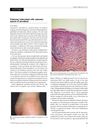 9 citations
,
July 2002 in “Journal of the European Academy of Dermatology and Venereology”
9 citations
,
July 2002 in “Journal of the European Academy of Dermatology and Venereology” This article discusses multiple minute digitate hyperkeratosis in a dermatological context and reports no new clinical findings; the authors focus on a descriptive review.
 37 citations
,
January 2010 in “International Journal of Trichology”
37 citations
,
January 2010 in “International Journal of Trichology” In this 1-year study of patients with alopecia areata universalis, researchers found that 0.03% topical bimatoprost led to an acceptable cosmetic response in 43.24% of participants.
September 2025 in “Asian journal of pediatric dermatology.” This case study reports the successful use of abrocitinib for treating severe alopecia areata in a 14-year-old patient, demonstrating significant hair regrowth and suggesting the need for sustained JAK1 inhibition to prevent relapse.
109 citations
,
November 1987 in “Archives of dermatology” In this study, 0.5%-1.0% anthralin cream led to a cosmetic response in 25% of patients with severe alopecia areata, despite common side effects like pruritus and erythema.
1 citations
,
August 2024 in “British Journal of Dermatology” This study found that after 15 months of treatment with ritlecitinib, patients with alopecia areata and less than 95% initial hair loss experienced significant hair regrowth, though those with more extensive hair loss showed more variable improvement.
 April 2012 in “Journal of the American Academy of Dermatology”
 In this survey of dermatologists, pimozide was most commonly identified as the preferred first-line antipsychotic for treating delusions of parasitosis, followed by risperidone.
 162 citations
,
August 2002 in “Survey of Ophthalmology”
162 citations
,
August 2002 in “Survey of Ophthalmology” This study found that latanoprost induces significant growth and pigmentation of lashes and ancillary hairs, with effects mirroring both brief and chronic treatments observed in patients and animal models.
September 2025 in “Journal of the American Academy of Dermatology” Deuruxolitinib significantly improves hair satisfaction in severe alopecia areata patients.
 2 citations
,
April 2023 in “JEADV. Journal of the European Academy of Dermatology and Venereology/Journal of the European Academy of Dermatology and Venereology”
2 citations
,
April 2023 in “JEADV. Journal of the European Academy of Dermatology and Venereology/Journal of the European Academy of Dermatology and Venereology” This systematic review evaluated the safety of JAK-inhibitors for alopecia areata, finding that most adverse events were mild and systemic formulations were well-tolerated; however, increased rates of certain infections and laboratory abnormalities were noted, with isolated severe cases but no fatal outcomes.
November 2023 in “SKIN The Journal of Cutaneous Medicine” This study assessed ritlecitinib's effects on sustained hair regrowth in patients with alopecia areata who showed improvement at 24 weeks, confirming ongoing benefits through 48 weeks for scalp, eyebrow, and eyelash hair regrowth in this post hoc analysis.
April 2017 in “Leukemia research” This study reported that tofacitinib may be a promising treatment for alopecia areata in adolescents, showing significant hair regrowth with mild adverse effects in a retrospective review.