November 2023 in “SKIN The Journal of Cutaneous Medicine” This study assessed ritlecitinib's effects on sustained hair regrowth in patients with alopecia areata who showed improvement at 24 weeks, confirming ongoing benefits through 48 weeks for scalp, eyebrow, and eyelash hair regrowth in this post hoc analysis.
April 2017 in “Leukemia research” This study reported that tofacitinib may be a promising treatment for alopecia areata in adolescents, showing significant hair regrowth with mild adverse effects in a retrospective review.
 April 2016 in “Journal of The American Academy of Dermatology”
 People with certain allergic conditions or higher white blood cell counts have more severe hair loss, and treating hair and nail side effects early in melanoma therapy can improve quality of life.
2 citations
,
January 2021 in “Indian Journal of Dermatology, Venereology and Leprology” This study found that topical betamethasone dipropionate was more effective than topical latanoprost in reducing the area and promoting hair regrowth in patients with localized alopecia areata, though latanoprost was considered safer.
6 citations
,
March 2024 in “SKIN The Journal of Cutaneous Medicine” In this ongoing phase 3 study, ritlecitinib demonstrated sustained efficacy up to 24 months in patients aged 12 or older with alopecia areata, showing increased response rates with or without an initial loading dose and supporting its long-term use.
 49 citations
,
October 2014 in “International Scholarly Research Notices”
49 citations
,
October 2014 in “International Scholarly Research Notices” This review explores the medicinal properties of Eclipta alba and its phytoconstituents and reports their potential for developing new drugs, but presents no new research results.
January 2018 in “대한피부과학회지” This case report details a 54-year-old woman with metastatic non-small-cell lung cancer who experienced severe hair loss and exanthematous drug eruption, potentially linked to erlotinib hypersensitivity.
 June 2026 in “Dermatology and Therapy”
 This study reported that ritlecitinib was prescribed to a diverse group of patients with severe alopecia areata in the first 10 months after FDA approval, indicating its potential role in AA management.
 66 citations
,
December 2018 in “Dermatology”
66 citations
,
December 2018 in “Dermatology” This study found that oral JAK inhibitors, ruxolitinib and tofacitinib, are effective and well-tolerated for treating severe alopecia areata, with a similar degree of hair regrowth and relapse rates, but ruxolitinib induced faster initial hair regrowth.
November 2024 in “Skin Appendage Disorders” This review provides insights and guidelines for clinicians and patients on assessing the risks and benefits of ritlecitinib for adolescents with alopecia areata, emphasizing shared decision-making and management strategies.
 July 2026 in “Pharmacological Reports”
 In this pilot study, topical latanoprost acid was observed to increase hair count and improve hair follicle structure in women with androgenetic alopecia, with no serious adverse events, suggesting potential for further investigation to confirm its efficacy and safety.
November 2025 in “SKIN The Journal of Cutaneous Medicine” This study observed that adolescents with alopecia areata receiving ritlecitinib 50 mg daily showed notable hair regrowth over three years, as seen in both clinician- and patient-reported outcomes. However, the decreased number of participants at later stages limits the findings.
March 2020 in “Revista Eletrônica da Faculdade de Ceres” This review discusses the role of latanoprost in hair growth but reports no clinical results; the authors suggest further research to determine its efficacy and optimal treatment regimen.
 2 citations
,
January 2021 in “JAAD Case Reports”
2 citations
,
January 2021 in “JAAD Case Reports” This article reviews potential causes for angiolymphoid hyperplasia with eosinophilia, a benign vascular tumor often found in middle-aged adults, and reports no new clinical findings.
 9 citations
,
May 2012 in “British Journal of Dermatology”
9 citations
,
May 2012 in “British Journal of Dermatology” This article discusses female androgenetic alopecia but reports no new clinical findings.
 65 citations
,
November 2004 in “Journal of the American Academy of Dermatology”
65 citations
,
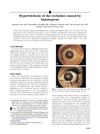
November 2004 in “Journal of the American Academy of Dermatology” This article reports a case where the IOP-lowering drug bimatoprost was associated with eyelash hypertrichosis.
6 citations
,
July 2015 in “JAAD Case Reports” This study describes a case of erlotinib-induced alopecia, unresponsive to traditional corticosteroid treatments, that was successfully managed with doxycycline, suggesting a novel approach for EGFR inhibitor-associated alopecia.
Deuruxolitinib effectively promotes hair regrowth in alopecia areata.
114 citations
,
October 2006 in “Journal of the European Academy of Dermatology and Venereology” In this study, clobetasol propionate foam demonstrated effectiveness and good patient compliance as a safe topical treatment for moderate to severe alopecia areata, with significant hair regrowth compared to placebo.
 10 citations
,
June 2018 in “Aaps Pharmscitech”
10 citations
,
June 2018 in “Aaps Pharmscitech” The flutamide-loaded hydrogel is a promising, skin-friendly treatment for acne and hair loss, potentially requiring less frequent application.
23 citations
,
October 2024 in “British Journal of Dermatology” In this study, ritlecitinib showed sustained effectiveness and a favorable safety profile in treating alopecia areata in patients aged 12 and older over 24 months, with improvements observed in hair and eyebrow regrowth and patient satisfaction.
2 citations
,
May 2008 in “Journal of Clinical Oncology” This study found that patients with unresectable melanoma treated with AZD6244 experienced skin reactions, including depigmentation and papulopustular rashes, in patterns similar to those caused by EGFR inhibitors.
 July 2023 in “Research Square (Research Square)”
 In this study, the application of topical cetirizine 1% once daily for four months in Egyptian male patients with androgenetic alopecia led to a significant increase in terminal hairs and improved hair diversity, with promising safety and efficacy outcomes.
 1 citations
,
June 2026 in “Dermato”
1 citations
,
June 2026 in “Dermato” This narrative review found that ritlecitinib shows consistent effectiveness and a favorable safety profile for treating alopecia areata in clinical trials and real-world settings, with progressive hair regrowth observed, particularly when treatment is initiated early and maintained appropriately.
 April 2016 in “Journal of The American Academy of Dermatology”
 Dutasteride is more effective than finasteride for hair growth with similar side effects.
 5 citations
,
January 2024 in “Journal of Cancer”
5 citations
,
January 2024 in “Journal of Cancer” In this phase II clinical study, combining anlotinib with standard platinum-based chemotherapy showed promising outcomes and prognosis in treating extensive small-cell lung cancer, with high disease control and response rates.
 3 citations
,
March 2017 in “Regulatory toxicology and pharmacology”
3 citations
,
March 2017 in “Regulatory toxicology and pharmacology” In this study, aleglitazar and its metabolite M6 were evaluated for safety in non-clinical settings, revealing organ-targeting effects common to PPAR agonists but no significant tumor increase in rat carcinogenicity studies, supporting progression to Phase 3 clinical trials.
March 2026 in “The Journal of Dermatology” This study found that ritlecitinib 50 mg is cost-effective compared to no treatment for patients in Japan with alopecia areata and significant scalp hair loss, demonstrating an incremental cost-effectiveness ratio below the country's cost-effectiveness threshold.
 19 citations
,
March 2003 in “Journal of Investigative Dermatology”
19 citations
,
March 2003 in “Journal of Investigative Dermatology” This study found that mechlorethamine restored hair growth in mice with alopecia-areata-like disease by eliminating infiltrated lymphocytes and inhibiting certain pro-inflammatory cytokines in treated skin areas.

This study reports two cases of severe alopecia areata showing seemingly permanent hair regrowth with a modified triamcinolone acetonide regimen involving epinephrine, and suggests a potential role for epinephrine in enhancing treatment efficacy.