January 2011 in “Australasian Journal of Paramedicine” This review discusses the roles of PAX3 in melanocyte development and melanoma progression but reports no new experimental results; the authors propose it as a key regulatory factor and call for further investigation.
92 citations
,
May 2004 in “Journal of Investigative Dermatology” April 2025 in “Sabuncuoglu Serefeddin Health Sciences” This study highlights the public health significance of androgenic-anabolic steroid use disorder, emphasizing health risks, societal effects, and the need for routine AAS analyses in forensic autopsies, especially in athlete deaths.
Deuruxolitinib effectively promotes hair regrowth in alopecia areata.
 April 2019 in “The journal of investigative dermatology/Journal of investigative dermatology”
 This study used machine learning to identify molecular predictors of drug response in alopecia areata, suggesting a tool for predicting treatment efficacy based on gene signatures.
36 citations
,
March 2014 in “Annals of the Rheumatic Diseases” This study found that activating liver X receptors with an agonist reduced skin fibrosis in experimental models, particularly in inflammation-driven conditions, by inhibiting macrophage infiltration and interleukin-6 release.
January 2018 in “Figshare” This study found that both ruxolitinib and tofacitinib were effective in promoting hair regrowth for patients with severe alopecia areata, with no significant difference in efficacy and relapse rate between them, and both were well tolerated throughout the treatment.
46 citations
,
May 2013 in “The journal of investigative dermatology/Journal of investigative dermatology” This review discusses the state-of-the-art knowledge on pseudoxanthoma elasticum, summarizing recent advancements in genetics, pathomechanisms, and potential treatments but reports no new clinical findings.
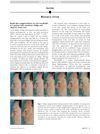
In this reported case, a male German Spitz diagnosed with alopecia X showed partial regrowth of alopecic areas after treatment with orchiectomy and melatonin, indicating this combination's potential effectiveness for the condition.
June 2008 in “Wound Repair and Regeneration” In this study, Msx-2 knockout mice showed enhanced re-epithelialization and faster wound closure compared to wild-type controls, suggesting Msx-2 may influence skin morphogenesis during wound repair.
 157 citations
,
December 2015 in “Journal of the American Academy of Dermatology”
157 citations
,
December 2015 in “Journal of the American Academy of Dermatology” This case study reported significant but temporary hair regrowth and skin repigmentation in a patient with vitiligo and alopecia areata during treatment with oral ruxolitinib.
This study reported that acupuncture combined with topical Aloe vera and celery gel reduced hair loss from alopecia androgenetica after 28 days of treatment.
 5 citations
,
January 2004 in “Biochimie”
5 citations
,
January 2004 in “Biochimie” This review discusses arsenic trioxide therapy in acute promyelocytic leukemia and introduces a novel method using hair analysis to monitor arsenic exposure and correlate it with treatment timing, but reports no new clinical results.
 March 2026 in “Journal of Translational Autoimmunity”
 In this study using a mouse model with alopecia areata, the researchers found that ruxolitinib enhances hair regrowth by inhibiting the JAK-STAT signaling pathway, reducing inflammation and oxidative stress, and decreasing apoptosis, which supports its clinical effectiveness in treating this condition.
1 citations
,
November 2025 in “International Journal of Dermatology” This study developed the Alopecia Areata Children's Quality of Life Index (AAcQLI) to assess quality of life in children with alopecia areata, demonstrating good reliability and validity in initial tests.
January 2019 in “프로그램북(구 초록집)” This study reported that oral JAK inhibitors, tofacitinib and ruxolitinib, may effectively promote hair regrowth in alopecia areata patients, though ruxolitinib had fewer adverse events compared to tofacitinib.
September 2025 in “Journal of the American Academy of Dermatology” Deuruxolitinib significantly improves hair satisfaction in severe alopecia areata patients.
 April 2016 in “Journal of Investigative Dermatology”
 The researchers reported that SOX4 expression is significantly upregulated in melanoma and its knockdown in cell lines resulted in reduced tumor progression, suggesting potential for targeted therapies.
30 citations
,
June 2017 in “Journal of cutaneous medicine and surgery” This study reports that topical ruxolitinib failed to induce hair growth in a 66-year-old patient with alopecia areata, highlighting the need to explore factors affecting treatment response and compare topical vs oral administration outcomes.
 20 citations
,
July 2013 in “European Journal of Oral Sciences”
20 citations
,
July 2013 in “European Journal of Oral Sciences” This study found a novel PAX9 gene mutation that may cause tooth agenesis and trichodysplasia in a studied family.
132 citations
,
August 2008 in “Development” This research found that Dlx3 plays a central role in hair formation and regeneration, with its absence leading to alopecia through disrupted differentiation and signaling pathways.
1 citations
,
November 2022 in “PubVet” This case study describes using microneedling combined with orchiectomy as a treatment for alopecia X in a male German Spitz dog, highlighting this approach for managing the condition.
5 citations
,
January 2021 in “Frontiers in Cell and Developmental Biology” This study found that elevated expression of the protein Zyxin in hair follicles is associated with androgenetic alopecia and suggests it may be targeted for therapy.
 7 citations
,
February 2006 in “Clinical and Experimental Dermatology”
7 citations
,
February 2006 in “Clinical and Experimental Dermatology” This clinical report details the case of a 22-year-old man experiencing severe pustular eruptions on his chest and back, which improved after increasing minocycline to 100 mg twice daily.
74 citations
,
February 2018 in “Journal of the American Academy of Dermatology” 
This review discusses the approval of deuruxolitinib, an oral JAK inhibitor, by the FDA in July 2024 for treating severe alopecia areata in adults, highlighting its role as the third approved oral treatment option alongside baricitinib and ritlecitinib.
 September 2024 in “Skin Appendage Disorders”
 This case report describes a 21-year-old woman with circumscribed alopecia areata incognita, who experienced a sustained positive response to treatment with oral tofacitinib after conventional treatments frequently failed to provide lasting effects.
4 citations
,
September 2025 in “Journal of the American Academy of Dermatology” The trial helped find the best dose of deuruxolitinib for treating alopecia areata.
3 citations
,
January 2014 Collagen XVIII and Bmx tyrosine kinase are important for hair growth and skin cancer development.
July 2026 in “Journal of the American Academy of Dermatology”