 162 citations
,
April 2016 in “The Lancet Diabetes & Endocrinology”
162 citations
,
April 2016 in “The Lancet Diabetes & Endocrinology” This review discusses the effects of testosterone therapy for transgender men, noting desired outcomes and potential risks, but reports no new research findings; the authors highlight a lack of high-quality data due to various study limitations.
 160 citations
,
March 2009 in “Seminars in Cutaneous Medicine and Surgery”
160 citations
,
March 2009 in “Seminars in Cutaneous Medicine and Surgery” This article reviews lichen planopilaris, its presentation, and treatment challenges, and emphasizes the need for more research into its pathogenesis and therapy efficacy; it reports no new findings.
 159 citations
,
July 2006 in “Endocrine Reviews”
159 citations
,
July 2006 in “Endocrine Reviews” This article discusses the influence of estrogens on hair follicle growth and metabolism, suggesting a significant role alongside androgens in hair growth control but reports no new clinical results.
 159 citations
,
September 2001 in “European Journal of Cancer Care”
159 citations
,
September 2001 in “European Journal of Cancer Care” This literature study reviews the consequences of hair loss due to chemotherapy and nursing care interventions but reports no new clinical results.
 157 citations
,
April 1994 in “Clinical endocrinology”
157 citations
,
April 1994 in “Clinical endocrinology” Androgens can cause hair growth in some areas and hair loss on the scalp.
 153 citations
,
March 2017 in “Endocrine”
153 citations
,
March 2017 in “Endocrine” This review examines recent advances in understanding the pathophysiology and molecular mechanisms of androgenetic alopecia, highlighting two major genetic risk loci, but does not report new clinical findings.
 152 citations
,
December 2007 in “Gender Medicine”
152 citations
,
December 2007 in “Gender Medicine” This review discusses recent advances in understanding gender differences in skin and their implications for dermatologic diseases, but it reports no new experimental results; ongoing research is necessary for translating these insights into clinical practice.
 151 citations
,
August 2010 in “British Journal of Dermatology”
151 citations
,
August 2010 in “British Journal of Dermatology” This guideline reviews the diagnosis of androgenetic alopecia and offers expert consensus recommendations tailored to males, females, and adolescents, but reports no new clinical results.
 151 citations
,
December 2004 in “Annals of the New York Academy of Sciences”
151 citations
,
December 2004 in “Annals of the New York Academy of Sciences” This review discusses nonclassical 21-hydroxylase deficiency as the most common autosomal recessive disorder in humans and highlights the effectiveness of glucocorticoid treatment in reversing related symptoms.
 147 citations
,
April 1994 in “Drug Safety”
147 citations
,
April 1994 in “Drug Safety” Some drugs can cause hair loss or increase hair growth, but these effects are usually reversible when the drug is stopped.
 141 citations
,
September 2016 in “European Journal of Dermatology”
141 citations
,
September 2016 in “European Journal of Dermatology” This review examines dermatological side effects of taxane chemotherapy reported in past studies and highlights the necessity for identifying and managing these conditions to maintain cancer patients' quality of life; it presents no new clinical results.
 134 citations
,
December 2018 in “Dermatology and Therapy”
134 citations
,
December 2018 in “Dermatology and Therapy” This review discusses the potential role of vitamins and minerals in managing non-scarring alopecia but reports no clinical results; the authors advocate for further controlled trials to explore these relationships.
 132 citations
,
October 1995 in “Journal of the American Academy of Dermatology”
132 citations
,
October 1995 in “Journal of the American Academy of Dermatology” This report concludes that the blend method is the most effective electrolysis technique for permanent hair removal, requiring proper technique and preparation such as shaving before treatment to increase efficacy.
 130 citations
,
September 2018 in “Cell Reports”
130 citations
,
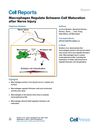
September 2018 in “Cell Reports” This study found that macrophages play a crucial role in nerve regeneration by regulating Schwann cell dynamics and remyelination, with Gas6 identified as a key factor in this process.
 130 citations
,
February 2018 in “Journal of Investigative Dermatology”
130 citations
,
February 2018 in “Journal of Investigative Dermatology” This study found that tofacitinib led to ≥50% hair regrowth in eight out of twelve patients with moderate to severe alopecia areata, suggesting a potential benefit for using JAK inhibitors in treating this condition.
 130 citations
,
January 1994 in “Differentiation”
130 citations
,
January 1994 in “Differentiation” In this study, researchers found that bulge cells in mouse hair follicles undergo transient proliferation during early anagen, indicating their role as follicular stem cells. However, another factor beyond dermal papilla proximity may be required to initiate a new anagen phase.
 129 citations
,
October 2007 in “The New England Journal of Medicine”
129 citations
,
October 2007 in “The New England Journal of Medicine” This article discusses the evaluation and management of a 45-year-old woman with diffuse scalp-hair loss and reports no new clinical findings.
 128 citations
,
January 1996 in “Journal of analytical toxicology.”
128 citations
,
January 1996 in “Journal of analytical toxicology.” This study suggests that while hair analysis using GC-MS is a sensitive method for detecting cocaine ingestion, it may not reliably indicate the amount, timing, or duration of drug use due to interindividual variability and multiple incorporation mechanisms.
 127 citations
,
January 2013 in “PLOS ONE”
127 citations
,
January 2013 in “PLOS ONE” This study found that feeding aged mice a probiotic yogurt induced changes leading to thicker, healthier fur, suggesting a bacteria-triggered interleukin-10-dependent mechanism that mimics signs of youth and reproductive fitness.
 126 citations
,
April 2006 in “International Journal of Dermatology”
126 citations
,
April 2006 in “International Journal of Dermatology” This study found that frontal fibrosing alopecia and lichen planopilaris have similar histopathological features, but FFA exhibits more prominent apoptosis and less inflammation with spared interfollicular epidermis.
 126 citations
,
October 1983 in “Journal of The American Academy of Dermatology”
126 citations
,
October 1983 in “Journal of The American Academy of Dermatology” This report verifies isotretinoin's significant efficacy in treating severe acne over the past year in the U.S., highlighting the need for careful patient selection and monitoring due to potential side effects.
 124 citations
,
July 2012 in “Archives of Dermatological Research”
124 citations
,
July 2012 in “Archives of Dermatological Research” This review discusses the roles of androgens and androgen receptors in skin-related disorders and suggests that targeting androgen receptors may be a more effective treatment strategy.
 122 citations
,
November 2010 in “Journal of Dermatological Science”
122 citations
,
November 2010 in “Journal of Dermatological Science” This study found that increased expression of type II 5α-reductase, androgen receptors, and Hic-5/ARA55 in dermal papilla cells upregulates androgen sensitivity, playing a key role in androgenetic alopecia pathogenesis.
 118 citations
,
April 1998 in “Dermatologic Clinics”
118 citations
,
April 1998 in “Dermatologic Clinics” This review discusses the advancements in understanding and treating androgenetic alopecia and alopecia areata but reports no clinical findings; the authors emphasize the need for further research on molecular control mechanisms.
 115 citations
,
October 2009 in “The Journal of clinical endocrinology and metabolism/Journal of clinical endocrinology & metabolism”
115 citations
,
October 2009 in “The Journal of clinical endocrinology and metabolism/Journal of clinical endocrinology & metabolism” In this study, researchers identified novel LMNA mutations in patients with atypical progeroid syndrome, revealing clinical features distinct from other similar disorders, but unrelated to mutant prelamin A accumulation.
 111 citations
,
January 2007 in “Seminars in cell & developmental biology”
111 citations
,
January 2007 in “Seminars in cell & developmental biology” This article reviews the similarities in early development processes of hair follicles, teeth, and mammary glands and reports no new experimental findings.
 108 citations
,
October 2004 in “Anesthesiology”
108 citations
,
October 2004 in “Anesthesiology” This review discusses surgical factors that may increase the risk of developing complex regional pain syndrome and describes potential preventive techniques but presents no new clinical results.
 102 citations
,
April 2014 in “International Journal of Dermatology”
102 citations
,
April 2014 in “International Journal of Dermatology” This study found that early intervention and treatment with intralesional triamcinolone acetonide may stabilize hairline recession in patients with frontal fibrosing alopecia, although further research is needed for definitive treatment guidelines.
 101 citations
,
July 2020 in “Dermatologic therapy”
101 citations
,
July 2020 in “Dermatologic therapy” This systematic review reports that "COVID toes" and other skin manifestations can be initial signs of COVID-19, and advises immunosuppressive therapy adjustments only for infected or at-risk patients.
 100 citations
,
September 2017 in “Molecular and Cellular Endocrinology”
100 citations
,
September 2017 in “Molecular and Cellular Endocrinology” This review discusses the molecular mechanisms of androgens and androgen receptors in skin disorders, particularly androgenetic alopecia, and reports no new clinical results; it highlights potential areas for future treatment development.