 December 2022 in “Curēus”
 This case report describes a 5-year-old girl with atrichia with papular lesions, whose diagnosis was confirmed through genetic testing identifying mutations in the hairless gene.
38 citations
,
September 2017 in “Journal of zoo and wildlife medicine” This study describes the successful management of Andean bear alopecia syndrome in three female bears using oclacitinib, leading to rapid pruritus resolution and fur regrowth without adverse effects.
1 citations
,
August 2024 in “JAAD Case Reports” This report presents a rare case of diffuse hair loss resembling alopecia areata, following a tick bite on the scalp.
18 citations
,
January 1992 in “Dermatology” This case report details atrichia with papular lesions in a 4-year-old girl, highlighting specific histological findings on her scalp and other affected areas.
20 citations
,
October 2005 in “Archives of Dermatological Research”  19 citations
,
March 1997 in “Journal of Cutaneous Pathology”
19 citations
,
March 1997 in “Journal of Cutaneous Pathology” This study observed that patients with alopecia areata often have a T-cell receptor repertoire in skin lesions that suggests a specific antigen-driven immune response may be important in the disease's pathogenesis.
 3 citations
,
March 2010 in “Dermatologica Sinica”
3 citations
,
March 2010 in “Dermatologica Sinica” This study reports the first case of atrichia with papular lesions in a Taiwanese family without a detectable mutation in the HR gene.
 5 citations
,
March 2005 in “Journal of The American Academy of Dermatology”
5 citations
,
March 2005 in “Journal of The American Academy of Dermatology”  December 2014 in “Bangladesh Journal of Veterinary Medicine”
 In this study, mixed lice infestations and their associated skin changes were observed in the Egyptian lesser blind mole rat, marking the first report of such findings in this species.
20 citations
,
January 2002 in “Laboratory Animals” This study identified a compound heterozygous mutation in a hairless rhesus macaque, which was associated with skin abnormalities similar to those in hairless mice and humans with APL.
61 citations
,
February 1982 in “Cell and Tissue Research” 4 citations
,
January 2023 in “Journal of Clinical Investigation” This study identified a recurrent mutation in the endothelin receptor type A associated with mandibulofacial dysostosis with alopecia, and proposed a mechanism involving increased ligand affinity due to structural changes.
 59 citations
,
January 2002 in “Dermatology”
59 citations
,
January 2002 in “Dermatology” This study suggests the existence of a new subtype of alopecia, called 'acute diffuse and total alopecia of the female scalp (ADTAFS)', characterized by acute, diffuse hair loss primarily in women and a rapid recovery.
 April 2016 in “Journal of The American Academy of Dermatology”
 The study found that Temporal Triangular Alopecia often starts in early childhood, while Folliculitis Decalvans is characterized by tufted hairs and redness around hair follicles.
1 citations
,
January 2024 in “Journal of Feline Medicine and Surgery Open Reports” In this study, the researchers describe a case of feline demodicosis that presented with dermatological lesions but lacked the typical signs of pruritus or overgrooming, and they report successful off-label treatment using a single spot-on application of fluralaner.
November 2021 in “Skin appendage disorders” This case report describes the first known instances of male androgenetic alopecia with trichoteiromania, suggesting self-induced hair loss can occur alongside patterned miniaturization of hair.
59 citations
,
November 2011 in “Development” This study found that the transcription factor Trps1 acts as a novel regulator of the Wnt signaling pathway and early hair follicle progenitors in developing vibrissa follicles in mice.
 1 citations
,
April 2019 in “The journal of investigative dermatology/Journal of investigative dermatology”
1 citations
,
April 2019 in “The journal of investigative dermatology/Journal of investigative dermatology” This study found that anagen stage protein homogenates and specific epitopes from melanogenesis proteins activated CD8 T cells, suggesting alopecia areata is an anagen-specific disease.
This report describes a 7-year-old girl with monilethrix who showed significant improvement while on acitretin treatment, but symptoms returned after stopping the medication.
 April 2024 in “Cellular signalling”
 This study on mice found that activating TRPML channels with MLSA1 promoted hair regeneration, accelerated hair cycle transition, and influenced human dermal papilla cells to secrete hair growth promoting factors while reducing hair growth inhibitors and oxidative damage.

In this study, the authors emphasize the importance of accurately diagnosing congenital atrichia with papules—a condition marked by hair loss and papular skin lesions—differentiating it from other similar disorders to prevent unnecessary treatments and inform families about its benign but irreversible nature.
 January 2022 in “Revista Dermatológica Centro Uraga”
 This article reviews two cases of monilethrix in siblings, detailing their clinical and dermatoscopic characteristics, but reports no new findings.
34 citations
,
December 1984 in “Journal of Cutaneous Pathology” This study observed that the thinning and structural abnormalities in monilethrix-affected hair occur at the internodes due to possible periodic dysfunction of the hair matrix, particularly in the cortex.
 45 citations
,
December 2014 in “Journal of the European Academy of Dermatology and Venereology”
45 citations
,
December 2014 in “Journal of the European Academy of Dermatology and Venereology” This study found that plasmacytoid dendritic cells are central to the pathogenesis of alopecia areata, suggesting they may help differentiate it from trichotillomania and androgenetic alopecia.
 4 citations
,
November 2018 in “JAAD case reports”
4 citations
,
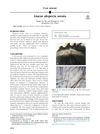
November 2018 in “JAAD case reports” This report presents a case of alopecia areata manifesting in a linear pattern, deviating from the typical presentation of sharply demarcated round patches.
 8 citations
,
May 2017 in “IUBMB life”
8 citations
,
May 2017 in “IUBMB life” This review discusses the role of astrotactins in development and their genetic mutations' links to a variety of human diseases, but reports no new clinical results.
 65 citations
,
February 2015 in “Neuro-Oncology”
65 citations
,
February 2015 in “Neuro-Oncology” In this study, four children with recurrent atypical teratoid rhabdoid tumors experienced disease stabilization or regression after treatment with alisertib, suggesting its potential role in future trials for this condition.
 February 2021 in “IP Indian journal of clinical and experimental dermatology”
 This report presents a rare case of trichoadenoma occurring in the vulva, adding to the limited instances documented in medical literature.
22 citations
,
February 2000 in “Journal of the American Academy of Dermatology” Eosinophils are not a reliable marker for diagnosing alopecia areata.