July 2021 in “Journal of dermatology & dermatologic surgery” In this study, two patients with severe alopecia areata who did not respond well to oral tofacitinib showed more than 50% hair regrowth after a single dose of intramuscular triamcinolone acetonide.
 November 2025 in “Mendeley Data”
 This study observed that JAK inhibitors were safe and effective for patients with moderate-to-severe alopecia areata and comorbid latent hepatitis B or stable tuberculosis, with careful monitoring and selective prophylaxis.
April 2026 in “Proceedings of the National Academy of Sciences” In this study, Tmem30b was identified as a key regulator of outer hair cell structure in mice, and its modulation may offer a therapeutic approach for certain types of hearing loss.
 4 citations
,
September 2022 in “Journal of The American Academy of Dermatology”
4 citations
,
September 2022 in “Journal of The American Academy of Dermatology” This study examined phase 3 clinical trial data and found that baricitinib improves hair regrowth in adults with alopecia areata and significant scalp hair loss, with the response varying based on the severity of hair loss at the start of treatment.
6 citations
,
March 2021 in “Journal of the American Academy of Dermatology” This study found that the Brigham Eyelash Tool for Alopecia (BELA) is a reliable measure for assessing eyelash loss in alopecia areata patients, demonstrating high inter- and intrarater reliability.
1 citations
,
September 2023 in “Journal of the American Academy of Dermatology” In this study, patients with alopecia areata who didn't initially respond to ritlecitinib at Week 24 showed improved response rates by Week 48, with up to 34% achieving better hair regrowth outcomes.
20 citations
,
October 1995 in “Biochimica et Biophysica Acta (BBA) - Gene Structure and Expression” hHb1, hHb3, and hHb6 mRNAs start expressing at the same time in hair follicles.
 19 citations
,
February 2016 in “Journal of The American Academy of Dermatology”
19 citations
,
February 2016 in “Journal of The American Academy of Dermatology” This study found that the presence of CD3(+) T-cells within empty follicular fibrous tracts is a reliable indicator for diagnosing diffuse alopecia areata instead of pattern hair loss.
 February 2025 in “PubMed”
 In this study, researchers evaluated CS12192, a selective JAK3 inhibitor, in an alopecia areata mouse model and found it reversed hair growth inhibition comparably to baricitinib, with better safety and similar immune-modulating mechanisms.

This proof-of-concept study suggests that the new topical treatment regimen TH07 may offer effective hair growth results in men with androgenic alopecia, using a combination of finasteride, latanoprost, and minoxidil, supported by animal models and clinical studies.
2 citations
,
July 2025 in “Scientific Reports” This study identified a novel Acinetobacter species, strain A1-4-2, with exceptional biodegradation abilities and low antibiotic resistance, found in diverse environments and potentially useful for ecological restoration by degrading organic pollutants.
 3 citations
,
March 2020 in “International Journal of Dermatology”
3 citations
,
March 2020 in “International Journal of Dermatology” This correspondence about the treatment of chronic alopecia areata with tildrakizumab reports no clinical results; the authors present an open-label pilot study setup.
January 1996 in “Springer eBooks”  January 2022 in “Skin appendage disorders”
 This case report describes a unique occurrence of alopecia totalis resulting in pigmented hair growth over superficial scalp veins in an adult female using augmented betamethasone dipropionate ointment.
July 2026 in “Journal of Investigative Dermatology” ABS-201 may effectively promote hair growth in men by targeting the prolactin receptor.
2 citations
,
May 2014 in “BMC Infectious Diseases” In this study, anal beta-papillomavirus infection was found to be highly prevalent among Slovenian MSM, with higher rates observed in HIV-1 positive individuals and those using alkyl nitrates.
 2 citations
,
June 2023 in “Journal of cell science”
2 citations
,
June 2023 in “Journal of cell science” In this study, researchers found that specific mutations in iRhom2 in mice lead to skin and hair abnormalities which depend on the presence of the protein ADAM17, suggesting a complex role for iRhom2 in tissue development and potential implications for treating tylosis with oesophageal cancer.
 6 citations
,
October 2012 in “Journal of Heredity”
6 citations
,
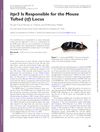
October 2012 in “Journal of Heredity” This study identified the Itpr3 gene as responsible for the tufted hair loss phenotype in the BTBR mouse strain.
 6 citations
,
January 2018 in “Dermato-endocrinology”
6 citations
,
January 2018 in “Dermato-endocrinology” This study found that acanthosis nigricans in the knuckles correlates with higher insulin and HOMA-IR values, potentially serving as an early, accessible marker for insulin resistance even without excess weight.
1 citations
,
March 2023 in “SKIN The Journal of Cutaneous Medicine”  15 citations
,
March 2014 in “Biochimica and biophysica acta. Molecular and cell biology of lipids”
15 citations
,
March 2014 in “Biochimica and biophysica acta. Molecular and cell biology of lipids” This review discusses the role of acyl-CoA binding protein (ACBP) in the epidermal barrier, noting that its disruption in mice is linked to skin and fur abnormalities; it reports no new clinical results.
 January 2024 in “JCEM case reports”
 In this clinical case report, a man with Birt Hogg Dube syndrome presented with parathyroid cancer, the first such case according to the authors, highlighting a potential link between Folliculin gene mutations and parathyroid cancer development.
4 citations
,
September 2024 in “Development” This study investigated transcription factors in human trophectoderm cells during development, finding that GATA2 and GATA3 are essential for transforming stem cells into induced trophoblast stem cells, which display characteristics similar to placental progenitor cells, offering new methods for modeling placental-associated diseases.
 November 2022 in “Journal of Investigative Dermatology”
 This study found that "early" transit amplifying cells, marked by CD271, are the first keratinocyte stem cell progenitors with distinct features, playing a significant role in early epidermal differentiation and regeneration.
 November 2024 in “Malaysian Journal of Microbiology”
 In this study, researchers found varying levels of multiple autoantibody types among thyroid disorder patients, with 84.84% of those with immunological hypothyroidism reporting symptoms like weight gain and lethargy, whereas 81.81% of those with immune hyperthyroidism experienced hair loss.
47 citations
,
April 2000 in “Experimental Dermatology” This study identified a novel missense mutation in the hairless gene in a Polish family, which may contribute to congenital atrichia with papular lesions by affecting the gene's function.
 November 2023 in “The journal of investigative dermatology/Journal of investigative dermatology”
 This study suggests that hemoglobin α expression in the epidermis is induced by oxidative stress and may function as an antioxidant, contributing to skin barrier function.
 9 citations
,
March 2022 in “Journal of radiation research”
9 citations
,
March 2022 in “Journal of radiation research” This study identified specific profiles and courses of adverse events associated with boron neutron capture therapy for head and neck cancer, suggesting differences based on the beam incidence site.
4 citations
,
January 2023 in “Journal of Clinical Investigation” This study identified a recurrent mutation in the endothelin receptor type A associated with mandibulofacial dysostosis with alopecia, and proposed a mechanism involving increased ligand affinity due to structural changes.
 11 citations
,
September 2011 in “British Journal of Dermatology”
11 citations
,
September 2011 in “British Journal of Dermatology” New ABCA12 gene mutations were linked to a skin condition with scaling and hair loss, and a treatment helped with hair loss in a related case.