July 2025 in “The Egyptian Journal of Hospital Medicine” This study found that intralesional methotrexate and triamcinolone acetonide have similar efficacy for localized alopecia areata in adults, but differ in safety profiles, with methotrexate associated with hyperpigmentation and triamcinolone with atrophy.
January 2017 in “DOAJ (DOAJ: Directory of Open Access Journals)” In this study, botulinum toxin type A did not improve clinical features in patients with recalcitrant alopecia totalis or alopecia universalis over a four-month period.
 October 2023 in “International journal of rheumatic diseases”
 This study found that the JAK3/TEC kinase inhibitor ritlecitinib was effective and well tolerated in patients aged 12 and older with alopecia areata, providing a potential systemic treatment option for this condition, especially in cases of significant psychosocial impact.
March 2026 in “Al-Azhar International Medical Journal /Al-Azhar International Medical Journal” In this study, patients with resistant alopecia areata treated with 35% trichloroacetic acid showed significantly better outcomes compared to those receiving superficial cryotherapy, with TCA demonstrating "excellent" results in 37.5% of cases versus 6.25% for cryotherapy.
18 citations
,
October 1986 in “PubMed” This study found that alpha-tocopherol acetate did not demonstrate any protective effect against hair loss induced by doxorubicin in patients with solid tumors.
71 citations
,
February 2012 in “The American Journal of Human Genetics” This study found that a heterozygous missense mutation in ATR is associated with a hereditary cancer syndrome, manifested by oropharyngeal cancer and other anomalies, in an autosomal-dominant inheritance pattern across a five-generation family.
 April 2026 in “Zenodo (CERN European Organization for Nuclear Research)”
 In this study, Dodatek A operationalizes the Functional Androgen Axis framework by defining three system-level indices and an efficiency metric to describe androgen function, incorporating key methodological improvements and acknowledging significant limitations for future empirical validation.
 12 citations
,
June 2010 in “Journal of dermatology”
12 citations
,
June 2010 in “Journal of dermatology” This study found that hyperpigmentation following contact immunotherapy for severe alopecia areata may indicate poor treatment responsiveness and aligns with characteristics of pigmented contact dermatitis.
40 citations
,
August 2021 in “JAAD international” This review found that teledermatology was significantly used during the COVID-19 pandemic, particularly for managing common ambulatory dermatoses like acne and eczema.
June 2026 in “JAAD Case Reports” October 2025 in “Journal of Clinical Medicine” This study found that in patients with severe alopecia areata, those who responded early to baricitinib treatment typically had a lower baseline Severity of Alopecia Tool score, shorter disease duration, and higher erythrocyte sedimentation rate, suggesting these factors may predict therapeutic success.
 November 2025 in “SKIN The Journal of Cutaneous Medicine”
 In this phase 3 trial, baricitinib showed effectiveness and safety in both adolescents and adults with severe alopecia areata, with adolescents achieving higher response rates despite more severe baseline conditions, suggesting the advantages of early treatment.

This report describes the 2024 American Academy of Dermatology Annual Meeting in San Diego, notable for attracting nearly 20,000 attendees with 339 sessions covering a wide range of dermatological topics, making it potentially the largest dermatology meeting by attendance.
 1 citations
,
September 2022 in “International Journal of Trichology”
1 citations
,
September 2022 in “International Journal of Trichology” In this case report, a young adult male with resistant alopecia areata showed nearly 90% hair regrowth after 3 months of treatment with tofacitinib, alongside biotin supplementation, without any side effects observed.
 1 citations
,
September 2023 in “Journal of the American Academy of Dermatology”
1 citations
,
September 2023 in “Journal of the American Academy of Dermatology” This abstract introduces baricitinib as an approved treatment for adults with severe alopecia areata in the US, Europe, and Japan, but does not report any specific study results or findings.
 11 citations
,
April 2015 in “International Journal of Cosmetic Science”
11 citations
,
April 2015 in “International Journal of Cosmetic Science” This study found that topical adenosine significantly increased the ratio of thick hairs and contributed to global improvement in Japanese men with androgenetic alopecia compared to niacinamide, with no observed adverse events.
 November 2025 in “Turkish Journal of Dermatology”
 In this study, retrospective analysis of patients with severe alopecia areata showed that oral JAK inhibitors, tofacitinib and baricitinib, reduced hair loss significantly, with comparable effectiveness; longer tofacitinib use was linked to greater improvement, while baricitinib achieved substantial outcomes quickly.

This study concluded that oral tofacitinib significantly improved hair growth in patients with alopecia areata, alopecia totalis, and alopecia universalis over a 24-week period, but longer studies are needed to assess long-term safety.
 June 2017 in “Journal of the American Academy of Dermatology”
 In this retrospective study, tofacitinib was found to be effective and well-tolerated for treating severe alopecia areata, with 77% of patients achieving a clinical response over 4-20 months, though results were more favorable for patients with less extensive hair loss.
July 2026 in “Skin Appendage Disorders” In this study, patients with treatment-refractory alopecia areata who received oral ritlecitinib 50 mg daily experienced significant hair regrowth, with 52.6% achieving complete scalp regrowth and improved Severity of Alopecia Tool scores, indicating its potential effectiveness in real-world settings.
May 2021 in “Medicina internă” This case report highlights a 31-year-old male with Adult Onset Still Disease, whose symptoms, including high fever, responded only to pulse-therapy with Methylprednisolone after failing to improve with usual treatments.
 April 2016 in “Journal of Investigative Dermatology”
 This study found that administering botulinum toxin A via Flex-PADs to mouse footpads inhibited sweating similarly to traditional injections, suggesting a promising patient-friendly delivery method for hyperhidrosis treatment.
 5 citations
,
June 2019 in “Open Forum Infectious Diseases”
5 citations
,
June 2019 in “Open Forum Infectious Diseases” This report describes six cases of hair loss in African American women after switching to tenofovir alafenamide, suggesting it as a possible adverse effect in this population.
 April 2016 in “Journal of the American Academy of Dermatology”
 This study found that in a tertiary academic institution, nearly 1 in 5 dermatology consults were for drug-related skin reactions, with antibiotics frequently identified as the culprits.
 139 citations
,
November 2016 in “Journal of the American Academy of Dermatology”
139 citations
,
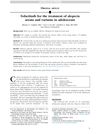
November 2016 in “Journal of the American Academy of Dermatology” In this retrospective review, tofacitinib treatment was associated with clinically significant hair regrowth in most adolescent patients with alopecia areata, though limitations suggest further studies are needed to confirm these findings.
June 2025 in “Journal of Drug Delivery Science and Technology” A dissolving microneedle patch with dutasteride offers effective, long-lasting hair loss treatment with fewer side effects.
 February 2025 in “International Journal of Cosmetic Science”
 This study found that treating hair with ATS, formed from fumaric acid and cysteamine, effectively improved hair quality by increasing moisture content and altering the internal structure of strong curls.
4 citations
,
January 2023 in “Journal of Clinical Investigation” This study identified a recurrent mutation in the endothelin receptor type A associated with mandibulofacial dysostosis with alopecia, and proposed a mechanism involving increased ligand affinity due to structural changes.
68 citations
,
August 2009 in “American Journal of Medical Genetics Part A” This study systematically reviewed clinical findings in trichothiodystrophy patients and suggested a new clinico-genetic classification to help better understand the ichthyotic phenotype and its management.

This study found that 23.2% of surveyed dermatologists in Saudi Arabia prescribe Tofacitinib for alopecia areata, with 72.4% reporting its effectiveness, while 47.7% cited unavailability as the main reason for not prescribing.