 8 citations
,
August 2013 in “Pediatric Dermatology”
8 citations
,
August 2013 in “Pediatric Dermatology” This article reviews loose anagen hair syndrome, an inheritable hair disorder affecting children and sometimes adults, but does not report any new clinical results.
 5 citations
,
January 2022 in “Journal of Clinical Medicine”
5 citations
,
January 2022 in “Journal of Clinical Medicine” This study observed that videodermoscopic assessments of dermatomyositis patients revealed specific vascular and pigmentary features, suggesting it may be useful for preliminary diagnosis.
 3 citations
,
April 2021 in “Revista da Sociedade Portuguesa de Dermatologia e Venereologia”
3 citations
,
April 2021 in “Revista da Sociedade Portuguesa de Dermatologia e Venereologia” This study reports that a third of patients with SARS-CoV-2 infection developed acute telogen effluvium within three weeks, highlighting a notable pattern of early hair loss following COVID-19.
 3 citations
,
September 2019 in “Skin appendage disorders”
3 citations
,
September 2019 in “Skin appendage disorders” This study found that females with frontal fibrosing alopecia had more preauricular lines than age-matched controls, indicating a potential new clinical marker for the condition.
 2 citations
,
May 2009 in “Hair transplant forum international”
2 citations
,
May 2009 in “Hair transplant forum international” This abstract discusses facial swelling as a temporary complication of hair transplantation and indicates that multiple prevention methods have been tested, but it reports no new results.
This study found no significant differences in iron metabolism-related or thyroid function parameters between women with chronic diffuse hair loss and healthy controls.
 January 2019 in “Applied Organometallic Chemistry”
 The compound (NH4)2Mn0.17Cu0.83Cl4.2H₂O has a specific structure, shows weak magnetism at low temperatures, and undergoes phase changes at high temperatures.
 October 2018 in “Annals of oncology”
 This study reported that topical BPM31543 was safe and well-tolerated for patients on taxane-based chemotherapy, with some efficacy indicated in reducing hair loss at all dosages tested.
August 2017 in “Journal of biotechnology” This review found that topical corticosteroids hold the highest level of evidence as a first-line treatment for pediatric alopecia areata, but further trials are needed to explore additional therapies.
 April 2017 in “Journal of evolution of medical and dental sciences”
 This study reports that polycystic ovary syndrome was the most common cause of hirsutism among Indian patients, with 70% of cases associated with this condition.
 131 citations
,
October 2004 in “Clinical Cancer Research”
131 citations
,
October 2004 in “Clinical Cancer Research” This study suggests that applying topical Tempol to the scalp before whole brain radiation may protect against radiation-induced alopecia and is safe and well-tolerated.
108 citations
,
October 2003 in “Journal of biological chemistry/The Journal of biological chemistry” This study documents that trichohyalin acts as a multi-functional cross-bridging protein in the inner root sheath of mouse hair follicles, enhancing mechanical strength by linking keratin filaments to the cell envelope.
 40 citations
,
April 2013 in “Dermato-endocrinology”
40 citations
,
April 2013 in “Dermato-endocrinology” In this study, researchers observed vitamin D insufficiency in many patients with Alopecia Areata, suggesting its potential role in managing this autoimmune condition.
10 citations
,
February 2022 in “Epidemiologia” This study reported that about one-third of post-COVID-19 patients experienced long-term symptoms, with women, older individuals, smokers, and those with specific blood groups at higher risk for complications.
 6 citations
,
January 2016 in “JAMA Dermatology”
6 citations
,
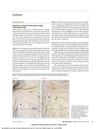
January 2016 in “JAMA Dermatology” This article discusses the presence of dirty dots as a normal trichoscopic finding in children, noting they are not observed in adults or other age groups, and reports no new results.
 September 1983 in “Journal of The American Academy of Dermatology”
 Experts discussed hair care, genetic hair defects, hair loss treatments, nail surgery, lupus treatments, skin infections, and cosmetic allergies.
 May 2024 in “International Journal of Advanced Multidisciplinary Research and Studies”
 In this cross-sectional study of COVID-19 positive patients in Bangladesh, researchers found that maculo-papular eruptions were the most common dermatological manifestation, with other prevalent conditions including chilblain-like eruptions, urticarial lesions, and petechiae/purpura.
October 2020 in “Indian journal of forensic medicine and toxicology” This review discusses the potential role of iron deficiency in chronic hair loss and reports no new results, highlighting the need for further research.
 February 2019 in “IP Indian journal of clinical and experimental dermatology”
 This study found that psychological stress significantly influences the onset and severity of alopecia areata, with atopic individuals more likely to develop severe forms like ophiasis.
 October 1961 in “Archives of Dermatology”
 This report describes a case of dermatitis herpetiformis where symptoms resolved with continuous sulfapyridine therapy after persisting despite other treatments.
99 citations
,
September 2007 in “The American journal of pathology” This study found that organ-cultured human scalp hair follicles can mimic chemotherapy-induced damage in vivo and serve as a model to explore molecular targets and protective agents for hair follicle preservation.

This article explores how natural and man-made factors shape architecture and environments for human activity in emergency situations, focusing on the unique conditions of the Republic of Kazakhstan. Results are not reported.
This conference report summarizes discussions from the first edition of COMEF 2023 in Formosa, focusing on medical ethics, education, and health, but provides no new research results.
 December 2022 in “Pakistan Journal of Medical and Health Sciences”
 This study found that Tofacitinib effectively improved hair regrowth in patients with Alopecia Areata, with most participants showing a significant change in their Severity of Alopecia Tool scores.
 April 2019 in “Sohag Medical Journal”
 This study found that androgenetic alopecia was the most common cause of hair loss among patients at Sohag University Hospital's hair clinic.
 January 2023 in “Skinmed”
 This chapter reviews management strategies for female pattern hair loss and provides guidance on treatment options, but it reports no new clinical findings.
 1514 citations
,
December 2011 in “Fertility and sterility”
1514 citations
,
December 2011 in “Fertility and sterility” This consensus report reviews current knowledge and identifies knowledge gaps concerning the various health aspects of polycystic ovary syndrome, without presenting new clinical findings.
 35 citations
,
June 2018 in “Urology”
35 citations
,
June 2018 in “Urology” This study of FAERS data suggests that finasteride, particularly at the 1 mg dosage, is associated with a wide range of adverse effects not previously established in long-term studies, especially among younger men.
 7 citations
,
October 2020 in “Dermatology practical & conceptual”
7 citations
,
October 2020 in “Dermatology practical & conceptual” This review discusses the potential risks associated with skin, hair, and nail supplements, highlighting concerns about safety, efficacy, and lack of regulation but reports no new clinical results.
1 citations
,
February 2023 in “Advancements in Homeopathic Research” This review highlights the limited evidence available for homeopathy in the treatment of alopecia areata, indicating the need for more rigorous studies.