August 2024 in “British Journal of Dermatology” The trial is ongoing, but researchers are evaluating the efficacy and safety of REZPEG, a potential new therapy for severe alopecia areata, which selectively expands regulatory T cells.
 March 2026 in “Dermatology Online Journal”
 Medicaid coverage for alopecia areata treatments is inconsistent and often limited.
3 citations
,
December 2022 in “The Neurologist” This report presents the first documented case of CARASIL in an Arabic patient and notes unique magnetic resonance spectroscopy findings compared to prior cases.
April 2025 in “Anais Brasileiros de Dermatologia” Abrocitinib effectively treats severe alopecia areata with significant improvement and no side effects.
232 citations
,
January 2002 in “Mechanisms of development” This study reports that the differential expression patterns of three retinaldehyde dehydrogenases suggest a regulated need for retinoic acid synthesis in various organs during late mouse organogenesis.
 128 citations
,
February 2016 in “British Journal of Dermatology”
128 citations
,
February 2016 in “British Journal of Dermatology” This study found that patients with alopecia areata experience significant impairments in health-related quality of life, notably affecting mental health, according to various quality of life assessment tools.
 5 citations
,
March 1985 in “Head & Neck Surgery”
5 citations
,
March 1985 in “Head & Neck Surgery” This review discusses the benefits and clinical considerations of incorporating alopecia reduction in hair transplantation, and it reports no new clinical results.
4 citations
,
June 2020 in “DOAJ (DOAJ: Directory of Open Access Journals)” This case report describes a 30-year-old woman diagnosed with both Rhupus and Rowell syndromes, and details her presentation and treatment plan, without reporting specific treatment outcomes.
 10 citations
,
February 2008 in “Photochemistry and photobiology”
10 citations
,
February 2008 in “Photochemistry and photobiology” This study suggests that the vitamin D receptor and hairless gene may directly regulate each other via a transcriptional mechanism, potentially explaining phenotypic similarities between atrichia and VDRRIIa rickets.
2 citations
,
December 2022 in “Archives of Dermatological Research” In this study, researchers developed a new classification system for anterior hairline types among Asian males without androgenetic alopecia, finding MM, RM, and ML to be the most common types.
November 2025 in “SKIN The Journal of Cutaneous Medicine” This study observed that adolescents with alopecia areata receiving ritlecitinib 50 mg daily showed notable hair regrowth over three years, as seen in both clinician- and patient-reported outcomes. However, the decreased number of participants at later stages limits the findings.
 January 2017 in “Journal of clinical & experimental dermatology research”
 This report describes a case of HAIR-AN syndrome in a young woman, characterized by acanthosis nigricans, insulin resistance, and polycystic ovaries, highlighting its rarity and multisystem nature.
 7 citations
,
August 2023 in “Journal of the American Academy of Dermatology”
7 citations
,
August 2023 in “Journal of the American Academy of Dermatology” This source reports that the approval of baricitinib and ritlecitinib, which are JAK inhibitors, has marked a significant advancement in treating severe alopecia areata (AA), and suggests that additional treatments with new mechanisms may further improve patient outcomes in the future.
2 citations
,
September 2024 in “Expert Opinion on Drug Metabolism & Toxicology” This review highlights Ritlecitinib as a promising new oral treatment for Alopecia Areata, emphasizing its targeted action and potential efficacy, especially in adults and adolescents, though it notes the need for further real-world effectiveness and long-term safety studies.
 December 2020 in “bioRxiv (Cold Spring Harbor Laboratory)”
 In this study, 25% of CCHCR1-deficient mice exposed to stress developed hair loss similar to human alopecia areata, suggesting CCHCR1 is a susceptibility gene for the disease.

In this study, the researchers reported that the optimized compound 39 demonstrated potent AR antagonism and favorable pharmacokinetics in a hair-growth mouse model, achieving similar efficacy to pyrilutamide with faster onset and preserved safety, offering promise for next-generation topical AR antagonist development.
June 2025 in “British Journal of Dermatology” This study details a case of a 20-year-old woman with APECED syndrome and alopecia areata who experienced complete scalp hair regrowth and improved quality of life after nine months of ruxolitinib treatment, highlighting the drug's effectiveness for severe AA linked to AIRE gene mutation.
November 2022 in “Molecular Pharmaceutics” This study found that intradermal injection of a cell-penetrating, AR-targeting asiRNA promoted hair growth and reduced androgen receptor expression in mouse models of androgenetic alopecia, suggesting its therapeutic potential.
 November 2025 in “SKIN The Journal of Cutaneous Medicine”
 In this phase 3 trial, baricitinib showed effectiveness and safety in both adolescents and adults with severe alopecia areata, with adolescents achieving higher response rates despite more severe baseline conditions, suggesting the advantages of early treatment.
This study found that the optimized AR antagonist candidate 39, in a hair-growth mouse model, achieved similar efficacy to pyrilutamide with faster onset and favorable safety, suggesting a promising approach for developing topical treatments with low systemic toxicity for androgenetic alopecia.
July 2026 in “Journal of Medicinal Chemistry” In this study, candidate compound 39 demonstrated potent androgen receptor antagonism and faster hair-growth efficacy in a mouse model compared to pyrilutamide, while maintaining favorable safety and pharmacokinetic profiles, suggesting potential for topical use in androgenic alopecia.
 15 citations
,
January 2010 in “Reproduction, Fertility and Development”
15 citations
,
January 2010 in “Reproduction, Fertility and Development” This study found that Han Chinese women carrying the rs6152A allele had a significantly higher risk of developing polycystic ovary syndrome compared to those with the rs6152GG genotype.
49 citations
,
February 2022 in “Drug Design Development and Therapy” This study found that treatment with ritlecitinib improved hair regrowth in alopecia areata patients, with many achieving significant results after 24 weeks compared to placebo.
November 2024 in “SKIN The Journal of Cutaneous Medicine” In this study, NH Asian alopecia areata patients reported the highest levels of severe disease, with NH White patients having the most eyebrow involvement and Hispanic patients showing the least severity.
 18 citations
,
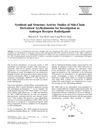
April 2001 in “Bioorganic & Medicinal Chemistry Letters”
18 citations
,
April 2001 in “Bioorganic & Medicinal Chemistry Letters” This study identified the N-(iodopropenyl) derivative 13 as a promising candidate for development as a radioiodinated androgen receptor ligand due to its binding affinity.
10 citations
,
April 2014 in “Molecular and Clinical Oncology” This case report describes a 46-year-old male whose alopecia areata preceded and resolved with treatment for stage IVB classical Hodgkin's lymphoma, highlighting AA as a potential indicator of underlying malignancy, although such cases are rare and not well-characterized.
September 2025 in “OPAL (Open@LaTrobe) (La Trobe University)” This study found that a chemically modified small-interfering RNA candidate, AR-27 E-Chol, effectively stimulated hair regrowth and reduced androgen receptor gene expression in a mouse model of androgenetic alopecia, indicating its potential as a novel therapeutic approach.
2 citations
,
August 2023 in “Aesthetic Surgery Journal” This study found that dynamic resilient hyaluronic acid fillers were effective and well-tolerated for correcting moderate-to-severe nasolabial folds in people of color, with improvements in wrinkle severity and fewer adverse events compared to non-people of color.
 2 citations
,
October 2022 in “The journal of investigative dermatology/Journal of investigative dermatology”
2 citations
,
October 2022 in “The journal of investigative dermatology/Journal of investigative dermatology” This study found that Aire‒/‒ mice spontaneously developed persistent AA-like lesions, highlighting a potential role for AIRE in hair follicle biology and pathogenesis of alopecia areata.
5 citations
,
January 2002 in “European journal of pediatrics” "D-CHRAMPS syndrome" is a newly identified condition with multiple severe symptoms.