1 citations
,
September 2024 in “Life” This study reports three cases of alopecia areata resistant to corticosteroids that improved after 16 weeks of treatment with a combination of fractional carbon dioxide laser and topical tacrolimus, suggesting a potential new therapeutic option that requires further confirmation.
July 2026 in “Journal of the American Academy of Dermatology” CRT is more effective than oral minoxidil alone for treating hair loss.
 March 2026 in “American Journal of Clinical Dermatology”
 In this study, ritlecitinib 50 mg produced clinically meaningful improvements in scalp hair regrowth over three years for patients aged 12 and older with severe alopecia areata, with 65.1% showing substantial hair regrowth and 31.2% achieving complete regrowth, while also maintaining a consistent safety profile.
July 2024 in “LA Referencia (Red Federada de Repositorios Institucionales de Publicaciones Científicas)” This study observed that while anomalous adipose tissue and displaced eccrine glands were common in certain types of scarring alopecia, these findings did not assist in diagnosis.
 April 2026 in “Inflammation and Regeneration”
 This study found that androgen inactivation pathways in scalp sebaceous glands change with age, specifically noting that AKR1C expression, including AKR1C4 previously thought liver-specific, declines with age and is sex dependent, which could impact hair follicle health during aging.
March 2023 in “SKIN The Journal of Cutaneous Medicine” This study observed that most patients with alopecia areata experienced sustained scalp hair regrowth after 48 weeks of ritlecitinib treatment, with safety consistent with prior findings.
15 citations
,
July 2009 in “Biomedical Chromatography” This study developed and validated a sensitive liquid chromatography–mass spectrometry method to measure aristolochic acid‐I in rat plasma, successfully applying it to pharmacokinetic research.
 28 citations
,
May 2020 in “BMC plant biology”
28 citations
,
May 2020 in “BMC plant biology” This study concluded that GLCAT14A-C genes are crucial for the function of glucuronic acid transfer to AGPs in Arabidopsis, affecting various growth and reproductive traits such as seed germination and root hair growth.
 1 citations
,
June 2023 in “American Journal of Clinical Dermatology”
1 citations
,
June 2023 in “American Journal of Clinical Dermatology” In two phase 3 clinical trials, this study found that adults with severe alopecia areata receiving baricitinib experienced significant hair regrowth on the scalp, eyebrows, and eyelashes over 36 weeks compared to placebo, although longer-term data are needed to fully assess benefits and risks.
 45 citations
,
August 2005 in “Bioorganic & medicinal chemistry”
45 citations
,
August 2005 in “Bioorganic & medicinal chemistry” This study found that novel androgen antagonists incorporating a carborane moiety showed anti-androgenic activity comparable to flutamide in a laboratory setting.
 April 2024 in “Journal of ethnopharmacology”
 This study demonstrated that ellagic acid promoted hair regrowth in a DHT-induced androgenic alopecia mouse model by inhibiting ferroptosis through the activation of the Wnt/β-catenin signaling pathway, suggesting its potential as a treatment for androgenic alopecia.
April 2023 in “Journal of Investigative Dermatology” This study found that overexpression of the lncRNA AL136131.3 may inhibit hair shaft growth and promote hair follicle apoptosis in androgenetic alopecia by influencing key metabolic pathways.
November 2023 in “Bioengineering” This study found that autologous micrografts using AMT® technology effectively improved symptoms and mobility in patients with early-stage knee osteoarthritis, demonstrating safety and potential benefits at 1- and 6-months post-procedure.
May 2025 in “OPAL (Open@LaTrobe) (La Trobe University)” This study found that tofacitinib may inhibit CD8+ T cell infiltration in alopecia areata by affecting the linoleic acid metabolism-Mg2+ pathway in a sodium sulfide-induced mouse model, highlighting new insights for clinical diagnosis and treatment strategies.
 January 2010 in “Yearbook of Endocrinology”
 Two new compounds can block androgen receptor activity in different ways and may lead to new treatments for androgen-related diseases.
11 citations
,
May 2018 in “Frontiers in plant science” This study found that overexpressing the PCaP2 protein in Arabidopsis enhanced drought tolerance by influencing ABA and SA signaling pathways and regulating root hair growth, suggesting a key role in water deficit response.
 May 2020 in “JAAD case reports”
 This source describes a previous case report that combined anthralin and calcipotriene to treat alopecia areata, showing promising results, but highlights that further research is needed to understand the mechanisms and potential benefits of this combination therapy.
 February 2026 in “Phycology”
 This review highlights the potential of microalgae as sustainable sources for nutraceuticals and cosmeceuticals, emphasizing their applications in functional foods, dietary supplements, and cosmetics for roles such as anti-aging and photoprotection in alignment with sustainability principles.
8 citations
,
June 1981 in “Clinica Chimica Acta” 76 citations
,
July 2009 in “Neuroscience” This study found that inhibiting allopregnanolone synthesis in late gestation fetal sheep increased apoptosis and dead cell count in the hippocampus and cerebellum, effects that were mitigated by alfaxalone co-infusion.
March 2025 in “NATIONS UNIVERSITY INTERNATIONAL JOURNAL OF MULTI-DISCIPLINARY STUDIES” This case report highlights that Baricitinib led to significant hair regrowth and resolution of atopic dermatitis symptoms in a 22-year-old female with coexisting autoimmune conditions.
January 2026 in “Journal of Ethnopharmacology” Cedrol promotes hair growth better than baricitinib by regulating immune cells.
September 2023 in “British Journal of Dermatology” In this study, researchers found that patients with severe alopecia areata show varied regrowth timelines with baricitinib, and those with the most severe cases may still experience delayed but eventual improvement.

This review explores the extraction, characterization, and skin cosmetic effects of phenolic compounds and pigments from marine macroalgae, highlighting their documented benefits for skin health, such as whitening, moisturizing, photoprotection, and anti-aging effects, without adverse health impacts.
 September 2021 in “Han'gug mi'saengmul saengmyeong gong haghoeji/Han-guk misaengmul saengmyeong gonghak hoeji”
 This study found that an ethanolic extract from the microalga Tetrathelmis tetrathele exhibited anti-inflammatory effects, promoted the proliferation of certain skin and hair cells, and inhibited 5α-reductase activity, suggesting its potential as a therapeutic agent for preventing alopecia and enhancing scalp health.
October 2025 in “Postgraduate Medical Journal” This study found that among various JAK inhibitors for severe alopecia areata, baricitinib_4 mg demonstrated significant efficacy with high precision, while deuruxolitinib_12 mg showed the best efficacy but with wider confidence intervals, providing clinicians valuable information for treatment selection.
 January 2017 in “Medeniyet medical journal”
 This study observed that men with early-onset androgenetic alopecia had increased carotid intima-media thickness and insulin resistance, suggesting a potential link to premature atherosclerosis.
5 citations
,
November 2023 in “Journal of Research in Medical Sciences” This study found that patients with AA who have more severe symptoms may have a higher risk of metabolic syndrome and arterial stiffness, suggesting a need for cardiometabolic disease screening.
 13 citations
,
January 2011 in “International Journal of Trichology”
13 citations
,
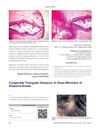
January 2011 in “International Journal of Trichology” CTA is often mistaken for AA but doesn't respond to steroids and may require hair transplantation.
This study mapped potential targets and pathways for baicalin's action in androgenic alopecia, suggesting it may inhibit 5α-reductase and serve as an effective treatment ingredient.