October 2025 in “Frontiers in Pharmacology” This review explores the immunopharmacological potential of A. lappa for inflammatory musculoskeletal disorders (IMSDs) but reports no new clinical results, emphasizing the need for standardized research methodologies.
36 citations
,
July 2022 in “Journal of Medicinal Chemistry” This review discusses various compounds targeting the androgen receptor, including recent developments in heterobifunctional degraders for prostate cancer treatment, but reports no new clinical results.
 1 citations
,
January 2006
1 citations
,
January 2006 This study found a positive association between bilateral diagonal earlobe crease and bilateral preauricular crease with coronary artery disease, with both creases together predicting the disease with 90% accuracy.
 February 2026 in “Veterinary Sciences”
 This study found that SPARC-overexpressing adipose-derived mesenchymal stem cells significantly improved various aspects of skin wound healing in dogs, including re-epithelialization, collagen deposition, and angiogenesis, showing promise for enhancing treatment effectiveness under different physiological and pathological conditions.
 24 citations
,
April 2007 in “European Journal of Pharmaceutics and Biopharmaceutics”
24 citations
,
April 2007 in “European Journal of Pharmaceutics and Biopharmaceutics” This study found that artocarpin delivered via alginate/chitosan microparticles effectively suppressed the growth of hamster flank organs compared to artocarpin in solution form, without significant systemic effects.
January 1979 in “Lucus: Boletín informativo de la Excelentísima Diputación Provincial de Lugo” This paper discusses the molecular basis of intestinal regeneration and highlights the potential role of echinoderms in enhancing regenerative biology research, but reports no new research findings.
5-ARI therapy may help prevent prostate cancer progression.
 1 citations
,
September 2023
1 citations
,
September 2023 In this study, autologous micrografting technology using auricular cartilage was reported to be safe and effective for improving knee function and reducing symptoms in patients with early-stage knee osteoarthritis over six months, but larger studies are needed to confirm these results.
 March 2026 in “Zenodo (CERN European Organization for Nuclear Research)”
 In this publication, independent scholar Jeffi Chao Hui Wu presents a comprehensive civilization archiving system spanning fourteen domains, highlighting innovative AGI limitations and physiological case reversals, published in ten languages and integrated into global academic infrastructures.
July 2026 in “Macromolecular Bioscience” In this study on wound healing, sulfated glycosaminoglycans from sturgeon cartilage enhanced fibroblast cell proliferation, migration, and collagen deposition, significantly accelerating wound closure and promoting re-epithelialization in both in vitro and in vivo tests.
January 2025 in “Buleria (Universidad de León)”  11 citations
,
August 2009 in “Expert Opinion on Drug Discovery”
11 citations
,
August 2009 in “Expert Opinion on Drug Discovery” This review discusses current challenges in selective androgen receptor modulator discovery and preclinical evaluation and reports no new results, emphasizing the need for basic research to improve safety and selectivity.
 March 2024 in “International journal of pharmaceutical and bio-medical science (Print)”
 This review examines Angelica sinensis and Chinese arborvitae, highlighting their historical and contemporary use in traditional Chinese medicine and pharmacology. It emphasizes the need for more comprehensive scientific assessments to fully explore their therapeutic potential.
3 citations
,
August 2024 in “The Journal of Cell Biology” This study demonstrated that in live rodents, actin filaments adjust their structure to facilitate membrane transfer between cellular compartments with different biophysical properties.
 6 citations
,
January 2013 in “Genetics and Molecular Research”
6 citations
,
January 2013 in “Genetics and Molecular Research” This study found that women with androgenetic alopecia demonstrated higher androgen receptor gene expression compared to controls, with a correlation found between higher AR expression and fewer CAG repeats in the AR gene.
 November 2023 in “The journal of investigative dermatology/Journal of investigative dermatology”
 This study found that engineered high-affinity soluble CD200R agonists, including ARQ-234, showed superior efficacy in reducing immune responses in various preclinical models of inflammatory conditions, suggesting potential as a therapeutic for atopic dermatitis and other related diseases.
January 2009 in “ScholarlyCommons (University of Pennsylvania)” This study provided the first X-ray crystal structure of the mammalian steroid hormone reductase AKR1D1 and identified a disease-related mutant, P133R, which may impact bile acid metabolism and cause clinical symptoms.
5 citations
,
December 2018 in “Frontiers in Endocrinology” This study found that nuclear androgen receptor expression was enhanced by dihydrotestosterone in rat gubernacular mesenchyme, but this did not affect muscle morphology or matrix composition during fetal development.
This study found that RXR and RAR proteins were detectable in normal human skin, suggesting they may play a role in epidermal cell differentiation and hair and gland physiology.
December 2025 in “Current Issues in Molecular Biology” In this systematic review, animal studies showed that cytarabine causes multi-organ toxicities, notably neurotoxicity, linked to oxidative stress and other mechanisms, though study quality raises concerns about reliability and translation to human outcomes.
![Synthesis, Biological Evaluation, and Molecular Docking of 4-Amino-2H-benzo[h]chromen-2-one Analogs Containing the Piperazine Moiety](/images/assets/2ecf4eed-7dbe-4f1a-83db-739625546cdd/small/31808.jpg) 7 citations
,
August 2019 in “Bioorganic & medicinal chemistry”
7 citations
,
August 2019 in “Bioorganic & medicinal chemistry” This study identified novel 4-Amino-2H-benzo[h]chromen-2-one analogs as potent androgen receptor antagonists that show strong antiproliferative activity against prostate cancer cells, suggesting them as potential lead compounds for therapy development.
October 2013 in “Revue de Chirurgie Orthopédique et Traumatologique”  February 2014 in “Plastic and Reconstructive Surgery”
 This abstract contains titles of organizations and publication names but reports no study results or findings.
 211 citations
,
May 2013 in “Journal of Nutrition Health & Aging”
211 citations
,
May 2013 in “Journal of Nutrition Health & Aging” This study found that while MK-0773 significantly increased lean body mass in sarcopenic frail elderly women, it did not significantly improve muscle strength or physical function compared to placebo.
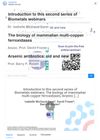
This research presentation explored the roles of mammalian multi-copper ferroxidases in iron homeostasis and highlighted new insights into their functions, including non-iron-related ones, while discussing arsenic's role in microbial warfare as a potential antibiotic.
 2 citations
,
November 2017 in “Elsevier eBooks”
2 citations
,
November 2017 in “Elsevier eBooks” This article discusses the role of the androgen receptor in regulating development and homeostasis, and reviews treatment approaches for conditions related to hormone imbalances, without reporting new clinical findings.
6 citations
,
December 2018 in “International Journal of Cosmetic Science” This study found that a highly resistant structure, located at the interface between the cuticle and cortex of human hair, acts as a penetration barrier, which the authors propose to name the "cuticle anchored resistant base" or CARB.
1 citations
,
August 2019 in “Journal of pediatric & adolescent gynecology” This report describes a novel AR gene mutation in a female patient, contributing to androgen insensitivity syndrome, and emphasizes its potential impact on genetic counseling.
27 citations
,
August 2008 in “Mayo Clinic proceedings” This review discusses the diagnosis, management, and treatment options for peripheral arterial disease and does not report new clinical findings; the authors emphasize the need for early diagnosis and comprehensive management.
32 citations
,
November 2020 in “UNC Libraries” This study identified a mutation in the steroid-binding domain of the androgen receptor gene associated with complete androgen insensitivity syndrome, impairing male sexual development due to altered androgen receptor protein function.