January 2020 in “Proyecto de investigación:” This study found a significant association between AGDAC measurements and the presence of PCOS, suggesting it could be an effective clinical tool in diagnosing the condition and its phenotypes, especially when combined with AMH.
September 2017 in “The journal of investigative dermatology. Symposium proceedings/The Journal of investigative dermatology symposium proceedings” This study emphasizes the genetic component of central centrifugal cicatricial alopecia, highlighting an atypical case involving an adolescent male within an African-American family.
 January 2024 in “Annals of Dermatology”
 This study found that DPCP immunotherapy effectively treats alopecia areata, identifying factors that influence treatment response and patient satisfaction, which may aid in standardizing the treatment for improved outcomes.
1 citations
,
August 2024 in “Skin Health and Disease” Among pediatric alopecia areata patients treated with DPCP, this study reported complete hair regrowth in 8.8% and any regrowth in 61.8% after one year, with better outcomes for those with milder initial symptoms and longer treatment durations.
19 citations
,
July 2022 in “PNAS Nexus” This study identified a shared gene signature in scarring alopecia subtypes, with increased mast cell presence, suggesting similar treatment approaches may be effective across these hair loss disorders.
 4 citations
,
November 2016 in “Journal of Cutaneous Pathology”
4 citations
,
November 2016 in “Journal of Cutaneous Pathology” This letter discusses three plasmacytoid dendritic cell-related parameters that may help differentiate lupus alopecia from lichen planopilaris, but it reports no new study results.
 November 2025 in “PubMed”
 This study identified nine pathogenic variants in the PADI3 gene, and variants in the S100A3 and TCHH genes, which may disrupt protein function and contribute to central centrifugal cicatricial alopecia.
 August 2023 in “JAAD international”
 This study, conducted at Montefiore Medical Center, reports that central centrifugal cicatricial alopecia predominantly affects middle-aged Black or African American women, often presenting without symptoms, which may delay diagnosis and treatment. The study underscores the need for a specific ICD-10 code for better epidemiological studies.
 September 2023 in “International Journal of Dermatology”
 In this study, FAPD was characterized in a Chinese population by perifollicular mast cell infiltration, suggesting young individuals may be at higher risk than previously thought.
 April 2019 in “The journal of investigative dermatology/Journal of investigative dermatology”
 In this study, researchers found that CCCA in women of African descent is associated with molecular changes, including dysregulation of fatty acid metabolism and fibrosis pathways, suggesting potential targets for new treatments.
5 citations
,
November 2023 in “Journal of Investigative Dermatology” People with primary cicatricial alopecia have a higher risk of heart disease and stroke.
 11 citations
,
March 2021 in “Dermatology and therapy”
11 citations
,
March 2021 in “Dermatology and therapy” This study developed the Alopecia Areata Patient Priority Outcome (AAPPO), a new tool designed to measure and capture the symptoms and impacts of alopecia areata that matter most to patients.
This review discusses central centrifugal cicatricial alopecia and emphasizes the need for more research to understand and manage the disease, while also suggesting initiatives like educating hairstylists for early detection.
 10 citations
,
January 2018 in “Postępy Dermatologii i Alergologii”
10 citations
,
January 2018 in “Postępy Dermatologii i Alergologii” This study found that 21 out of 39 patients with alopecia areata experienced more than 50% hair regrowth after six months of DPCP treatment, with better outcomes observed in those treated at 3-week intervals compared to weekly intervals.
 1 citations
,
April 2022 in “The Journal of Family Practice”
1 citations
,
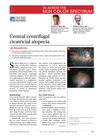
April 2022 in “The Journal of Family Practice” This report describes early and late stages of central centrifugal cicatricial alopecia in two Black women, highlighting progression from a small to a large central patch of hair loss.
24 citations
,
February 2011 in “The American journal of pathology” This study found that AIRE, a usually nuclear protein, is expressed in the cytoplasm of human epidermal and follicular keratinocytes and associates with the intermediate filament protein cytokeratin 17, potentially impacting ectodermal abnormalities in APECED syndrome.
 27 citations
,
September 2017 in “Journal of Investigative Dermatology Symposium Proceedings”
27 citations
,
September 2017 in “Journal of Investigative Dermatology Symposium Proceedings” This article discusses central centrifugal cicatricial alopecia, noting its prevalence in women of African descent and highlighting the need for further genetic research to improve treatment options; it reports no new clinical results.
December 2024 in “eCommons - AKU (Aga Khan University)” This study concluded that the platelet rich plasma injectable competency assessment tool (PICAT) demonstrated strong validity, internal consistency, and inter-rater reliability for evaluating dermatology residents at PNS Shifa Hospital.
 22 citations
,
November 2021 in “Dermatology and Therapy”
22 citations
,
November 2021 in “Dermatology and Therapy” This study found that the Alopecia Areata Patient Priority Outcomes questionnaire is a reliable and valid tool for measuring the severity and impact of hair loss in individuals with alopecia areata.
 20 citations
,
May 2016 in “Journal of Cutaneous Pathology”
20 citations
,
May 2016 in “Journal of Cutaneous Pathology” This study suggests that the presence and arrangement of plasmacytoid dendritic cells can help distinguish chronic cutaneous lupus erythematosus from other types of scarring alopecia.
 95 citations
,
February 2019 in “The New England Journal of Medicine”
95 citations
,
February 2019 in “The New England Journal of Medicine” This article discusses the potential genetic basis of central centrifugal cicatricial alopecia in women of African ancestry but does not provide new research results.
9 citations
,
October 2020 in “Journal of the American Academy of Dermatology” Patients with central centrifugal cicatricial alopecia may have a higher risk of breast and colorectal cancer.
 16 citations
,
February 2010 in “Journal of the European Academy of Dermatology and Venereology”
16 citations
,
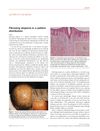
February 2010 in “Journal of the European Academy of Dermatology and Venereology” This article is a letter to the editor about fibrosing alopecia in a pattern distribution and reports no new research findings.
 45 citations
,
December 2014 in “Journal of the European Academy of Dermatology and Venereology”
45 citations
,
December 2014 in “Journal of the European Academy of Dermatology and Venereology” This study found that plasmacytoid dendritic cells are central to the pathogenesis of alopecia areata, suggesting they may help differentiate it from trichotillomania and androgenetic alopecia.
 7 citations
,
January 2018 in “Neurodegenerative Diseases”
7 citations
,
January 2018 in “Neurodegenerative Diseases” This study identified a new clinical variant of adult adrenomyeloneuropathy characterized by hypoplasia and agenesis of the corpus callosum, associated with a novel ABCD1 gene mutation.
 21 citations
,
June 2017 in “Journal of The American Academy of Dermatology”
21 citations
,
June 2017 in “Journal of The American Academy of Dermatology” This study reviewed existing articles to assess the efficacy of topical diphenylcyclopropenone immunotherapy for alopecia areata, but it did not report new clinical results.
12 citations
,
June 2015 in “Dermatology Reports” This study found that discoid lupus erythematous was the most common type of primary cicatricial alopecia, predominantly affecting middle-aged women.
 32 citations
,
November 2011 in “International Journal of Dermatology”
32 citations
,
November 2011 in “International Journal of Dermatology” This article reviews central centrifugal cicatricial alopecia, focusing on its multifactorial etiology and challenges in clinical diagnosis, and calls for more research and better treatment options.
 2 citations
,
June 2012 in “PubMed”
2 citations
,
June 2012 in “PubMed” This article reports three cases of African American men with central centrifugal cicatricial alopecia, highlighting the need to consider this diagnosis for male patients with vertex hair loss and scalp symptoms.
 28 citations
,
August 2018 in “Dermatologic Surgery”
28 citations
,
August 2018 in “Dermatologic Surgery” This abstract is a listing of affiliations and funding, with no new study or results reported.