2 citations
,
July 2023 in “International Journal of Clinical and Experimental Medicine Research” This study found that for thyroid cancer patients who underwent radical mastectomy, the combination of CAF regimen and fufangbanmao capsule improved short-term clinical efficacy, enhanced immune function, reduced drug toxicity, and positively impacted quality of life compared to the CAF regimen alone.
 February 2025 in “International Journal of Cosmetic Science”
 This study found that treating hair with ATS, formed from fumaric acid and cysteamine, effectively improved hair quality by increasing moisture content and altering the internal structure of strong curls.
October 2025 in “Biomolecules” This study found that prolonged intermittent fasting in diet-induced obese mice led to increased levels of inositol monophosphates in white adipose tissue, improved insulin sensitivity, and reduced body weight and fat mass, suggesting a novel metabolic adaptation mechanism.
 18 citations
,
June 2017 in “Journal of The American Academy of Dermatology”
18 citations
,
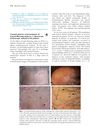
June 2017 in “Journal of The American Academy of Dermatology” In this study, trichoscopy consistently identified typical findings of frontal fibrosing alopecia, revealing three unusual clinical patterns in 18.4% of patients, which may aid in the differential diagnosis when clinical presentations are atypical.
March 2021 in “Arrow - TU Dublin (Technological University Dublin)” This study tested a folate-conjugate drug delivery system and found its cytotoxicity depends on whether the treated cells overexpress folate receptors, suggesting potential for targeted chemotherapy.
20 citations
,
January 2010 in “Biological Trace Element Research” 24 citations
,
June 2003 in “Journal of Structural Biology” This study suggests that varying intersheet interactions may explain the differences between the two polymorphic forms of macrofibril assembly in Merino wool and hair.
 April 2016 in “Journal of Investigative Dermatology”
 This study found that a newly developed peptide, FOL-005, significantly inhibited hair growth and counteracted minoxidil's effects in organ-cultured human male scalp skin and mouse models, without apparent toxicity.
 1 citations
,
January 2024 in “Journal of Cutaneous and Aesthetic Surgery”
1 citations
,
January 2024 in “Journal of Cutaneous and Aesthetic Surgery” This study found that treating patchy alopecia areata with fractional CO2 laser and topical triamcinolone acetonide was more effective and safer than intralesional triamcinolone, despite higher initial discomfort, as it resulted in greater patient satisfaction and fewer adverse effects like skin atrophy.
21 citations
,
March 2018 in “JEADV. Journal of the European Academy of Dermatology and Venereology/Journal of the European Academy of Dermatology and Venereology” This review reported that 5-alpha-reductase inhibitors were effective in stabilizing disease progression or reducing the rate of progression in some cases of frontal fibrosing alopecia, though evidence on safety remains limited.
 3 citations
,
July 2017 in “Journal of Molecular Graphics & Modelling”
3 citations
,
July 2017 in “Journal of Molecular Graphics & Modelling” This study analyzed the geometric and electronic properties of baicalin conformers, finding that BCLa2TT and BCLa1TT conformers exhibit high stability in aqueous solutions and are favorable for interactions with positively charged species.
 7 citations
,
January 2019 in “Australasian Journal of Dermatology”
7 citations
,
January 2019 in “Australasian Journal of Dermatology” In this study, the CYP 21A2 gene p.V281L mutation was associated with an increased susceptibility to familial frontal fibrosing alopecia, suggesting an antigen-driven mechanism linked to certain human leukocyte antigen haplotypes.
September 2015 in “OUKA (Osaka University Knowledge Archive) (Osaka University)” Poly(ethylene-co-vinyl alcohol) monoliths can be made using heat separation for various uses.
1 citations
,
September 2001 in “PubMed” This study found that the serine protease inhibitor ONO-3403 significantly suppressed tumor growth in mice with induced squamous cell carcinoma without apparent side effects, suggesting its potential for cancer treatment.
 1 citations
,
January 2025 in “RSC Advances”
1 citations
,
January 2025 in “RSC Advances” The researchers evaluated scientific data on the usage and pharmaceutical applications of ascorbic acid derivatives, such as ascorbyl-6-palmitate and ascorbyl-2-glucoside, highlighting their development into stable delivery platforms to overcome ascorbic acid's instability and formulation challenges.
5 citations
,
November 2015 in “Journal of Enzyme Inhibition and Medicinal Chemistry” This study found that aliphatic ester moieties in 16-formyl-17-methoxy dehydroepiandrosterone derivatives increased their potency as 5α-reductase type 2 inhibitors in vitro compared to finasteride.

This article discusses the features and increasing prevalence of frontal fibrosing alopecia, a type of scarring hair loss, and reports no new clinical results.
2 citations
,
August 2025 in “JAAD reviews.” This review discusses frontal fibrosing alopecia in males and reports no new clinical results, indicating a broader demographic affected by this inflammatory disorder beyond postmenopausal women.
August 2020 in “Benha Journal of Applied Sciences” This study observed that patients with androgenetic alopecia had significantly higher serum FABP4 levels compared to healthy controls, suggesting FABP4 may be involved in the condition's pathogenesis.
December 2015 in “Endocrinology and Metabolic Syndrome” This study observed that treatment with inositol, in various doses based on BMI, led to significant reductions in hair loss and symptoms of hyperandrogenism in patients with androgenetic alopecia.
 3 citations
,
September 2005 in “International Journal of Cosmetic Science”
3 citations
,
September 2005 in “International Journal of Cosmetic Science” This study found that monounsaturated oils like olive oil penetrate hair fibers effectively, whereas polyunsaturated oils typically do not penetrate beyond the cuticle.
 January 2026 in “Frontiers in Medicine”
 This article questions whether frontal fibrosing alopecia and fibrosing androgeneic patterned hair loss are overlapping conditions or stages of the same process, calling for further research to clarify their underlying factors.
1 citations
,
February 2023 in “Russian Journal of Bioorganic Chemistry” In an animal study, researchers observed that a newly synthesized deoxycholic acid derivative showed similar prostate protection effects to finasteride in Wistar rats while being less toxic.
 November 2023 in “Indian Dermatology Online Journal”
 This study found that tofacitinib was safe and effective for patients with severe or treatment-resistant alopecia areata, alopecia totalis, and alopecia universalis, resulting in significant hair regrowth for most participants.
 April 2024 in “JMR. Journal of molecular recognition/Journal of molecular recognition”
 This study found that hydrophilic carbon dots (Lys-CA-CDs) induced bovine serum albumin to form more wormlike fibrils, while inhibiting hen egg white lysozyme from forming hair-like fibrils.
4 citations
,
April 2019 in “DOAJ (DOAJ: Directory of Open Access Journals)” This review highlights available treatments for frontal fibrosing alopecia, noting that 5-alpha reductase inhibitors, intralesional steroids, and hydroxychloroquine currently have the most evidence supporting their use, while other treatments show variable results and require further study.
July 2019 in “Medical Science and Discovery” This study retrospectively analyzed 14 postmenopausal women with frontal fibrosing alopecia, noting that 57% experienced total eyebrow loss, and all received various steroid treatments, highlighting the importance of early diagnosis to potentially delay disease progression.
18 citations
,
August 2009 in “Skin Research and Technology” In this study, optical coherence tomography was used to produce 3D images of human hair, revealing that after chemical treatment with ammonium thioglycolate, the main hair structures were not identifiable due to damage.
92 citations
,
May 2004 in “Journal of Investigative Dermatology”  July 2026 in “Journal of Nanobiotechnology”
 This study describes a multifunctional hydrogel system designed to treat androgenetic alopecia by integrating nanozymes for reactive oxygen species clearance and melanin nano photothermal agents to enhance hair follicle health, suggesting potential for multi-target precision therapy and improved hair growth.