 7 citations
,
March 2024 in “Scientific Reports”
7 citations
,
March 2024 in “Scientific Reports” This study reports that the new neighborhood face index (NFI) demonstrates a remarkably high correlation with the physiochemical properties of benzenoid hydrocarbons, highlighting its potential as a predictive tool.
5 citations
,
May 1994 in “Facial plastic surgery clinics of North America” This article reviews the clinical characterization and potential treatments for androgenetic alopecia, highlighting minoxidil's efficacy in hair regrowth and noting the need for further genetic research; it reports no new clinical results.
 20 citations
,
February 2016 in “American Journal of Pathology”
20 citations
,
February 2016 in “American Journal of Pathology” This study indicates that the OVOL1-OVOL2 axis may play a significant role in hair follicle differentiation and growth, potentially serving as therapeutic targets for hair disorders like alopecia and in the tumorigenesis of pilomatricoma.
January 2002 in “HAL (Le Centre pour la Communication Scientifique Directe)” In this study, researchers characterized a dehydroepiandrosterone hydroxylating enzyme system in hair follicles similar to the liver monooxygenase system, noting its inhibition by carbon monoxide and its dependence on NADPH.
 19 citations
,
October 2018 in “Medicine”
19 citations
,
October 2018 in “Medicine” In this meta-analysis, researchers found that moxibustion combined with oriental herbal medicine may improve pregnancy rates and other outcomes in women with polycystic ovary syndrome compared to western medication alone; however, the evidence is limited by the poor quality of included studies.
1 citations
,
January 2003 in “Chinese Journal of Pharmaceuticals” This study developed a new synthetic route for finasteride that omits the costly reagent 2,2′ dipyridyl disulfide, achieving an overall yield of 16%.
 37 citations
,
January 2009 in “Sexual Development”
37 citations
,
January 2009 in “Sexual Development” This study found that chronic exposure to fadrozole or finasteride during frog development induced intersex individuals, which displayed different gene expression profiles depending on the chemical used.
 December 2023 in “Journal of materials chemistry. B”
 This study found that a nanoemulsion containing perfluorooctyl bromide effectively increased oxygen levels in an anoxic environment, enhancing hair dermal papilla cell growth and significantly promoting hair organ elongation.
12 citations
,
January 2023 in “AAPS PharmSciTech” August 2025 in “JOURNAL OF EXPERIMENTAL ZOOLOGY INDIA” This study reported that a spray containing Origanum marjoram essential oil significantly improved hair regrowth, dermal thickness, weight, and lymphocyte levels in rabbits with cyclophosphamide-induced alopecia, suggesting its potential as a natural alternative for hair loss treatment.
 January 2014 in “대한미용학회지”
 In this study, the researchers found that micronizing hinokitiol using supercritical carbon dioxide impacted its particle size, with increased temperature enlarging particles and increased pressure reducing them.
December 2015 in “OPAL (Open@LaTrobe) (La Trobe University)” This study found that minoxidil sulfate enhanced hair growth in CRF-OE mice, with increased hair growth scores observed at 2 and 4 weeks after treatment.
4 citations
,
January 2024 in “Therapeutic Advances in Reproductive Health” This study found significant correlations between old and new ultrasound devices for measuring NF and ovarian volume, being the first on the African continent to reassess ultrasound criteria for PCOS.
7 citations
,
July 2021 in “The Journal of Dermatology” This study in Asian females found that higher use of moisturizers and sunscreen among FFA patients may reflect appearance concerns rather than indicating a direct link to the disease mechanism.
 June 2024 in “Frontiers in pharmacology”
 This study found that a 2-deoxy-D-ribose gel stimulated hair follicle growth in mice with androgenic alopecia, showing effects similar to minoxidil without additional benefits from combining the two treatments.
 11 citations
,
October 2015 in “Clinical and Experimental Dermatology”
11 citations
,
October 2015 in “Clinical and Experimental Dermatology” This study found that an extract from the root of Sophora flavescens Aiton significantly improved hair growth in patients with androgenetic alopecia over 6 months.
 36 citations
,
October 2016 in “Bone”
36 citations
,
October 2016 in “Bone” This case report describes a male patient with aromatase deficiency, revealing that a c.628G>A mutation can lead to varied clinical features, such as low bone mass and normal metabolic profiles.
 November 2021 in “Pharmaceutical Sciences”
 This study found that the compound androstane-17-carboxamide 6 may serve as a lead for new drugs to treat BPH and prostate cancer by reducing the weight of androgen-dependent glands.
 December 2025 in “Zenodo (CERN European Organization for Nuclear Research)”
 This review addresses the use of anti-androgens in managing symptoms of polycystic ovary syndrome, noting both their clinical effectiveness and associated safety concerns, while highlighting the need for more research into their long-term safety and metabolic effects.
 April 2023 in “Journal of Investigative Dermatology”
 This study identified a new role for IL-4Ra-induced oxidative metabolism in wound macrophages, essential for balancing inflammatory response and promoting pro-fibrotic repair, suggesting a target for fibrosis prevention.
 22 citations
,
February 2002 in “Planta Medica”
22 citations
,
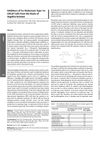
February 2002 in “Planta Medica” In this study, osthenol was identified as a highly potent inhibitor of 5alpha-reductase type I in LNCaP cells, significantly outperforming finasteride.
 April 2017 in “Journal of Investigative Dermatology”
 This study observed that using a 1064 nm Nd: YAG laser may stabilize hair loss and promote new growth in some females with frontal fibrosing alopecia, though individual results varied.
 7 citations
,
March 2018 in “Asian-Australasian journal of animal sciences”
7 citations
,
March 2018 in “Asian-Australasian journal of animal sciences” This study observed that the OCIAD2 and DCN genes in Liaoning cashmere goats have opposite effects on hair growth by interacting with the TGF-β signaling pathway, influencing follicle morphogenesis and periodic changes.
 September 2017 in “Journal of Investigative Dermatology”
 This study found that in AGA, the risk allele at locus 2q35 alters WNT10A expression through EBF1, suggesting a potential androgen-dependent regulatory mechanism.
 7 citations
,
February 2022 in “International Journal of Pharmaceutics”
7 citations
,
February 2022 in “International Journal of Pharmaceutics” In a mouse model of androgenetic alopecia, this study found that a safflower oil body nanoparticle loaded with human fibroblast growth factor 10 significantly improved hair regeneration and reduced associated microinflammation without significant toxicity.
 1 citations
,
September 2020 in “Pediatric Dermatology”
1 citations
,
September 2020 in “Pediatric Dermatology” In this case report, two adolescents developed androgenetic alopecia after treatment with anastrozole for idiopathic short stature, suggesting this potential side effect should be considered in pediatric patients using aromatase inhibitors.
3 citations
,
January 2015 in “Indian journal of paediatric dermatology” This case report describes an 18-month-old male with ichthyosis follicularis alopecia photophobia syndrome who experienced transient improvement in skin symptoms after oral isotretinoin treatment.
 February 2021 in “Cureus”
 In this case report, the authors describe a rare presentation of alopecia areata mimicking frontal fibrosing alopecia, emphasizing the diagnostic value of trichoscopy and the need to consider alopecia areata in differential diagnoses.
 August 2023 in “British journal of dermatology/British journal of dermatology, Supplement”
 This paper reviews three cases of traumatic anserine folliculosis in children, showing the condition's association with postural habits and potential improvement through posture correction and topical treatments.
31 citations
,
February 2007 in “Molecular Carcinogenesis” This study found that transgenic mice overexpressing human ATF3 showed hyperplastic and dysplastic changes in epithelial tissues, with a high incidence of oral cancer, suggesting potential oncogenic properties of ATF3.