July 2025 in “Journal of Ayurveda Case Reports” This case report describes a five-year-old boy with Alopecia Universalis who did not respond to allopathic treatments but showed significant hair regrowth after two months of Ayurveda therapies, suggesting their potential effectiveness for this condition.
 August 2021 in “International Journal of Research in Dermatology”
 This study observed that Amarantha hair oil contains β-sitosterol, which is suggested to promote hair growth.
8 citations
,
January 2013 in “International journal of trichology” This report details two cases of alopecia areata with unusual annular and circinate patterns, highlighting atypical morphology of the condition.
 July 2025 in “Journal of Ayurveda and Holistic medicine.”
 In this study, researchers reported significant improvements in hair follicle diameter, thickness, and reduced hair root gap after treating male pattern hair loss with a regimen of Prachanna, Chitrakadi lepa, and Jeevamrutham lehyam over four months.
January 2025 in “Sanjeevani Darshan National Journal of Ayurveda & Yoga” This source examines alopecia areata, an autoimmune condition causing patchy hair loss, describing the current reliance on corticosteroid injections despite their severe side effects, and explores Ayurvedic treatments identified as Shaman and Shodhan for managing an equivalent condition called Indralupta.
 December 2025 in “GARI International Journal of Multidisciplinary Research”
 This study examines Ayurvedic approaches to managing premature hair greying, highlighting the potential of herbal formulations, lifestyle interventions, and rejuvenative therapies as safe, sustainable alternatives, though more rigorous clinical trials are needed to validate these methods.
 April 2016 in “Journal of the American Academy of Dermatology”
 This study found that in a tertiary academic institution, nearly 1 in 5 dermatology consults were for drug-related skin reactions, with antibiotics frequently identified as the culprits.
September 2024 in “Journal of Ethnopharmacology” In this study, Terminalia bellirica extracts promoted hair regrowth in testosterone-induced AGA mice, possibly by inhibiting type II 5α-reductase activity and enhancing the MAPK signaling pathway.
 13 citations
,
January 2014 in “PubMed”
13 citations
,
January 2014 in “PubMed” In this study, A. capillus-veneris solution demonstrated potential to reduce hair loss and improve hair characteristics in a testosterone-induced alopecia mouse model.
April 2025 in “Mutiara Jurnal Penelitian dan Karya Ilmiah” In this study of Beauty and Aesthetics students, researchers found that using a hair tonic made from Green Spinach Leaves significantly reduced hair loss when applied weekly, compared to a control, but no significant difference was observed when increasing application to twice weekly.
October 2024 in “JURNAL ILMU KEFARMASIAN INDONESIA” This study found that the F6 formulation of a hair tonic containing EDS and ATG extracts produced the most significant hair growth in rabbits, without causing skin irritation and remaining stable throughout the observation period.
 June 2025 in “International Journal of Research and Review”
 This review concluded that Unani medicine offers a promising holistic approach to managing androgenetic alopecia by focusing on humoral balance and follicular rejuvenation, but further scientific validation is needed for widespread clinical use.
 1 citations
,
December 2022 in “Current Issues in Molecular Biology”
1 citations
,
December 2022 in “Current Issues in Molecular Biology” This study found that orally administered Annurca apple extract improved hair length, thickness, weight, and density in mice, while also increasing the expression of hair growth-related genes and proteins, suggesting potential as a natural treatment for hair loss.
January 2020 in “International Research Journal of Ayurveda & Yoga” This article discusses the Ayurvedic perspective on hair health, highlighting the role of aasthi dhatu nourishment and herbal treatments, but it reports no new clinical results.
 June 2026 in “Zenodo (CERN European Organization for Nuclear Research)”
 This study evaluated an Ayurvedic treatment protocol for Indralupta (similar to alopecia areata), finding significant clinical improvement with increased hair density and no adverse effects, suggesting it may be a safe, holistic alternative for managing alopecia areata.
 March 2025 in “Kerala Journal of Ayurveda”
 This case study demonstrated the successful use of Ayurvedic detoxification therapies and treatments in a 28-year-old female, leading to significant hair regrowth and reduced hair loss, offering a potential holistic approach for managing Alopecia Areata.
 April 2026 in “Zenodo (CERN European Organization for Nuclear Research)”
 In this case study, a female patient with alopecia areata experienced significant symptom reduction after Ayurvedic treatments including Nasya and Pracchanna karma, suggesting potential effectiveness of this approach for managing autoimmune hair disorders.
 1 citations
,
May 2023 in “AYUSHDHARA”
1 citations
,
May 2023 in “AYUSHDHARA” This study explores the Ayurvedic concept of Akala Palitya, or premature greying, noting that its incidence is rising due to modern lifestyle changes and environmental factors, particularly in tropical and developing countries.
 August 2025 in “BMJ Open”
 In this randomized controlled trial, researchers are assessing the efficacy and safety of acupoint catgut embedding combined with topical 5% minoxidil in treating androgenetic alopecia among 70 men, with primary outcomes focusing on changes in hair count after 24 weeks of treatment.
 January 2026 in “International Journal of Current Research and Review”
 This review of Adiantum capillus-veneris highlights its traditional medicinal uses, rich phytochemical profile, and broad range of pharmacological activities, but emphasizes the need for more research to validate and expand its therapeutic applications.
1 citations
,
June 2023 in “Journal of Natural Remedies” This case report describes an Ayurvedic treatment approach in a 48-year-old male with Alopecia Universalis, suggesting potential benefit through subjective assessments; however, detailed clinical results are not provided.
October 2017 in “Journal of Advanced Research in Ayurveda Yoga Unani Sidhha & Homeopathy” This article reviews Ayurvedic maastishkya therapies aimed at nurturing the head and sense organs, noting potential benefits for hair growth, skin health, and headache prevention but providing no new clinical results.
1 citations
,
January 2016 in “Dermatology Online Journal” This case report documents a rare instance of triangular temporal alopecia in an adult woman, emphasizing the importance of correct diagnosis to avoid unnecessary treatments, and reviews the literature on TTA.
 8 citations
,
October 2020 in “International Journal of Molecular Sciences”
8 citations
,
October 2020 in “International Journal of Molecular Sciences” This laboratory study found that nonanal, a plant scent compound, may stimulate growth factors and cell proliferation in human hair follicle dermal papilla cells, suggesting a cAMP-mediated mechanism.
 June 2026 in “Zenodo (CERN European Organization for Nuclear Research)”
 In this case report, a 23-year-old male with a circular alopecia patch in the beard, diagnosed as Dushivishajanya Indralupta in Ayurveda, showed significant improvement, including new hair growth, after 10 days of Ayurvedic Shamana and Shodhana therapies.
 April 2026 in “Zenodo (CERN European Organization for Nuclear Research)”
 In this case study, a female patient with alopecia areata experienced significant symptom reduction following Ayurvedic treatment, including Nasya and Pracchanna karma, suggesting potential benefits of Ayurveda for autoimmune hair disorders.
 September 2025 in “The health sciences AUS.”
 This review discusses the efficacy and safety of intralesional triamcinolone acetonide for treating acne keloidalis nuchae, highlighting its significant effectiveness with rare side effects when used properly.
 6 citations
,
February 2013 in “Veterinary Dermatology”
6 citations
,
February 2013 in “Veterinary Dermatology” This case report describes the first documented occurrence of pili torti in a healthy young adult cat, marked by noninflammatory and nonpruritic symmetrical multifocal alopecia.
 41 citations
,
December 2015 in “JAMA Dermatology”
41 citations
,
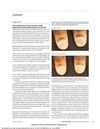
December 2015 in “JAMA Dermatology” Tofacitinib citrate improved nail dystrophy and pain in patients with alopecia universalis without causing side effects.
 January 2022 in “Journal of Cutaneous and Aesthetic Surgery”
 Using truncal anesthesia on the supraorbital nerve reduces pain in hair loss treatments and improves patient comfort.