 May 2021 in “Journal of the Endocrine Society”
 This case report highlights the importance of timely biochemical and radiographic evaluation of adrenal masses, as illustrated by a rapidly progressing aggressive adrenal cortical carcinoma.
1 citations
,
May 2025 in “Indian Dermatology Online Journal” This case report links sorafenib treatment in a 22-year-old man with relapsed acute myeloid leukemia to a rare instance of drug-induced pityriasis rubra pilaris-like eruption.
6 citations
,
October 2001 in “British Journal of Ophthalmology” This article discusses the potential of intralesional cidofovir for treating SCC without systemic toxicity, noting that surgical excision remains the best treatment option; it reports no new clinical results.
1 citations
,
October 2002 in “The Journal of Urology” This article describes the unusual anti-angiogenic effects of combined hormonal blockade but reports no new research findings.
 January 2011 in “Journal of The American Academy of Dermatology”
 A man developed a painful skin condition after multiple heart procedures involving radiation.
6 citations
,
June 2006 in “International Journal of Gynecological Pathology” This study reports that in a case of benign Brenner tumor, elevated androgens may originate from luteinized stromal cells, as these cells do not convert androgen to estrogen due to suppressed aromatase biosynthesis.
 August 2025 in “Endokrynologia Polska”
 A rare pancreatic tumor caused a woman's male-like features, treated successfully with surgery and medication.
4 citations
,
August 2002 in “British Journal of Ophthalmology” This study suggests that intralesional cidofovir might be a treatment option for SCC, as it showed a successful outcome without systemic toxicity in the reported case.
3 citations
,
April 2020 in “PubMed” This study found that DEB-BACE combined with systemic chemotherapy was more effective than chemotherapy alone for unresectable lung squamous cell carcinoma, reducing side effects and improving survival rates.
 26 citations
,
January 2014 in “Annals of Dermatology”
26 citations
,
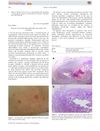
January 2014 in “Annals of Dermatology” This report describes a 33-year-old woman who developed alopecia neoplastica due to gastric adenocarcinoma, highlighting the role of tumor invasion in hair follicle atrophy.
 24 citations
,
November 1992 in “Journal of the American Academy of Dermatology”
24 citations
,
November 1992 in “Journal of the American Academy of Dermatology” This report on a case of cutaneous lymphomatoid granulomatosis underscores the pivotal role dermatologists have in its early diagnosis, which could potentially improve the otherwise poor prognosis.
13 citations
,
June 2008 in “International Journal of Dermatology” This case study reports a unique and severe papulopustular eruption, likely induced by sorafenib treatment in a patient with metastatic renal cancer, which manifested as hyperkeratotic spicules and improved with cessation of the drug.
4 citations
,
February 2018 in “World journal of surgical oncology” This case report describes a rare instance of renal cell carcinoma metastasizing to the ovary and early onset of alopecia after beginning sunitinib treatment, though hypothyroidism and dandruff complicate attribution to the drug.
August 2024 in “Case Reports in Ophthalmology” In this case report, researchers observed that local radiation therapy to the orbits may not be sufficient to halt progression of new retinal lesions in older patients, even when the disease initially appears confined to the intraocular space.
 April 2016 in “Journal of The American Academy of Dermatology”
 In this study, exposure to ARBs, ACE inhibitors, and thiazides was associated with an increased risk of various skin cancers, including melanoma and nonmelanoma types, highlighting potential clinical implications for antihypertensive treatment choices.
January 2015 in “프로그램북(구 초록집)” This case report describes an unusual instance of eruptive syringomas in a 25-year-old man, persisting for about 10 years, which is atypical given the patient's sex and the condition's usual presentation.
2 citations
,
January 2014 in “Journal of Cytology & Histology” In a mouse model, this study found that LAM/TSC cells invaded the uterus and increased angiogenesis, while anti-EGFR antibody and rapamycin effectively reduced cell presence and blood vessel proliferation.
24 citations
,
February 1986 in “Cancer” In this case study, a man with necrolytic migratory erythema and a glucagonoma experienced decreased plasma glucagon levels and reduced metastases after treatment with dimethyltriazenoimidazole carboxamide.
May 2024 in “Anais Brasileiros de Dermatologia” This abstract discusses how a nevus may cause an interruption in tattoo pigment, with no new research findings reported.
 16 citations
,
January 2017 in “Archives of Medical Science”
16 citations
,
January 2017 in “Archives of Medical Science” This study found that adjuvant sorafenib after hepatic resection improved overall survival in patients with intermediate and advanced hepatocellular carcinoma, compared to surgery only.
 7 citations
,
February 2004 in “Clinical and Experimental Ophthalmology”
7 citations
,
February 2004 in “Clinical and Experimental Ophthalmology” This case report details a 65-year-old woman who developed malignant melanoma in her right eye socket following previous eye trauma, treated by orbital exenteration.
 5 citations
,
August 2014 in “Australasian journal of dermatology”
5 citations
,
August 2014 in “Australasian journal of dermatology” This article discusses a case of delayed onset perforating folliculitis linked to the use of sorafenib, but it reports no new clinical results.
5 citations
,
July 2014 in “Respirology Case Reports” This case report describes a woman diagnosed with paraneoplastic autoimmune multiorgan syndrome associated with Castleman's disease, leading to constrictive bronchiolitis and multiple organ involvement despite corticosteroid treatment.
 May 2021 in “Journal of the Endocrine Society”
 This case report describes a 48-year-old woman with a history of PCOS and chemotherapy-induced menopause who was found to have a rare ovarian steroid cell tumor causing postmenopausal hyperandrogenism.
14 citations
,
August 2017 in “International Journal of Immunopathology and Pharmacology” This case report describes a patient with painful skin lesions during sorafenib treatment whose symptoms improved after receiving photodynamic therapy, suggesting it might help manage similar refractory skin toxicity cases.
June 2022 in “Mayo Clinic Proceedings” This case report describes a 69-year-old man diagnosed with stage 3 acute kidney injury secondary to new IgG kappa light chain multiple myeloma, where treatment with bortezomib-based therapy showed potential for kidney function salvage.
 February 2025 in “Pediatric Dermatology”
 This study suggests that permanent chemotherapy-induced alopecia can occur in pediatric patients with Ewing's sarcoma and that treatments like minoxidil could be beneficial, though may not lead to full hair regrowth.
5 citations
,
January 2016 in “International Journal of Trichology” This case report describes two patients who experienced loose anagen hairs and pili torti, resulting in nonscarring alopecia, potentially linked to erlotinib treatment for solid tumors.
41 citations
,
July 2016 in “Radiation Research” This study found that radiation-induced salivary gland dysfunction in mice involves microvascular damage mediated by ceramide and reactive oxygen species, suggesting ROS scavengers could protect salivary function during radiotherapy for head and neck cancer.