January 2022 in “International Journal of Clinical Oncology and Cancer Research” This case report discusses a 60-year-old woman diagnosed with Castleman’s disease and associated POEMS syndrome, emphasizing early diagnosis and treatment, including the beneficial role of histology, lymph node excision, and steroid therapy.
April 2026 in “UNC Libraries” This case report describes a 49-year-old woman with metastatic adrenocortical carcinoma in the liver who experienced an abscopal effect after pulse electric field ablation, with PET/CT imaging showing complete resolution of three untreated lesions two months post-treatment.
 1 citations
,
June 2023 in “Advances in therapy”
1 citations
,
June 2023 in “Advances in therapy” In a real-world registry study, ripretinib showed effectiveness with a median progression-free survival of 7.70 months and a tolerable safety profile in Chinese patients using it as a fourth-line treatment for advanced GIST, particularly benefiting those with non-gastric tumors.
10 citations
,
December 2011 in “PubMed” In this reported case of SAPHO syndrome, methotrexate treatment led to significant clinical improvement after other treatments for skin lesions and arthritis proved less effective.
8 citations
,
October 2021 in “Journal of Mind and Medical Sciences” This review emphasizes the importance of identifying and modifying patient-related risk factors to reduce morbidity and mortality after gastric cancer surgeries but presents no new clinical findings.
 9 citations
,
November 2018 in “Acta Clinica Belgica”
9 citations
,
November 2018 in “Acta Clinica Belgica” This case report suggests that spironolactone may induce prostate cancer proliferation in patients on abiraterone acetate, advising against its use for managing treatment-associated side effects in these individuals.
 July 2024 in “JAAD Case Reports”
 This study reports two cases of central serous chorioretinopathy developing after intralesional corticosteroid injections to the scalp for alopecia areata, suggesting a potential association that warrants cautious use and monitoring for ocular complications.
March 2022 in “JAAD case reports” A man had a non-cancerous, fast-growing skin lump on his arm that was removed with surgery.
 4 citations
,
March 2023 in “Journal of controlled release”
4 citations
,
March 2023 in “Journal of controlled release” This study reports that a novel bioabsorbable nano-micelle hybridized hydrogel scaffold may reduce postoperative melanoma recurrence and mitigate the side effects of doxorubicin in mouse models.
294 citations
,
March 2016 in “European journal of cancer” This study found that neoadjuvant chemotherapy followed by interval debulking surgery led to better quality of life and lower perioperative morbidity compared to primary debulking surgery in advanced epithelial ovarian cancer patients with high tumor load.
2 citations
,
August 2008 in “Oncotarget” In this study, intravital microscopy in live mice showed that apoptosis in hair follicle regression may be driven by apoptotic cells inducing neighboring cell death, with stem cells likely providing a pro-survival signal.
March 2021 in “Der Hautarzt” This review covers the clinical features, pathophysiology, differential diagnoses, and therapeutic options for neuroendocrine paraneoplastic syndromes affecting the skin but reports no new clinical findings.
 5 citations
,
January 2013 in “Journal der Deutschen Dermatologischen Gesellschaft”
5 citations
,
January 2013 in “Journal der Deutschen Dermatologischen Gesellschaft” The document concludes that individualized treatment for malignant epithelial tumors is necessary and more research on metastatic squamous cell carcinoma treatments is needed.
 July 2014 in “Plastic and Reconstructive Surgery”
 Sentinel lymph node biopsy is recommended for all types of desmoplastic melanoma due to higher rates of nodal metastasis.
 July 2014 in “Plastic and Reconstructive Surgery”
 Sentinel lymph node biopsy is recommended for all types of desmoplastic melanoma due to higher rates of nodal metastasis.
May 1961 in “Tumori Journal” This study found that vitamin A treatment in rats reduced hyperplastic-dysplastic changes and sebaceous gland hypertrophy associated with 3,4-benzpyrene-induced tumors.
 16 citations
,
August 2011 in “Annals of Allergy Asthma & Immunology”
16 citations
,
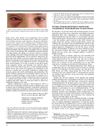
August 2011 in “Annals of Allergy Asthma & Immunology” This report describes a case of a 19-year-old woman experiencing severe recurrent angioedema with airway issues, leading to multiple emergency visits and unsuccessful treatment with typical steroid-sparing agents.
 5 citations
,
January 2017 in “Acta Endocrinologica”
5 citations
,
January 2017 in “Acta Endocrinologica” This case report discusses a postmenopausal woman whose hyperandrogenism and metabolic symptoms improved significantly after the surgical removal of an ovarian Leydig cell tumor, confirmed post-operatively.
June 2003 in “Clinical orthopaedics and related research” This case study reports a rare instance of Majocchi's granuloma caused by Candida, highlighting the patient's diabetes mellitus and kidney transplant as predisposing factors for the infection.
 1 citations
,
January 2019 in “Medical principles and practice”
1 citations
,
January 2019 in “Medical principles and practice” This case report describes a 17-year-old boy with alopecia areata who had vitamin D deficiency and an incidentally discovered adrenal ganglioneuroma, with alopecia receding after vitamin D supplementation but later recurring despite normalized vitamin D and no tumor return.
8 citations
,
January 2024 in “Journal of Materials Chemistry B” In this study, acellular dermal matrix hydrogels significantly improved healing in a rat model of radiation-induced skin injury by promoting angiogenesis and modulating inflammation, suggesting potential as a novel treatment for this common radiotherapy complication.
 5 citations
,
November 2001 in “PubMed”
5 citations
,
November 2001 in “PubMed” This case report describes an 80-year-old woman with severe androgenic alopecia linked to Leydig cell hyperplasia in an ovarian cyst, highlighting the need to investigate androgen-secreting tumors in similar cases.
4 citations
,
October 2013 in “PLoS ONE” This study found that Vemurafenib led to a broad range of cutaneous side effects in nearly all patients with advanced melanoma, highlighting the need for regular dermatologic management and UV protection.
 19 citations
,
October 2008 in “Journal der Deutschen Dermatologischen Gesellschaft”
19 citations
,
October 2008 in “Journal der Deutschen Dermatologischen Gesellschaft” This article reviews the cutaneous reactions and characteristic skin changes associated with chemotherapy, radiation therapy, and new targeted cancer treatments, reporting no new clinical results.
6 citations
,
March 2021 in “Frontiers in surgery” This case report describes a 64-year-old woman with hirsutism who was found to have a borderline adrenocortical oncocytoma, successfully treated with adrenalectomy.
 4 citations
,
May 2021 in “The American Journal of Surgical Pathology”
4 citations
,
May 2021 in “The American Journal of Surgical Pathology” This study suggests that cutaneous lymphadenoma is a distinct benign lymphoepithelial tumor characterized by androgen receptor expression, hair follicle stem cell markers, and common EGFR gene mutations.
 9 citations
,
July 2022 in “EMBO molecular medicine”
9 citations
,
July 2022 in “EMBO molecular medicine” This study found that targeting IL-6, IL-1, and CCR6 signaling pathways may effectively reduce irradiation-induced alopecia and dermatitis in radiotherapy patients.
 54 citations
,
April 2020 in “Experimental & Molecular Medicine”
54 citations
,
April 2020 in “Experimental & Molecular Medicine” This review discusses the origins of skin and esophageal cancers and reports no clinical results; it emphasizes the role of cyclooxygenase-2 in tumorigenesis and differentiation.
 February 2008 in “Vlaams dierengeneeskundig tijdschrift”
 In this case report, a pancreatic adenocarcinoma with liver and omentum metastases was found in a cat, whose clinical signs included anorexia, diarrhea, lethargy, and non-pruritic glistening alopecia.
 November 2025 in “Archiv für Pathologische Anatomie und Physiologie und für Klinische Medicin”
 This study examined 16 sporadic trichoblastic tumors and found that although one showed malignant transformation, clinical follow-up revealed no residual or metastatic disease. RNA sequencing indicated a high tumor mutational burden and absence of a UV-related signature, helping to distinguish these tumors from similar growths.