 40 citations
,
February 2013 in “American Journal of Clinical Dermatology”
40 citations
,
February 2013 in “American Journal of Clinical Dermatology” This study found that people with androgenic alopecia, particularly women, are more prone to anxiety and depression, often adopting avoidant coping strategies, which are linked to emotional and psychological impacts rather than clinical severity.
 February 2026 in “JOURNAL OF CLINICAL AND DIAGNOSTIC RESEARCH”
 This study observed that white dots, focal atrichia, and honeycomb pigmentation on the scalp were significantly associated with the severity of androgenetic alopecia in men under forty.
November 2025 in “OPAL (Open@LaTrobe) (La Trobe University)” This study found that the leaf extract of Tectona grandis and its major bioactive constituents moderately inhibit the 5α-reductase enzyme, which is linked to androgenetic alopecia, and also possess anti-inflammatory properties, showing promise as dual-action candidates for managing this condition.
 11 citations
,
August 2018 in “Medicine”
11 citations
,
August 2018 in “Medicine” This study found that college students with androgenetic alopecia exhibited higher levels of various psychological symptoms compared to those without AGA, with medical and art students showing particularly elevated symptoms.
November 2025 in “OPAL (Open@LaTrobe) (La Trobe University)” This study found that patients with androgenetic alopecia experience significantly higher symptoms of anxiety, depression, stress, and body image dissatisfaction compared to non-AGA controls, along with generally reduced self-esteem and life satisfaction.
46 citations
,
September 2002 in “Journal of the European Academy of Dermatology and Venereology” In this study, depression was more common among women with androgenetic alopecia, while men showed higher levels of anxiety, aggressiveness, and a lack of adherence to treatment.
This study found that 54% of participants with androgenetic alopecia using Ricapil® showed clinical signs of hair follicle reactivation and initial hair regrowth over three months.
 August 2025 in “Current Botany”
 This study suggests that Acrotrema arnottianum, a herb used in traditional medicine, contains biologically active metabolites like squalene and α-Tocopherol. It showed antibacterial effects against Staphylococcus aureus and antifungal properties against Candida albicans, while demonstrating antioxidant activity.
 1 citations
,
May 2016 in “Dermatologic Surgery”
1 citations
,
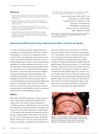
May 2016 in “Dermatologic Surgery” The document concludes that using a phototrichogram with a protractor and tapeline is a reliable and noninvasive way to measure hair loss.
July 2022 in “DOAJ (DOAJ: Directory of Open Access Journals)” This article reviews various aspects of androgenetic alopecia, from its historical perceptions to current understanding and treatments, without providing new clinical results.
 118 citations
,
July 2005 in “Journal of Ethnopharmacology”
118 citations
,
July 2005 in “Journal of Ethnopharmacology” In this study, the aqueous extract of Eclipta alba and its hydrolyzed fraction showed nootropic activity and reduced stress-induced alterations in rats.
This study found that the Padina arborescens extract and its component MOGG may prevent hair loss by inhibiting 5α-reductase activity, promoting cell proliferation, opening the KATP channel, and increasing PGE2 production in laboratory settings.
January 2021 in “Brazilian Journal of Development” This study found that women with androgenic alopecia in Patos, Brazil, experienced significant psychological and social impacts, including feelings of frustration, low self-esteem, and social withdrawal.
 10 citations
,
June 2021 in “Primates”
10 citations
,
June 2021 in “Primates” This study found that wild geladas in Ethiopian crop areas experienced higher levels of human disturbance and health issues, such as increased parasitic infections, compared to those in pasture areas.
 2 citations
,
January 2025 in “Pharmaceutical Research”
2 citations
,
January 2025 in “Pharmaceutical Research” This article reviews the possible therapeutic activities of Angelica gigas Nakai root extracts and their components, noting their potential effects on neuro-cognitive, metabolic, and other health conditions, and reports no new clinical results.
Recognizing bamboo hair helps diagnose Netherton’s syndrome.

This review reports that extracts from the plant Eclipta alba, traditionally used in herbal medicine, may promote hair growth by inhibiting TGF-β1 expression and functioning as a 5α-reductase inhibitor, potentially benefiting androgenic alopecia treatment.
This study revealed that Thai youths who are more worried about androgenetic alopecia tend to experience higher severity of the condition, poorer quality of life, and increased use of multiple hair styling products.

This study of androgenic alopecia patients reports that stress was associated with AGA in both men and women, with notable findings differing by gender, age, and AGA type.
 7 citations
,
January 2019 in “Brazilian Journal of Pharmaceutical Sciences”
7 citations
,
January 2019 in “Brazilian Journal of Pharmaceutical Sciences” This study found that Adiantum capillus-veneris extract exhibited significant antidepressant and anti-anxiety effects in rats, likely due to its antioxidant and anti-inflammatory properties.
 September 2023 in “Journal of the European Academy of Dermatology and Venereology”
 This letter discusses the potential of the "Gabrin sign" as an indicator for identifying high-risk COVID-19 patients with androgenic alopecia, yet no specific results are detailed in the text.
November 2021 in “International Journal of Trichology” This study found that trichoscopy can confirm the diagnosis and assess the clinical severity of female androgenetic alopecia, correlating specific features with different severity grades.
November 2024 in “DELOS Desarrollo Local Sostenible” In this study, researchers observed that Thunbergia grandiflora and Russelia equisetiformis exhibited mutual aid by altering their phenotypic characteristics to facilitate intertwining, suggesting a form of solidarity without apparent external threats.
 9 citations
,
January 2013 in “Case reports in emergency medicine”
9 citations
,
January 2013 in “Case reports in emergency medicine” This case study reports that Citrullus colocynthis can cause severe gastrointestinal symptoms, including rectorrhagia and mucosal erosion, highlighting the need for awareness of its potential side effects.
 4 citations
,
February 2020 in “Journal of Cosmetic Dermatology”
4 citations
,
February 2020 in “Journal of Cosmetic Dermatology” This study found that androgenetic alopecia was the most common cause of frontal hairline recession in Egyptian female patients, supporting the use of trichoscopy as a noninvasive diagnostic tool.
 4 citations
,
September 2018 in “Rendiconti lincei. Scienze fisiche e naturali”
4 citations
,
September 2018 in “Rendiconti lincei. Scienze fisiche e naturali” This study concluded that spikenard specimens in Renaissance Italian herbaria are attributed to Nardostachys jatamansi, a plant used in traditional medicine and cosmetics.
4 citations
,
October 2001 in “Mycoses” This case report describes a rare instance of dermatophytosis in a young cat caused by Microsporum gypseum, confirmed by molecular analyses to be Arthroderma gypseum.
 2 citations
,
January 1997 in “Archives of Dermatology”
2 citations
,
January 1997 in “Archives of Dermatology” This retrospective study of 1604 alopecia areata cases reported 13 instances of a potentially new hair regrowth pattern, termed the "androgenetic-like pattern".
 June 2026 in “Indian Journal of Dermatology Venereology and Leprology”
 In this study, researchers found significant associations between trichoscopic features and the severity of androgenetic alopecia in Korean participants, suggesting trichoscopy as a useful tool for early detection and monitoring by identifying indicators like vellus hairs and follicular unit changes.
March 2023 in “Italian journal of dermatology and venereology”