 July 2026 in “Zenodo (CERN European Organization for Nuclear Research)”
 In this study, in silico analysis identified Saponin Re and Emodin as promising candidates for topical treatment of androgenetic alopecia, with Biochanin A having the most favorable safety profile among the tested compounds.
 14 citations
,
March 2019 in “Plant methods”
14 citations
,
March 2019 in “Plant methods” This study introduced a new adaptive microrhizotron for non-destructive observation of pepper root traits, finding that specific installation patterns significantly enhanced root interception probability while effectively measuring root architecture for plant research.
This study involved using smartphone applications and low-cost trichoscopy devices to assess various hair and scalp conditions, with diagnoses confirmed through detailed imaging during remote consultations and in-person evaluations.
 1 citations
,
January 2015 in “Springer eBooks”
1 citations
,
January 2015 in “Springer eBooks” AGA is a common hair loss disorder, and early diagnosis and treatment with minoxidil or finasteride can help reduce emotional distress.
5 citations
,
April 2022 in “Egyptian Journal of Chemistry” This study found that a subfraction from Sansevieria trifasciata showed higher hair growth activity than other fractions in tests on rabbits.
August 2004 in “Veterinary Dermatology” This case report describes two guinea pigs infested with Acarus farris mites, which were successfully treated with Phoxim and removal of contaminated hay, leading to rapid resolution of skin lesions and alopecia.
 May 2024 in “FEBS open bio”
 In this study, testing Annurca apple extract on human follicle dermal papilla cells indicated its potential to prevent patterned hair loss by reducing oxidative stress and increasing factors involved in hair growth.
 28 citations
,
August 2011 in “Journal of The American Academy of Dermatology”
28 citations
,
August 2011 in “Journal of The American Academy of Dermatology” This study found that men with early-onset androgenetic alopecia had significantly larger prostate volumes and lower urinary flow rates compared to healthy controls, suggesting a possible link between AGA and prostate-related urinary symptoms.
 June 2023 in “Journal of General Procedural Dermatology and Venereology Indonesia”
 This study explores the risk factors for androgenetic alopecia in women residing in Pasar Ambacang Sub-district, Padang City, emphasizing its potential impact on their quality of life and psychological well-being.
1 citations
,
January 2004 in “Journal of Clinical Dermatology” This study found that a high proportion of androgenetic alopecia patients were young individuals with mild types, potentially due to psychological stress in social situations.
January 2026 in “Surgical & Cosmetic Dermatology”  January 2009 in “대한피부과학회지”
 In this study, researchers found that stress is linked to androgenic alopecia in both male and female patients, with an increasing number of female patients in their forties experiencing the condition.
 2 citations
,
August 2010 in “Journal of Scientific Research”
2 citations
,
August 2010 in “Journal of Scientific Research” This study provides detailed macro and microscopical observations of Tridax procumbens Linn. leaf, which could aid in its identification.
1 citations
,
January 2019 This study found that a hair tonic combining fragrant pandan and celery extracts increased hair length in guinea pigs, with the 1:5 concentration showing the best growth activity.
November 2025 in “ACS Omega” This study found that compounds from *Tectona grandis* leaves showed moderate inhibition of steroid 5α-reductase, a factor in androgenetic alopecia, and exhibited anti-inflammatory properties by inhibiting nitric oxide and pro-inflammatory cytokines IL-1β and IL-6 in vitro, suggesting potential dual-action benefits for AGA management.
September 2023 in “Zenodo (CERN European Organization for Nuclear Research)” This source compiles information on Calotropis gigantea, an Asclepiadaceae plant used in traditional medicine for treating conditions like leprosy, asthma, vertigo, and hair loss, highlighting its diverse medicinal potential.
 November 2025 in “Frontiers in Psychiatry”
 This study found that individuals with androgenetic alopecia experience significantly higher symptoms of anxiety, depression, and stress compared to controls, along with reduced self-esteem and life satisfaction, highlighting the importance of addressing psychological well-being in clinical treatments.
May 2026 in “Phytomedicine”  April 2023 in “Our Dermatology Online”
 Trichoscopy is effective in diagnosing trichotillomania by showing specific hair patterns.
August 2024 in “Journal of Ayurveda and Holistic medicine.” This review study reports that while Bharangi, a traditional Indian medicinal shrub, is used for various conditions like asthma and epilepsy, it has been clinically underexplored and could benefit from scientific validation for broader use.
 March 2024 in “Journal of clinical medicine”
 This study examined trichoscopic findings in androgenetic alopecia, reporting that hair diameter variability, vellus hairs, and the peripilar sign are valuable indicators for diagnosing this condition.
 1 citations
,
January 2018 in “Acta dermato-venereologica”
1 citations
,
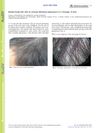
January 2018 in “Acta dermato-venereologica” A teenager's hair with alternating white and dark bands, known as Pili annulati, is a genetic condition that is usually harmless and often considered attractive.
 June 2026 in “EXPERIMENTAL & CLINICAL MEDICINE GEORGIA”
 In this study, researchers found a positive correlation between trichoscopic features and histomorphological findings, supporting trichoscopy as a valuable tool for assessing androgenetic alopecia severity and monitoring treatment outcomes.
 7 citations
,
July 2018 in “Biological & Pharmaceutical Bulletin”
7 citations
,
July 2018 in “Biological & Pharmaceutical Bulletin” This study found that Phyllanthus urinaria extract displayed significant anti-alopecia properties in a mouse model, showing potential as an anti-5α-reductase agent for androgenic hair loss.
 February 2024 in “Benha Journal of Applied Sciences”
 This article reviews the current understanding, clinical features, diagnostic tests, and treatment options for androgenetic alopecia and reports no new clinical results.
7 citations
,
January 2013 in “Egyptian Journal of Dermatology and Venereology” This study found that male patients with androgenetic alopecia had significantly higher aldosterone levels and blood pressure compared to controls, suggesting a possible link between AGA and hypertension.

This article reviews the causes and pattern of androgenetic alopecia and reports no new research findings.
October 2025 in “University of Zadar Institutional Repository” This article reviews the association between androgenic alopecia and metabolic syndrome, highlighting the importance of early diagnosis and lifestyle changes to manage associated health risks, but reports no new clinical results.
June 2025 in “AgroLife Scientific Journal” In a Romanian wildlife rehabilitation center, this study reported that dermatophytosis affected northern white-breasted hedgehogs, with 77.4% of the 31 treated cases responding favorably to a 14-day itraconazole regimen, emphasizing the importance of early diagnosis and treatment.