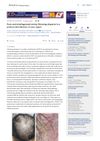
 March 2023 in “Journal of Cosmetic Dermatology”
 This case report illustrates that fibrosing alopecia in a pattern distribution may be misdiagnosed as androgenetic alopecia due to similar hair loss patterns, but distinctive trichoscopic and histopathologic features help differentiate it.
 September 2021 in “CRC Press eBooks”
 This review discusses fibrosing alopecia in a pattern distribution and highlights diagnostic features, but reports no new clinical results; the authors emphasize the value of trichoscopy and histology in diagnosis.
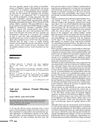 November 2015 in “European journal of dermatology/EJD. European journal of dermatology”
 This report describes a 55-year-old African woman with a 4-year history of frontotemporal alopecia and total eyebrow loss, who experienced scalp itching and had unsuccessfully undergone hair transplantation.
 2 citations
,
January 2023 in “International Journal of Dermatology Research”
2 citations
,
January 2023 in “International Journal of Dermatology Research” This study reported that C. procera leaf extracts showed antifungal activity against several dermatophytes, with ethanol extracts demonstrating slightly greater efficacy than aqueous extracts.
 May 2022 in “International Journal for Research in Applied Science and Engineering Technology”
 This study reported that Eclipta prostrata contains active phytochemicals and demonstrated antibacterial properties in methanolic extracts, suggesting potential antibiotic uses.
 June 2019 in “Brain Imaging and Behavior”
 In this study, androgenic alopecia was identified as an independent predictor of abnormal white matter hyperintensities in the brain, suggesting it may serve as a surrogate marker for cerebral small vessel disease linked to arteriolosclerosis.
9 citations
,
July 1993 in “Archives of dermatology” This report describes ten cases of pityriasis amiantacea to raise awareness of this uncommon scalp condition, highlighting its negative test findings and its uncertain association with other skin diseases.
 6 citations
,
August 2006 in “Journal of Cutaneous Pathology”
6 citations
,
August 2006 in “Journal of Cutaneous Pathology” This case report describes two brothers with an unusual, possibly treatment-resistant inflammatory variant of androgenic alopecia, featuring follicular isthmic lymphocytic inflammation and diffuse central scalp hair loss.
 19 citations
,
January 2011 in “Clinics”
19 citations
,
January 2011 in “Clinics” This article reviews alopecia areata incognita, a rare condition mostly seen in young women, and discusses its similarities and differences with telogen effluvium; however, it reports no new clinical findings.
1 citations
,
February 2008 in “Informa Healthcare eBooks” Androgenetic alopecia is a common form of hair loss in both men and women.
 7 citations
,
August 2013 in “Journal of the European Academy of Dermatology and Venereology”
7 citations
,
August 2013 in “Journal of the European Academy of Dermatology and Venereology” This study reported that atypical variants of alopecia areata made up less than 25% of all cases in their specialized trichology unit, suggesting a potential selection bias.
November 2025 in “Mendeley Data” November 2025 in “Mendeley Data”  October 2015 in “Elsevier eBooks”
 Chewing betel nut may increase the risk of type 2 diabetes, and saw palmetto can improve urinary symptoms in BPH with fewer side effects but may cause bleeding and allergic reactions.
 1 citations
,
February 2004 in “Journal of The European Academy of Dermatology and Venereology”
1 citations
,
February 2004 in “Journal of The European Academy of Dermatology and Venereology” This paper reports a case of alopecia triangularis congenita in a 22-year-old woman, combined with androgenetic alopecia, and highlights successful treatment with internal and topical antiandrogens.
 November 2020 in “Journal of The American Academy of Dermatology”
 This study observed a high prevalence of PCOS among young female-pattern hair loss patients and suggested that AMH levels might be more indicative of FPHL than traditional androgens.
July 2026 in “Journal of the American Academy of Dermatology”  November 2023 in “International Journal of Dermatology”
 This review presents European expert guidelines for diagnosing androgenetic alopecia across genders but reports no new clinical findings; it emphasizes the importance of trichoscopy for differentiating similar conditions.
 January 2023 in “Brazilian Journals Editora eBooks”
 Passiflora incarnata may help with anxiety and sleep issues but has side effects; teleconsultation for heart failure can improve quality of life; increased screen time for children during the pandemic led to more clinical complaints; older and severely affected COVID-19 patients are more likely to have long-term symptoms.
3 citations
,
January 2021 in “Medicinski arhiv” In this study, trichoscopic examination revealed that patients with androgenetic alopecia had significantly more yellow dots, pilosebaceous units with one hair, and increased perifollicular hyperpigmentation compared to healthy controls.
287 citations
,
March 1999 in “The Plant Journal” This study found that disrupting the microtubule cytoskeleton in Arabidopsis root hairs caused loss of growth directionality and suggested microtubules interact with calcium gradients to regulate apical growth stability.
This study reports that a majority of patients hospitalized with severe COVID-19 in three Madrid hospitals exhibited androgenetic alopecia, termed the "Gabrin Sign".
January 2017 in “Anais do 5º Encontro Brasileiro para Inovação Terapêutica” This study found that Dysphania ambrosioides oil exhibited cytotoxicity against U-937 lymphoma cells, indicating potential activity that warrants further investigation.
 1 citations
,
April 2016 in “Journal of The American Academy of Dermatology”
1 citations
,
April 2016 in “Journal of The American Academy of Dermatology” This study found that patients with androgenetic alopecia experienced more severe symptoms than those with alopecia areata, influencing their quality of life differently based on various patient characteristics.
 12 citations
,
November 2017 in “Archives of Dermatological Research”
12 citations
,
November 2017 in “Archives of Dermatological Research” This study suggests that high consumption of raw vegetables and fresh herbs, which are part of the Mediterranean diet, may reduce the risk of androgenetic alopecia in genetically predisposed men.
 157 citations
,
October 2003 in “Development”
157 citations
,
October 2003 in “Development” This study found that different stabilizing mutations in Aux/IAA proteins affect root hair development in Arabidopsis by disrupting the auxin response and suggest a model where the relative abundance of these proteins determines root hair initiation.
 17 citations
,
December 2003 in “Veterinary dermatology”
17 citations
,
December 2003 in “Veterinary dermatology” In this study, mange lesions with alopecia and crusts in masked palm civets in Japan were caused by the mite Notoedres cati.
 26 citations
,
September 2016 in “International Journal of Dermatology”
26 citations
,
September 2016 in “International Journal of Dermatology” This study aimed to identify trichoscopic features that help differentiate between tinea capitis and alopecia areata in children, enhancing diagnosis and treatment decisions visually and non-invasively.
 4 citations
,
February 2019 in “PubMed”
4 citations
,
February 2019 in “PubMed” This study found that cortexolone 17α-propionate (clascoterone) effectively inhibited androgen receptor-regulated transcription and IL-6 synthesis in scalp cells, potentially making it a promising candidate for topical treatment of androgenetic alopecia.
December 2022 in “JEADV Clinical Practice” In this study, researchers found that using a handheld digital microscope, hair diameter was a better determinant of perceived alopecia severity in androgenetic alopecia than hair density.