 1 citations
,
September 2012 in “Expert Review of Endocrinology & Metabolism”
1 citations
,
September 2012 in “Expert Review of Endocrinology & Metabolism” This review discusses the clinical implications of female androgen deficiency and evaluates treatment options, emphasizing the need for cautious use of replacement therapy in women with severe deficiency and matching symptoms.
 57 citations
,
January 1986 in “The Prostate”
57 citations
,
January 1986 in “The Prostate” This article discusses the role of dihydrotestosterone in human prostatic adenocarcinoma growth and suggests that 6-methyleneprogesterone could be used to inhibit DHT for treating hormone-responsive prostate cancer, without new clinical findings.
 51 citations
,
April 1999 in “The Journal of Steroid Biochemistry and Molecular Biology”
51 citations
,
April 1999 in “The Journal of Steroid Biochemistry and Molecular Biology” This review examines androgen replacement therapy in women for treating androgen deficiency symptoms and reports no new clinical results, while noting potential safety within a specific dose range.
4 citations
,
January 2011 in “Dermatopathology” November 1978 in “PubMed” This review discusses the role of antiandrogenic gestagens in treating androgen-dependent skin disorders and highlights the need for dermatologists to collaborate with endocrinologists and gynecologists for effective management.
 6 citations
,
September 2005 in “Expert Opinion on Pharmacotherapy”
6 citations
,
September 2005 in “Expert Opinion on Pharmacotherapy” This review discusses the role of androgens in women's sexual health and highlights the need for further research on androgen replacement therapy to optimize quality of life, but reports no new clinical results.
173 citations
,
November 2004 in “Seminars in Reproductive Medicine” This review discusses the physiological process of adrenarche, its impact on behavior and skeletal maturation, and its variability across sex and race, but reports no new clinical results.
January 2018 in “Elsevier eBooks” October 2025 in “Journal of the Endocrine Society” This case study reported that sudden hyperandrogenism in postmenopausal women may indicate hormonally active ovarian tumors such as Leydig cell tumors, which can be effectively treated with surgery.
3 citations
,
November 2013 in “PubMed”  70 citations
,
April 2014 in “Annales d'endocrinologie”
70 citations
,
April 2014 in “Annales d'endocrinologie” This review discusses the pathways of androgen biosynthesis and reports no new findings, highlighting the need to understand the interplay between the classic and backdoor pathways.
 20 citations
,
January 1999 in “Current Pharmaceutical Design”
20 citations
,
January 1999 in “Current Pharmaceutical Design” This study reports that various antiandrogen therapies, including spironolactone and finasteride, effectively address hirsutism, acne, androgenic alopecia, and ovulatory dysfunction in hyperandrogenic women and are generally well tolerated.
 June 2026 in “Zenodo (CERN European Organization for Nuclear Research)”
 This study found that transgender men undergoing testosterone therapy may experience skin changes such as acne and androgenic hair loss, which can be managed with a collaborative approach involving both dermatologists and endocrinologists.
 1 citations
,
January 2021 in “Prague medical report”
1 citations
,
January 2021 in “Prague medical report” This article reviews the potential male equivalent of polycystic ovarian syndrome, focusing on hormonal alterations and premature androgenic alopecia, but reports no new clinical findings; the authors highlight the need for further studies on adrenal steroids and other factors.
This article discusses the complexities of diagnosing hyperandrogenism in women and reviews potential treatments, such as antiandrogens and finasteride, but reports no new clinical findings.
 20 citations
,
January 2003 in “Treatments in Endocrinology”
20 citations
,
January 2003 in “Treatments in Endocrinology” Testosterone therapy can help improve mood, sexual function, and bone health in women with low androgen levels, but more research is needed to establish safe and effective guidelines.
 January 2025 in “HORMONES”
 This systematic review reported positive outcomes with gender-affirming hormone therapy in Canada and emphasized the urgent need for standardized outcome measurement tools to enhance evidence-based practices.
 June 2026 in “Zenodo (CERN European Organization for Nuclear Research)”
 This study indicates that transgender men undergoing testosterone therapy may encounter skin issues like acne and hair thinning, which can be addressed with a collaborative approach involving both dermatologists and endocrinologists.
 27 citations
,
January 1984 in “Pharmacology & Therapeutics”
27 citations
,
January 1984 in “Pharmacology & Therapeutics” This review discusses androgen manipulation strategies for conditions like benign prostatic hyperplasia and prostatic carcinoma but reports no new clinical results.
This study synthesizes current evidence showing that menopause involves a predictable endocrine transition, while male ageing features a more variable testosterone decline, necessitating a nuanced clinical approach to diagnosis and treatment.
 101 citations
,
April 1994 in “Baillière's clinical endocrinology and metabolism”
101 citations
,
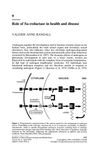
April 1994 in “Baillière's clinical endocrinology and metabolism” This review discusses the role of 5α-reductase enzymes in androgen action and related disorders, noting that their specific inhibitory drugs show promise for conditions like benign prostatic hypertrophy; it reports no new clinical results.
 6 citations
,
April 2019 in “Endocrinology and Metabolism Clinics of North America”
6 citations
,
April 2019 in “Endocrinology and Metabolism Clinics of North America” This study observed that testosterone therapy in transgender men enhances both physical and mental health, is safe in the short and middle term with proper follow-up, and highlights the need for endocrinologists to provide gender-affirming care despite its limited presence in medical education.
October 2025 in “Journal of the Endocrine Society” In this case report, hyperandrogenism, including hirsutism and elevated testosterone, in a post-menopausal woman on anastrozole for breast cancer may be attributed to the drug after ruling out other serious causes like ovarian hyperthecosis.
12 citations
,
February 2020 in “The Journal of Clinical Endocrinology & Metabolism” This study found that a self-assessed modified Ferriman-Gallwey score of 10 or higher indicates excess body hair, and suggests androstenedione measurement should accompany testosterone when evaluating hyperandrogenism.
July 2025 in “AACE Endocrinology and Diabetes” Ovarian hyperthecosis caused high testosterone and virilization symptoms in a 60-year-old woman, which improved after surgery.
14 citations
,
April 1978 in “International Journal of Dermatology” This article reviews the effects of antiandrogens on the skin and suggests their potential in treating conditions like acne and hirsutism, but reports no new clinical results.
 April 2020 in “Journal of the Endocrine Society”
 This study found that among transgender men undergoing long-term testosterone therapy, a severe pattern of androgenetic alopecia may indicate increased arterial stiffness, as measured by higher intima-media thickness of the carotid artery.
5 citations
,
January 2024 in “Reproductive Medicine and Biology” In this review, extensive analysis using conditional mutant mice revealed that androgen and Wnt signals play crucial roles in the development and function of male external genitalia and erectile tissue, while also exploring various regulatory factors involved in their pathogenesis.
October 1995 in “Journal of The European Academy of Dermatology and Venereology”