 April 2010 in “The Journal of Urology”
 This study found that ureteroileal anastomosis with direct intraluminal visualization had a 4.2% stricture rate, which compares favorably to other techniques with rates between 3.5% and 11.1%.
4 citations
,
May 2022 in “Genes & Diseases”  1 citations
,
February 2022 in “bioRxiv (Cold Spring Harbor Laboratory)”
1 citations
,
February 2022 in “bioRxiv (Cold Spring Harbor Laboratory)” This study uses cryo-electron microscopy to reveal how androgen receptor forms a non-obligate dimer to bind DNA, with implications for prostate cancer development.
 13 citations
,
July 2018 in “General and comparative endocrinology”
13 citations
,
July 2018 in “General and comparative endocrinology” This study observed that direct exposure to androgens in Western clawed frogs differentially affects thyroid receptor and deiodinase gene expression in male and female tissues, offering insight into sex-specific metabolic pathway activation.
16 citations
,
February 1978 in “Journal of steroid biochemistry/Journal of Steroid Biochemistry” This study found that hamster sebaceous glands have high affinity binding sites for dihydrotestosterone, with competition from other steroids indicating specific binding characteristics.
123 citations
,
December 1997 in “Calcified Tissue International” This study concluded that higher androgen levels in males and specific skeletal sites may contribute to differences in skeletal morphology, with glucocorticoids, E2, and D3 enhancing androgen receptor expression and mitogenic action in human osteoblastic cells.
 51 citations
,
January 1989 in “Journal of Investigative Dermatology”
51 citations
,
January 1989 in “Journal of Investigative Dermatology” This study found that sebaceous glands in bald scalp have greater androgen binding affinity and capacity than those in hairy scalp, possibly contributing to the androgenic response seen in male pattern baldness.
 53 citations
,
May 1986 in “Clinics in endocrinology and metabolism”
53 citations
,
May 1986 in “Clinics in endocrinology and metabolism” This review discusses the influence of androgens on hair and sebaceous growth, emphasizing that response may depend more on peripheral sensitivity than on hormone levels; it reports no new empirical results.
August 2019 in “Carolina Digital Repository (University of North Carolina at Chapel Hill)” This study indicates that MAGE-11 modulates androgen receptor transcriptional activity through F-box interactions, independent of the activation function 2 pathway, revealing a novel mechanism for androgen receptor regulation.
23 citations
,
July 1979 in “Canadian journal of biochemistry” This study found that administering spironolactone or canrenone to castrated male rats significantly decreased the availability of cytoplasmic androgen receptor binding sites, suggesting canrenone mediates spironolactone's antiandrogenic effects in skin.
 January 2026 in “Scientific Reports”
 In this study, researchers found that sesamin, a component of sesamum, modulated the AR-MAPK-Wnt signaling pathway in DHT-stimulated HaCaT keratinocytes, demonstrating potential multi-target activity against molecular events in androgenetic alopecia.
 6 citations
,
November 2004 in “Bioorganic & Medicinal Chemistry Letters”
6 citations
,
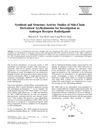
November 2004 in “Bioorganic & Medicinal Chemistry Letters” This study found that arylhydantoin and arylthiohydantoin derivatives with hydroxybutyl or methyl side-chains showed superior androgen receptor binding affinity and may serve as promising radioiodinated AR ligands.
 18 citations
,
April 2001 in “Bioorganic & Medicinal Chemistry Letters”
18 citations
,
April 2001 in “Bioorganic & Medicinal Chemistry Letters” This study identified the N-(iodopropenyl) derivative 13 as a promising candidate for development as a radioiodinated androgen receptor ligand due to its binding affinity.
64 citations
,
March 1984 in “Journal of steroid biochemistry/Journal of Steroid Biochemistry” In this study, cyproterone acetate combined with estradiol dramatically improved hirsutism symptoms and significantly reduced plasma testosterone and androstenedione levels in patients over periods of up to three years.
 11 citations
,
May 2010 in “Journal of Medicinal Chemistry”
11 citations
,
May 2010 in “Journal of Medicinal Chemistry” This study introduced a novel nonsteroidal androgen receptor antagonist that effectively controls sebum production in the golden Syrian hamster ear model through targeted follicular delivery.
 1 citations
,
January 1995 in “Journal of Investigative Dermatology”
1 citations
,
January 1995 in “Journal of Investigative Dermatology” RU58841, a substance from France, can potentially block the effects of hormones that cause hair loss and excessive hair growth, performing better than a similar substance, cyproterone acetate.
 159 citations
,
July 2006 in “Endocrine Reviews”
159 citations
,
July 2006 in “Endocrine Reviews” This article discusses the influence of estrogens on hair follicle growth and metabolism, suggesting a significant role alongside androgens in hair growth control but reports no new clinical results.
 193 citations
,
August 1985 in “Endocrinology”
193 citations
,
August 1985 in “Endocrinology” This study found significant species differences in the enzyme activity and inhibitor affinities of prostatic 5α-reductases from rats, dogs, and humans, with variable potencies for different 3-oxo-4-azasteroid inhibitors across species.
 58 citations
,
June 2000 in “The Journal of Steroid Biochemistry and Molecular Biology”
58 citations
,
June 2000 in “The Journal of Steroid Biochemistry and Molecular Biology” This study found that Atlantic croaker nuclear androgen receptors AR1 and AR2 have different binding affinities for androgens, suggesting that they may mediate distinct physiological actions in teleosts.
 5 citations
,
January 2005 in “Journal of Enzyme Inhibition and Medicinal Chemistry”
5 citations
,
January 2005 in “Journal of Enzyme Inhibition and Medicinal Chemistry” This study found that certain steroidal compounds, especially 10a–10c, demonstrated strong antiandrogenic activity by binding to the androgen receptor and reducing prostate weight in a hamster model.
 1 citations
,
November 2008 in “Acta crystallographica”
1 citations
,
November 2008 in “Acta crystallographica” This study reports the crystallization of the human androgen receptor's ligand-binding domain with nonsteroidal ligands, which may aid in understanding the differences in binding compared to steroidal ligands.
 24 citations
,
January 1989 in “Archives of biochemistry and biophysics”
24 citations
,
January 1989 in “Archives of biochemistry and biophysics” This study found that androgen binding in male rat livers involves specific androgen receptors, which decrease with castration and are inducible in female livers with testosterone.
 29 citations
,
January 2006 in “Clinical chemistry and laboratory medicine”
29 citations
,
January 2006 in “Clinical chemistry and laboratory medicine” This study found that male liver cirrhosis patients have higher estradiol levels and lower dehydroepiandrosterone sulfate, leading to hormonal imbalances favoring estradiol, but without changing sex hormone-binding globulin's binding properties.
 72 citations
,
January 2003 in “American Journal of Pathology”
72 citations
,
January 2003 in “American Journal of Pathology” This study found that the co-activator CBP enhances the agonistic action of hydroxyflutamide on androgen receptors, suggesting a mechanism for therapy resistance in prostate cancer.
 25 citations
,
January 2000 in “Hormone Research in Paediatrics”
25 citations
,
January 2000 in “Hormone Research in Paediatrics” This article reviews androgen insensitivity syndrome and highlights the factors contributing to phenotypic diversity in 46,XY patients with AR gene mutations, reporting no new clinical results.
 23 citations
,
May 2019 in “Expert Opinion on Therapeutic Patents”
23 citations
,
May 2019 in “Expert Opinion on Therapeutic Patents” This review discusses AR-modulating agents developed between 2012 and 2018, highlighting challenges with ligand-binding domain antagonists and proposing nonconventional approaches targeting other domains as promising strategies.
August 1987 in “European journal of endocrinology” This study found no correlation between plasma androgen levels and androgenetic alopecia in women, suggesting that increased androgen action may not be reflected in these parameters.
 27 citations
,
January 1984 in “Pharmacology & Therapeutics”
27 citations
,
January 1984 in “Pharmacology & Therapeutics” This review discusses androgen manipulation strategies for conditions like benign prostatic hyperplasia and prostatic carcinoma but reports no new clinical results.
 January 1995 in “Adolescent and pediatric gynecology”
 This article reviews genetic and phenotypic aspects of androgen insensitivity syndromes, emphasizing the diversity of mutations that complicates molecular screening and the importance of genotype-phenotype correlations.
 35 citations
,
May 1986 in “Clinics in endocrinology and metabolism”
35 citations
,
May 1986 in “Clinics in endocrinology and metabolism” This study concludes that high skin 5α-reductase activity may contribute to hirsutism, but the specific regulatory mechanisms and genetic factors remain unclear.