34 citations
,
December 2007 in “Human Reproduction Update” This review discusses the limitations of current androgen measurement techniques using immunoassays and explores the potential of novel in vitro bioassays for clinical research applications, but it reports no new clinical results.
34 citations
,
August 2007 in “PubMed” This study found a strong association between androgenetic alopecia and hypertension in Caucasian men, independent of age.
34 citations
,
January 2000 in “Journal of Andrology” This study found no difference in CAG repeat length between Chinese and Australian men, refuting the hypothesis that this polymorphism and central prostate zone volume are markers of long-term androgen sensitivity.
 34 citations
,
March 1999 in “Journal of The European Academy of Dermatology and Venereology”
34 citations
,
March 1999 in “Journal of The European Academy of Dermatology and Venereology” This study found significant differences in serum lipoprotein (a) and triglyceride levels between men with androgenetic alopecia and those with normal hair, suggesting a need for dermatologists to monitor lipid profiles in these patients.
34 citations
,
July 1993 in “The journal of investigative dermatology/Journal of investigative dermatology” This study suggests that androgens influence hair follicle behavior via the dermal papilla, using evidence from human and red deer cells with differing androgen responses as models.
 33 citations
,
January 2013 in “Dermatology”
33 citations
,
January 2013 in “Dermatology” This study found that among women above 15 years with acne, 54.56% exhibited hyperandrogenism, with dehydroepiandrosterone sulfate levels most frequently elevated.
 33 citations
,
October 2004 in “Archives of Dermatological Research”
33 citations
,
October 2004 in “Archives of Dermatological Research” This study suggests that a larger prostate is associated with a higher prevalence of androgenetic alopecia, although the prostate size did not correlate with alopecia severity.
 33 citations
,
July 2020 in “Journal of The American Academy of Dermatology”
33 citations
,
July 2020 in “Journal of The American Academy of Dermatology” In this study, PRP increased hair density in areas treated for androgenetic alopecia, but there was no significant difference when compared to placebo-treated areas.
 33 citations
,
November 2019 in “Journal of Controlled Release”
33 citations
,
November 2019 in “Journal of Controlled Release” In this study, researchers developed a new self-administered finasteride delivery system using powder-carrying microneedles that improved hair growth efficacy and addressed safety concerns compared to topical finasteride gel by allowing sustained intradermal release of the drug for three days with a single application.
 33 citations
,
March 2017 in “Dermatologic Surgery”
33 citations
,
March 2017 in “Dermatologic Surgery” In this clinical study, low-level laser therapy using the HANDI-DOME LASER device increased hair counts by 51% compared to controls, indicating its potential as a safe and effective treatment for androgenetic alopecia in women aged 18 to 60.
 33 citations
,
January 2017 in “Journal of Cutaneous and Aesthetic Surgery”
33 citations
,
January 2017 in “Journal of Cutaneous and Aesthetic Surgery” This study found that PRP injections improved hair density, quality, and thickness in males with androgenic alopecia compared to placebo, with reported high patient satisfaction and no major side effects.
 33 citations
,
August 2016 in “Indian Journal of Dermatology, Venereology and Leprology”
33 citations
,
August 2016 in “Indian Journal of Dermatology, Venereology and Leprology” In this study of men with androgenetic alopecia, dutasteride was shown to be more effective than finasteride in increasing hair count and reversing hair miniaturization over 24 weeks, with both treatments displaying similar side effect profiles.
 33 citations
,
January 2016 in “Indian Journal of Dermatology, Venereology and Leprology”
33 citations
,
January 2016 in “Indian Journal of Dermatology, Venereology and Leprology” This review discusses the use of finasteride for androgenetic alopecia and highlights that while it is considered safe, there is concern regarding its sexual side effects, which reverse upon discontinuation.
 33 citations
,
August 2015 in “F1000Research”
33 citations
,
August 2015 in “F1000Research” This study presents a new model for androgenetic alopecia progression, explaining diffuse hair loss in women through 3D reconstructions of the arrector pili muscle and its relationship with the hair follicle stem cell niche.
 33 citations
,
April 2015 in “Current Opinion in Endocrinology, Diabetes and Obesity”
33 citations
,
April 2015 in “Current Opinion in Endocrinology, Diabetes and Obesity” This review discusses the potential persistent adverse effects associated with 5α reductase inhibitor treatment for androgenetic alopecia but provides no new clinical results; it emphasizes the importance of discussing these risks with patients.
 32 citations
,
July 2017 in “Clinical and Experimental Dermatology”
32 citations
,
July 2017 in “Clinical and Experimental Dermatology” This study assessed the use of oral finasteride in transgender men with androgenetic alopecia and found that all patients improved by one grade on the Norwood–Hamilton scale within about 5.5 months, with no significant adverse effects reported during the 16.2 months of follow-up.
 32 citations
,
June 2015 in “Dermatologic Therapy”
32 citations
,
June 2015 in “Dermatologic Therapy” In this study, finasteride was found to be more effective than 5% minoxidil for treating male androgenetic alopecia in Chinese patients, with combination therapy showing the greatest improvement.
 32 citations
,
June 2000 in “Dermatologic Surgery”
32 citations
,
June 2000 in “Dermatologic Surgery” Different factors help diagnose and treat hair loss accurately.
 32 citations
,
April 1999 in “Expert Opinion on Investigational Drugs”
32 citations
,
April 1999 in “Expert Opinion on Investigational Drugs” Clinical studies reported that finasteride reduces scalp dihydrotestosterone levels and improves hair growth in men with androgenetic alopecia, supporting its role as a treatment option.
32 citations
,
November 2020 in “UNC Libraries” This study identified a mutation in the steroid-binding domain of the androgen receptor gene associated with complete androgen insensitivity syndrome, impairing male sexual development due to altered androgen receptor protein function.
 32 citations
,
July 2020 in “Journal of The American Academy of Dermatology”
32 citations
,
July 2020 in “Journal of The American Academy of Dermatology” This study noted that among hospitalized COVID-19 patients, androgenetic alopecia was prevalent, and severe cases were associated with adverse outcomes such as respiratory failure, highlighting a possible link with androgen sensitivity.
 32 citations
,
January 2017 in “Patient Preference and Adherence”
32 citations
,
January 2017 in “Patient Preference and Adherence” This study found that both alopecia areata and androgenetic alopecia moderately reduced the quality of life for Chinese patients, especially in younger individuals and those experiencing hair loss for over a year.
 32 citations
,
February 2016 in “Journal of Dermatology”
32 citations
,
February 2016 in “Journal of Dermatology” This study found that in Japanese male patients with androgenetic alopecia, dutasteride 0.5 mg daily over 52 weeks was associated with improvements in hair growth and appearance, with reported adverse events mostly mild.
32 citations
,
October 2015 in “Frontiers in Cellular Neuroscience” This study found that in male rat hippocampal slices, DHT is necessary for low frequency stimulation-induced long-term depression, while E2 synthesis is essential for high frequency stimulation-induced long-term potentiation.
 32 citations
,
January 2014 in “Indian Journal of Dermatology, Venereology and Leprology”
32 citations
,
January 2014 in “Indian Journal of Dermatology, Venereology and Leprology” This study found that both finasteride and dutasteride effectively increased hair thickness in women with androgenetic alopecia over three years, with dutasteride performing better in women under 50 at specific scalp sites.
 32 citations
,
October 1999 in “Journal of women's health and gender-based medicine”
32 citations
,
October 1999 in “Journal of women's health and gender-based medicine” This study found that women with androgenetic alopecia report various negative impacts on their lives due to hair thinning, highlighting emotional concerns and dissatisfaction with appearance.
 32 citations
,
August 1999 in “Journal of Investigative Dermatology”
32 citations
,
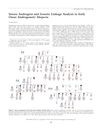
August 1999 in “Journal of Investigative Dermatology” This study found that individuals with early onset extensive androgenetic alopecia have an elevated ratio of DHT to testosterone, but no significant genetic linkage to markers on chromosomes 2 or 5 was detected.
 32 citations
,
January 1990 in “Clinical Endocrinology”
32 citations
,
January 1990 in “Clinical Endocrinology” This study found that women with female pattern androgenic alopecia have significantly higher levels of certain androgens and androgen sulfates compared to normal premenopausal women, suggesting markers for diagnosis and treatment efficacy.
 32 citations
,
March 1987 in “Journal of The American Academy of Dermatology”
32 citations
,
March 1987 in “Journal of The American Academy of Dermatology” Using minoxidil on balding men's scalps can increase hair growth, according to a 12-month study.
32 citations
,
August 1985 in “Clinical endocrinology” This study concluded that spironolactone may be an effective therapy for a subgroup of hirsute patients, as it reduced plasma testosterone and improved certain hair growth measures.