 13 citations
,
January 2017 in “Cosmetics”
13 citations
,
January 2017 in “Cosmetics” This review discusses in vitro methods for evaluating the effects of hair care products on hair fibers, reporting no new results; the authors emphasize the importance of selecting appropriate and accurate equipment for testing.
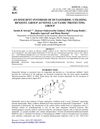 January 2017 in “Rasayan journal of Chemistry”
 This paper describes a new scalable synthesis method for Dutasteride, highlighting its potential for large-scale commercial production.
64 citations
,
January 2000 in “The Analyst” This study describes an efficient gas chromatography-mass spectrometry method for detecting estrone and 17 beta-estradiol concentrations in hair, finding differing levels in male and female samples.
January 2024 in “Metabolites” This review highlights the importance of standardizing pre-analytical procedures for collecting and extracting samples from uncommon biological specimens like breast milk and sweat in clinical metabolomics, to enhance diagnostic and biomarker discovery efforts while minimizing contamination and bias.
 7 citations
,
February 2014 in “Talanta”
7 citations
,
February 2014 in “Talanta” This study developed an advanced HPLC-ESI-ion trap MS(n) method for the structural identification of cyclosporin A analogs CyA and CyC and reported the first MS(n)-aided identification of a new CyA analog.
 27 citations
,
April 2013 in “Reviews in endocrine and metabolic disorders”
27 citations
,
April 2013 in “Reviews in endocrine and metabolic disorders” The document concludes that using LC-MS/MS for measuring androgens is more accurate than older methods, but it needs careful validation and standardized references to be most effective.
 1 citations
,
November 2021 in “Drug Testing and Analysis”
1 citations
,
November 2021 in “Drug Testing and Analysis” This collection from the 2021 Manfred Donike Workshop outlines advancements in doping detection, highlighting new test methods and challenges, with a focus on steroidal substances, peptide hormones, and gene doping analysis.
 2 citations
,
December 2019 in “Bioanalysis”
2 citations
,
December 2019 in “Bioanalysis” This article reviews analysis techniques in LC-MS/MS and discusses the potential use of a novel in-sample calibration curve method, but reports no new experimental results.
 May 2023 in “Bali Medical Journal”
 This study found a very strong positive correlation between sebum levels and the severity of androgenetic alopecia in men.
August 2026 in “Frontiers in Medicine” This article argues that esthetic dermatology could benefit from a more biologically informed approach through the integration of advanced biomarkers and imaging technologies, but cautions that many tools are not yet fully validated for clinical use.
 January 2026 in “Journal of Emerging Technologies and Innovative Research”
 This study reported that zinc oxide nanoparticles synthesized using Tridax procumbens leaf extract demonstrated significant antibacterial and anticancer activity, showing potential for applications in biomedical and pharmaceutical fields.
44 citations
,
November 2018 in “Journal of applied ecology” This review discusses the use of hair analysis for examining stress and reproduction hormone levels in wildlife and highlights the need for more comprehensive physiological validations across species.
 November 2025 in “Cosmetics”
 This study evaluated a hair mask containing rice germ oil GX-N and ferulic acid on damaged hair and found that rice germ oil GX-N improved hair characteristics after bleaching, UV, and heat exposure, but adding ferulic acid did not provide extra benefits.
January 2022 in “Zenodo (CERN European Organization for Nuclear Research)” This review discusses the potential benefits of multivitamins, hair shampoos, and ampules on hair growth but reports no new clinical results.
January 2011 in “Hispania Judaica bulletin” This study found that mechanical and chemical interactions in skin organoids are crucial for initiating mesenchymal-epithelial interactions necessary for hair follicle regeneration.
323 citations
,
November 2017 in “Bioanalysis” This commentary discusses the challenges of matrix effects in LC–MS analysis and introduces the concept of a matrix effect factor using stable isotopically labeled internal standards to improve analysis reliability.
May 2026 in “British Journal of Clinical Pharmacology” In this study, researchers observed low variability in hair formoterol concentrations for COPD patients with stable adherence, but inter-patient differences and other factors may limit the effectiveness of hair analysis as a reliable tool for assessing medication adherence.
November 2025 in “Wiley Interdisciplinary Reviews Forensic Science” This article reviews recent advancements in forensic hair testing, emphasizing its growing use for detecting past substance exposure, identifying emerging trends like micro-segmentation and hair scanning, and proposing standardized procedures to improve reliability and application in forensic toxicology.
January 2005 in “Zhongguo yaowu huaxue zazhi” This study successfully developed a synthetic route for finasteride that achieves a 30.6% yield and is suitable for industrial production, avoiding the use of expensive or poisonous reagents.
March 2023 in “MDPI eBooks” This reprint reviews 14 papers on advances in solid-phase microextraction techniques for bioanalysis, reporting no new results.
 5 citations
,
December 2022 in “Research in Biotechnology and Environmental Science”
5 citations
,
December 2022 in “Research in Biotechnology and Environmental Science” This bibliometric review analyzes trends in published research on ocean pollution biodegradation and bioremediation over time, reporting a notable growth in related publications from 2010 to 2022.
 75 citations
,
November 2016 in “Medicines”
75 citations
,
November 2016 in “Medicines” This review discusses the properties and therapeutic potentials of beta-sitosterol, highlighting a need for more detailed studies on its mechanisms and long-term effects in humans; it reports no new results.
11 citations
,
November 2023 in “Journal of Functional Biomaterials” This study investigated nanocomposite scaffolds made from alginate, chitosan, and graphene oxide to promote the proliferation of spermatogonial stem cells, finding the ALGCS/GO30 scaffold to be particularly effective due to increased proliferation markers and PLZF protein expression compared to controls.
 11 citations
,
January 2000 in “The Journal of Steroid Biochemistry and Molecular Biology”
11 citations
,
January 2000 in “The Journal of Steroid Biochemistry and Molecular Biology” This study found that LY320236 is a competitive inhibitor of type I and a non-competitive inhibitor of type II steroid 5alpha-reductase, indicating its potential as a dual inhibitor with differing modes of activity.
 8 citations
,
January 2011 in “Organic and Biomolecular Chemistry”
8 citations
,
January 2011 in “Organic and Biomolecular Chemistry” Minoxidil reacts to nitrosation 7 times more than phenol, mainly due to its -NH₂ groups, leading to the creation of N-nitrosominoxidil.
 5 citations
,
June 2011 in “PLoS ONE”
5 citations
,
June 2011 in “PLoS ONE” This study found that biologic rhythms in mammoth hairs differed from those in modern human hair, with variations in growth rates and mineral content providing insights into the lifestyle and behavior of extinct species.
 1 citations
,
January 2017 in “Springer eBooks”
1 citations
,
January 2017 in “Springer eBooks” This chapter reviews the hair follicle's role in drug and chemical penetration through the skin but does not present new experimental findings.
 1 citations
,
June 2014 in “Toxicologie analytique et clinique/Annales de toxicologie analytique”
1 citations
,
June 2014 in “Toxicologie analytique et clinique/Annales de toxicologie analytique” This study suggests that chest, arm, leg, and beard hair samples may be viable alternatives to scalp hair for monitoring long-term alcohol intake, although body hair is more typically collected from men.
 August 2025 in “Fabad Journal of Pharmaceutical Sciences”
 This review highlights that bicalutamide, a non-steroidal antiandrogen used in prostate cancer treatment, is mainly effective through its (R)-enantiomer and emphasizes the need to monitor its adverse effects despite its targeted antiandrogenic action.
July 2025 in “Journal of Investigative Dermatology” Some sunscreen ingredients may be linked to hair loss, but more research is needed.