 3 citations
,
December 2013 in “Journal of Dermatology”
3 citations
,
December 2013 in “Journal of Dermatology” This study found that scanning electron microscopy can identify four specific hair morphology patterns in alopecia areata patients, offering a less invasive diagnostic option compared to punch biopsy.
April 2022 in “Journal of the Medical Sciences” This study found a significant relationship between the severity of androgenetic alopecia in men and a negative impact on their quality of life.
 17 citations
,
July 2017 in “International Journal of Behavioral Medicine”
17 citations
,
July 2017 in “International Journal of Behavioral Medicine” This study validated the Egyptian Arabic version of the Skindex-16 and found that skin conditions significantly impacted patients' quality of life, particularly in the emotional domain.
 107 citations
,
November 2008 in “The Journal of Rheumatology”
107 citations
,
November 2008 in “The Journal of Rheumatology” This study found that fibromyalgia prevalence is slightly higher in patients with systemic lupus erythematosus compared to those with arthritis, but fibromyalgia-ness does not bias the SLE Activity Questionnaire.
 22 citations
,
November 2011 in “Journal of Analytical Toxicology”
22 citations
,
November 2011 in “Journal of Analytical Toxicology” This review discusses the relevance of human androgen receptor action in sports doping and examines the potential of cell-based biological assays for detecting androgenic anabolic steroid use, without presenting new research findings.
 April 2023 in “Journal of Investigative Dermatology”
 In this study, the KPAI and KP-IGA scoring systems for assessing keratosis pilaris showed excellent interrater and intrarater reliability, offering standardized measures for clinical and research use.
December 2022 in “JEADV Clinical Practice” In this study, researchers found that using a handheld digital microscope, hair diameter was a better determinant of perceived alopecia severity in androgenetic alopecia than hair density.
 August 2019 in “Journal of The American Academy of Dermatology”
 No link found between hair loss severity and PSA levels in men.
 1 citations
,
July 2024 in “Skin Research and Technology”
1 citations
,
July 2024 in “Skin Research and Technology” This study found that patients with androgenetic alopecia had thinner scalp and subcutaneous tissues, narrower and shorter hair follicles, a lower hair follicle count, and fewer color flow signals compared to healthy volunteers, as measured by 22 MHz ultrasound.
 January 2026 in “Scientific Reports”
 In this study, researchers found that sesamin, a component of sesamum, modulated the AR-MAPK-Wnt signaling pathway in DHT-stimulated HaCaT keratinocytes, demonstrating potential multi-target activity against molecular events in androgenetic alopecia.
29 citations
,
December 2022 in “Dermatology and Therapy” This study reported that patients with alopecia areata experienced significant increases in work productivity loss and activity impairment due to worsening emotional symptoms, highlighting a need for better treatments.
 January 2016 in “Ankara Üniversitesi Tıp Fakültesi mecmuası”
 Severe hair loss (androgenetic alopecia) is linked to higher risk of heart disease (cardiovascular atherosclerosis).
63 citations
,
February 2003 in “Australasian Journal of Dermatology” This review discusses various methods for measuring scalp hair growth in androgenetic alopecia and reports no new results; the authors suggest that computer-assisted technology has untapped potential.
 2 citations
,
October 2023 in “Dermatology and therapy”
2 citations
,
October 2023 in “Dermatology and therapy” This study conducted in Europe found that both physicians and patients generally agreed on the severity of alopecia areata, with higher physician-rated severity linked to increased patient-reported burdens such as anxiety, depression, and work impairment.
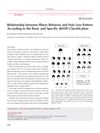 1 citations
,
January 2023 in “Annals of Dermatology”
1 citations
,
January 2023 in “Annals of Dermatology” The BASP classification helps predict patient behavior and improve treatment for hair loss.
1 citations
,
April 2024 in “Lasers in Surgery and Medicine” This study developed a 3D computational model to simulate how skin, fat, and muscle deform under suction, reporting that as suction pressure increased, skin thickness decreased, while fat thickness increased, and muscle thickness remained stable, closely aligning with experimental results.
5 citations
,
November 2023 in “Journal of Research in Medical Sciences” This study found that patients with AA who have more severe symptoms may have a higher risk of metabolic syndrome and arterial stiffness, suggesting a need for cardiometabolic disease screening.
5 citations
,
April 2024 in “BMJ Open” This scoping review revealed that methods for measuring traumatic scar thickness using ultrasound are inconsistently reported and mainly remain in early research phases, highlighting a need for standardizing these methods to bridge the gap to routine clinical practice.
 4 citations
,
May 2014 in “European Journal of Dermatology”
4 citations
,
May 2014 in “European Journal of Dermatology” This study found that severe androgenetic alopecia was associated with metabolic syndrome components in male psoriatic patients, particularly those over 59 years old, suggesting the need for regular screening.
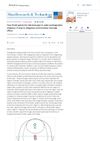 September 2023 in “Skin Research and Technology”
 This article presents a new method using dermoscopy to evaluate the severity and treatment effectiveness of androgenetic alopecia in men by capturing images of specific scalp regions.
 December 2013 in “Praxis medica”
 In this study, a strong correlation was found between the scores of two dermatology-specific quality of life instruments, DLQI and Skindex-16, suggesting they can provide complementary insights for assessing patients with skin diseases.
 January 2024 in “JEADV clinical practice”
 This study reported high patient satisfaction with multidisciplinary shared medical appointments for alopecia areata and frontal fibrosing alopecia, with participants appreciating the educational and supportive group environment.
1 citations
,
December 2019 in “Frontiers in endocrinology” This study found that high prepubertal and pubertal androgen levels, originating from both adrenal and gonadal secretion, were negatively associated with adult height outcomes in males with Silver-Russell syndrome.
This study developed a digital tool for quantitatively assessing hair in androgenetic alopecia, achieving an average accuracy of 79.45% for counting hairs and 68.19% for measuring hair size compared to human evaluation.
 24 citations
,
December 2019 in “PLoS ONE”
24 citations
,
December 2019 in “PLoS ONE” This study validated the Black Identity, Hair Product Use, and Breast Cancer Scale (BHBS) as a tool to measure social and cultural factors related to hair product use and perceived breast cancer risk in Black women.
 4 citations
,
March 2002 in “International journal of toxicology”
4 citations
,
March 2002 in “International journal of toxicology” In this study on tolerant rats, maternal and developmental toxicity from levo-alpha-acetyhnethadol hydrochloride were observed at all doses, without specific fetal toxicity or teratogenic effects.
3 citations
,
July 2017 in “Journal of Investigative Dermatology” This study found that SSEA-4 is a marker that distinguishes eccrine from apocrine ductal cells in human sweat glands, suggesting its potential use in diagnostic applications.
17 citations
,
June 2024 in “Journal of the European Academy of Dermatology and Venereology” This study suggests that using an appropriate tool for measuring quality of life is vital, particularly as factors like severity, female sex, and eyebrow involvement may increase the psychosocial burden of alopecia areata.
February 2024 in “Medicina” In this study, researchers used atomic force microscopy to capture and analyze morphological changes in the surface of healthy hair, identifying features such as pitting and rod-shaped macro-fibrillar elements, which could inform future research on hair conditions and care.
January 2020 in “Proyecto de investigación:” This study found a significant association between AGDAC measurements and the presence of PCOS, suggesting it could be an effective clinical tool in diagnosing the condition and its phenotypes, especially when combined with AMH.