Ivarmacitinib effectively regrows hair in severe alopecia areata.
 10 citations
,
November 1997 in “British Journal of Dermatology”
10 citations
,
November 1997 in “British Journal of Dermatology” This case report documents acquired progressive kinking of the hair in a prepubertal boy but does not provide new clinical results.
8 citations
,
January 2011 in “International journal of trichology” This report discusses the accurate diagnosis of atrichia with papular lesions, emphasizing its distinction from alopecia universalis to prevent unnecessary steroid treatment, and presents a case matching APL diagnostic criteria.
 July 2026 in “Zenodo (CERN European Organization for Nuclear Research)”
 In this study, researchers focused on the "bulge region" of hair follicles, identifying Janus kinases as key players in hair growth signaling, which could inform new therapies for hair restoration.
 July 2018 in “Elsevier eBooks”
 This review discusses primary neutrophilic cicatricial alopecias, their clinical and histological characteristics, and the importance of early therapeutic intervention to prevent scarring alopecia, reporting no new clinical results.
March 2025 in “Pediatric Dermatology” This source did not report new findings but provided a comprehensive overview of alopecia areata in children, emphasizing progress in understanding this condition and highlighting the need for further research to improve treatment options for young patients.
 June 2023 in “International Journal of Research in Dermatology”
 This study observed a high prevalence of severe markers among pediatric alopecia areata patients, identifying AA subtotalis as more frequent, with nail changes and various hair markers suggesting progression to severe forms.
 25 citations
,
October 2019 in “JAAD Case Reports”
25 citations
,
October 2019 in “JAAD Case Reports” This article discusses the role of interleukin-15 and Janus kinase inhibitors in alopecia areata based on a murine model and reports no new experimental results.
 January 2019 in “Journal of Case Reports and Scientific Images”
 This case report describes the treatment of a 12-year-old female with Alopecia Areata using oral azathioprine.
July 2026 in “Journal of the American Academy of Dermatology” January 2020 in “Integrative Medicine Research” 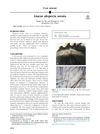 4 citations
,
November 2018 in “JAAD case reports”
4 citations
,
November 2018 in “JAAD case reports” This report presents a case of alopecia areata manifesting in a linear pattern, deviating from the typical presentation of sharply demarcated round patches.
 June 2023 in “Dermatology and therapy”
 This study found that most dermatologists in the Middle East manage mild to severe alopecia areata primarily with potent topical corticosteroids and identified long-term disease control and improved efficacy as key unmet needs.
 59 citations
,
January 2002 in “Dermatology”
59 citations
,
January 2002 in “Dermatology” This study suggests the existence of a new subtype of alopecia, called 'acute diffuse and total alopecia of the female scalp (ADTAFS)', characterized by acute, diffuse hair loss primarily in women and a rapid recovery.
2 citations
,
February 2021 in “PubMed” This case report describes a 25-year-old woman with alopecia areata and nail spooning, which regressed almost completely after treatment with oral corticosteroids.
 1 citations
,
March 2004 in “Journal of the American Academy of Dermatology”
1 citations
,
March 2004 in “Journal of the American Academy of Dermatology” This study reports a strong association between the MICA locus, specifically the MICA∗3-DR∗6-DQ6 haplotype, and Alopecia Areata in families.
 60 citations
,
October 2009 in “Dermatology”
60 citations
,
October 2009 in “Dermatology” This article proposes a hypothesis for alopecia areata hair loss patterns and provides epidemiological evidence supporting distinct hair loss characteristics between general cases and those with androgenetic alopecia; it presents no new clinical results.
This study observed two distinct groups of alopecia areata lesions based on PD-1 expression in T cells from biopsied skin samples, suggesting potential differences in subtypes or stages of the disease that warrant further investigation.
 March 2026 in “International Journal of Dermatology and Venereology”
 This study found that abrocitinib showed promising efficacy and safety in adolescents with moderate-to-severe alopecia areata, with significant hair regrowth observed over 10 months of treatment.
July 2026 in “Journal of the American Academy of Dermatology”  2 citations
,
January 2023 in “Prague Medical Report”
2 citations
,
January 2023 in “Prague Medical Report” This review examined the role, efficacy, and safety of Janus kinase inhibitors in treating alopecia areata, noting that baricitinib has received approval as the first on-label treatment due to positive outcomes in multiple trials.
8 citations
,
January 2019 in “Turkish journal of medical sciences” This study found that ischemia-modified albumin (IMA) may be a promising biomarker of oxidative stress in patients with alopecia areata, offering better potential compared to other oxidative stress markers.
 April 2025 in “Scientific Reports”
 This study explores how Astragaloside A from traditional Chinese medicine may combat lung adenocarcinoma by regulating key signaling molecules like STAT3 and AKT, using techniques such as network pharmacology and molecular docking to understand its mechanisms in cellular models.
1 citations
,
September 2024 in “Journal of the American Academy of Dermatology” Farudodstat may effectively treat alopecia areata without harmful side effects.
May 2026 in “Acta Dermato Venereologica” This study observed that patients with acute alopecia areata treated with Janus kinase inhibitors achieved a higher rate of complete hair regrowth by week 24 compared to those with non-acute disease, highlighting the benefits of early intervention.
 8 citations
,
January 2013 in “Journal of The Korean Medical Association”
8 citations
,
January 2013 in “Journal of The Korean Medical Association” This article reviews factors influencing hair growth and treatment options for androgenetic alopecia, but it reports no new clinical results on their effectiveness.
November 2025 in “Journal of Investigative Dermatology” Ritlecitinib effectively treats severe Alopecia Areata by reducing harmful immune activity in the skin.
 July 2026 in “Frontiers in Medicine”
 This study describes a new treatment algorithm for alopecia areata that includes both disease severity and quality-of-life considerations, highlighting recent therapeutic advances and the need for future validation and access equity.
 1 citations
,
September 2023 in “Journal of the American Academy of Dermatology”
1 citations
,
September 2023 in “Journal of the American Academy of Dermatology” This abstract introduces baricitinib as an approved treatment for adults with severe alopecia areata in the US, Europe, and Japan, but does not report any specific study results or findings.
This study highlights the use of dermatoscopy as a valuable tool for diagnosing and monitoring alopecia areata, noting that specific hair shaft alterations such as exclamation-mark hairs and black dots are indicators of active disease, while vellus hairs signal early regrowth.