 13 citations
,
January 2011 in “International Journal of Trichology”
13 citations
,
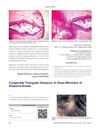
January 2011 in “International Journal of Trichology” CTA is often mistaken for AA but doesn't respond to steroids and may require hair transplantation.
 4 citations
,
January 2014 in “International Journal of Trichology”
4 citations
,
January 2014 in “International Journal of Trichology” This report presents a 12-year-old male with symptoms indicative of Marie-Unna type hereditary hypotrichosis, characterized by a specific pattern of hair loss evolving with age.
1 citations
,
January 2022 in “Dermatology Research and Practice” This study found that gene expression of CD70 and CD27 was higher in alopecia areata lesions and correlated with increased disease severity and activity.
 January 2025 in “Clinical and Translational Medicine”
 This research found that exosome-derived long non-coding RNA AC010789.1, modified by FTO and hnRNPA2B1, enhanced human hair follicle stem cell proliferation against androgenic alopecia through the activation of S100A8/Wnt/β-catenin signaling pathways.
 9 citations
,
January 2023 in “Dermatology and therapy”
9 citations
,
January 2023 in “Dermatology and therapy” This case report describes a 14-year-old girl with alopecia universalis and mild atopic dermatitis who achieved complete hair regrowth and eczema resolution after three months of treatment with the JAK1 inhibitor upadacitinib.
18 citations
,
January 2013 in “PLoS ONE” This study identified several significant genetic variants associated with alopecia universalis, including a novel association with HLA-DRB5, which may play a hidden role in the disease.
This case report describes a novel mutation in the CDH3 gene in an 11-year-old Iranian boy with sparse scalp hair and macular dystrophy, leading to altered P-cadherin synthesis.
December 2025 in “Value in Health”  56 citations
,
December 2011 in “The Plant Journal”
56 citations
,
December 2011 in “The Plant Journal” AGD1 is important for root hair development in Arabidopsis, working with phosphoinositide signaling and the actin cytoskeleton.
May 2017 in “Journal of the American Academy of Dermatology” This study found that Avicennia marina extract significantly increased hair growth in androgenic alopecia patients, suggesting its potential effectiveness by inhibiting 5 alpha-reductase and regulating relevant growth factors.
 181 citations
,
January 2009 in “Nature Genetics”
181 citations
,
January 2009 in “Nature Genetics” In this study, researchers linked defects in U2HR, an inhibitory region in the HR gene, to Marie Unna hereditary hypotrichosis, suggesting a mechanism for controlling hair growth and addressing hair loss.
June 2023 in “Zenodo (CERN European Organization for Nuclear Research)” 56 citations
,
June 2010 in “Clinical and experimental dermatology” In this study, coudability hairs were identified as a useful marker for assessing disease activity in patients with alopecia areata and may serve as an alternative to the hair-pull test.
 8 citations
,
March 2016 in “Hair transplant forum international”
8 citations
,
March 2016 in “Hair transplant forum international” This article discusses hair angle manipulation using the Mega FUE® device but reports no clinical results; disclosure of the author's ownership of the manufacturing company is noted.
3 citations
,
August 2018 in “Journal of Structural Biology” KAP8.1 protein is crucial for hair structure and interacts with keratin 85.
179 citations
,
June 2000 in “The American journal of pathology” This study reports that the asebia-2J mutation in mice affects sebaceous gland function and leads to hair follicle destruction, offering a model for human scarring alopecias.
1 citations
,
September 2021 in “Journal of Cosmetic Dermatology” This study found that the ACE gene I/D polymorphism may serve as a genetic susceptibility indicator for androgenetic alopecia in an Egyptian patient group.
 May 2023 in “Indian journal of science and technology”
 This study found that an Attention-based Balanced Multi-Task Deep learning system achieved a 95.11% accuracy in classifying Alopecia Areata conditions using hair and scalp images, outperforming classical methods.
 1 citations
,
January 2005 in “임상약리학회지”
1 citations
,
January 2005 in “임상약리학회지” This study reported that the topical treatment HDMHG0401-10 significantly improved hair density in men with androgenetic alopecia compared to placebo, although subjective hair growth ratings were not significantly different.
 2 citations
,
June 2000 in “Journal of The American Academy of Dermatology”
2 citations
,
June 2000 in “Journal of The American Academy of Dermatology” In this study, researchers found that heterozygous carriers of a mutation in the hairless gene showed no difference in the pattern of androgenetic alopecia compared to unaffected individuals.
June 2026 in “Clinical and Experimental Dermatology” In this study, researchers observed a rare presentation of alopecia areata characterized by hair shafts with segmental heterochromia and changes in thickness, indicating a fluctuating low-level inflammatory process with recovery periods in the hair's normal characteristics.
 12 citations
,
January 2014 in “Annals of Dermatology”
12 citations
,
January 2014 in “Annals of Dermatology” This study found an association between hydroxyl radical-modified SOD and alopecia areata, suggesting these modifications may lead to antibody induction in the condition.
51 citations
,
January 2007 in “The journal of investigative dermatology/Journal of investigative dermatology” This study identified a novel keratin-associated protein, KAP24.1, which is specifically expressed in the human scalp and located in the hair cuticle.
4 citations
,
January 2017 in “Acta dermato-venereologica” A new EDA gene mutation was found in a Chinese family with a specific skin disorder.
 June 2020 in “bioRxiv (Cold Spring Harbor Laboratory)”
 This study found that the HoxC gene cluster is crucial for the development of hair and nails in mice, with key regulation by two mammalian-specific enhancers.
 August 2023 in “Clinical and Experimental Dermatology”
 The document discusses a special exam case for formulating and using systemic therapy named Athena.
3 citations
,
March 2016 in “Experimental Dermatology” This study found that a hypomorphic mutation in the Hr gene contributes to the development of diet-induced pruritic atopic skin in mice, particularly when combined with dietary deficiencies of polyunsaturated fatty acids and starch.
2 citations
,
July 2013 in “Acervo Digital da Universidade Estadual Paulista (Universidade Estadual Paulista)” This study found that the shampoo formulation with Polyurethane-14 and AMP-acrylates copolymer improved curl definition and reduced frizz and volume in natural and curly hair tresses compared to the control.
2 citations
,
January 2020 in “Benha Journal of Applied Sciences” This study found that serum 8-Hydroxydeoxyguanosine levels were significantly higher in alopecia areata patients compared to healthy controls, suggesting its potential as a diagnostic and prognostic biomarker for the condition.