10 citations
,
January 1989 in “Archives of Dermatological Research” The method effectively analyzes human hair proteins, especially nonfilamentous ones.
7 citations
,
August 2019 in “JAAD Case Reports” This article reviews the potential relationship between serum amyloid A and hidradenitis suppurativa, highlighting genetic influences, but reports no new clinical findings.
 January 2005 in “Translational and Clinical Pharmacology”
 HDMHG0401-10 improves hair loss in men with androgenetic alopecia and has no major side effects.
13 citations
,
August 1985 in “The Journal of Dermatology” This study identified a monoclonal antibody, HKN-2, that recognizes specific cells in human skin and may indicate a common antigenic determinant between hair and other skin epithelial tissues.
 April 2026 in “International Journal of Molecular Sciences”
 In this study, Ageratum houstonianum ethanolic extract and its active component agerarin were found to promote hair growth and follicle elongation by increasing SCUBE3 expression via activation of MAPK–AP-1 signaling in human dermal papilla cells, suggesting potential therapeutic value for treating hair loss.
1 citations
,
September 2024 in “Journal of the American Academy of Dermatology” Farudodstat may effectively treat alopecia areata without harmful side effects.
 June 2026 in “arXiv (Cornell University)”
 This study proposes a new test for genome-wide association studies that incorporates Hardy-Weinberg equilibrium into SNP analysis, demonstrating improved power and interpretability over traditional methods, as evidenced by simulations and an alopecia study dataset.
This study reported that acupuncture combined with topical Aloe vera and celery gel reduced hair loss from alopecia androgenetica after 28 days of treatment.
 10 citations
,
January 1996 in “Journal of Dermatological Treatment”
10 citations
,
January 1996 in “Journal of Dermatological Treatment” In this study, a standardized 7.5% herbal extract significantly increased hair growth in men with androgenetic alopecia compared to a placebo over a 48-week period.
 7 citations
,
January 2015 in “Case reports in genetics”
7 citations
,
January 2015 in “Case reports in genetics” This case report illustrates how SNP array testing helped identify a DCAF17 mutation linked to Woodhouse-Sakati syndrome in consanguineous Qatari siblings with shared features including alopecia and hypogonadotropic hypogonadism.
 November 2023 in “The journal of investigative dermatology/Journal of investigative dermatology”
 This study developed a questionnaire based on Andersen’s behavioral model to explore psychological well-being and mental health help-seeking behaviors among alopecia areata patients from underserved communities, aiming to better understand factors influencing their mental healthcare utilization.
 1 citations
,
March 2023 in “Frontiers in Cardiovascular Medicine”
1 citations
,
March 2023 in “Frontiers in Cardiovascular Medicine” A specific gene variant is linked to heart disease, increased heart muscle, curly hair, and thick skin on palms and soles.
 November 2022 in “Orphanet Journal of Rare Diseases”
 This review discusses treatment options for hereditary angioedema and reports no new results; it highlights concerns about androgen side effects and mentions approved alternatives with fewer serious adverse effects.
 118 citations
,
May 2015 in “European journal of pharmaceutics and biopharmaceutics”
118 citations
,
May 2015 in “European journal of pharmaceutics and biopharmaceutics” This study found that the pH-sensitive hydrogel HECHA13, containing isoliquiritigenin, effectively inhibited the growth of Propionibacterium acnes and showed promise for transdermal delivery in acne treatment.
36 citations
,
July 2007 in “Journal of Investigative Dermatology” This study observed a strong negative association between the HLA-DQB1*0201 allele and the alopecia totalis/alopecia universalis phenotype in Caucasian individuals, indicating a potential protective role.
99 citations
,
March 2013 in “Journal of Investigative Dermatology” This study identified ABCB6 as the first gene linked to dyschromatosis universalis hereditaria (DUH) in a large Chinese family, suggesting it plays a role in skin pigmentation.
 September 2023 in “British Journal of Dermatology”
 This study found that WNT10A variants are associated with short anagen hair in children and may overlap genetically with male pattern hair loss.
 1 citations
,
October 2012 in “The Journal of Dermatology”
1 citations
,
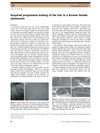
October 2012 in “The Journal of Dermatology” This letter to the editor describes a case of acquired progressive kinking of the hair in a Korean female adolescent, but no new research findings are reported.
66 citations
,
July 2010 in “Journal of Proteome Research” This study suggests that an immune response to trichohyalin and keratin 16 may contribute to the pathogenesis of alopecia areata.
 January 2017 in “Elsevier eBooks”
 Androgenetic alopecia is a common form of hair loss in both men and women.
 30 citations
,
June 2016 in “Journal of Human Genetics”
30 citations
,
June 2016 in “Journal of Human Genetics” This study found pathogenic mutations in genes EDA, EDA1R, and EDARADD in 101 out of 124 hypohidrotic ectodermal dysplasia patients, revealing 23 novel mutations and indicating genetic variability.
September 2019 in “The journal of investigative dermatology/Journal of investigative dermatology” This study found that in hidradenitis suppurativa, the proteins SERPINB3/B4 and S100A7/A8/A9 were significantly overexpressed in lesional skin compared to nonlesional skin, suggesting new pathways in the disease's pathogenesis.
 6 citations
,
February 2023 in “Journal of nanobiotechnology”
6 citations
,
February 2023 in “Journal of nanobiotechnology” In this study, HA-P5, a nanoparticle derived from peptide and polysaccharide conjugation, effectively reduced acne lesions and sebum production by inhibiting specific receptors in cells, without triggering unfavorable reactions compared to a commercial inhibitor, highlighting HA-P5's potential as a novel acne treatment.
September 2026 in “Apollo Medicine” In this case report, researchers observed that a 35-year-old male with alopecia universalis achieved full regrowth of scalp, eyebrow, and facial hair with oral upadacitinib treatment after previous therapies failed to provide lasting relief.
 August 1995 in “Journal of The European Academy of Dermatology and Venereology”
 New therapy helps treat hair loss.
 2 citations
,
August 2012 in “Journal of the American Academy of Dermatology”
2 citations
,
August 2012 in “Journal of the American Academy of Dermatology” This correspondence describes two patients with both epidermolysis bullosa simplex, Dowling-Meara type, and loose anagen hair syndrome, an association not previously reported in the literature.
 September 2016 in “Journal of Dermatological Science”
 This study reports a case of GGCX syndrome in a 55-year-old Japanese male, characterized by PXE-like symptoms and coagulation deficiency, with an unreported phenotype of possible spinocerebellar degeneration.
 13 citations
,
February 2007 in “British Journal of Dermatology”
13 citations
,
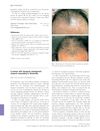
February 2007 in “British Journal of Dermatology” EF and PXE not closely related.
 2 citations
,
January 2015 in “Hair transplant forum international”
2 citations
,
January 2015 in “Hair transplant forum international” This article discusses the introduction of human recombinant hyaluronidase in hair restoration surgery and presents no new clinical results.
 42 citations
,
April 2009 in “Human Genetics”
42 citations
,
April 2009 in “Human Genetics” This study suggests that the AGA risk haplotype in Europeans was driven to high frequency by positive selection, likely associated with a variant in the EDA2R gene.