26 citations
,
June 2024 in “Frontiers in Immunology” The authors discussed that SOCS1 and SOCS3's inhibition of JAKs plays a significant role in the development of JAK inhibitor drugs for skin inflammatory diseases and malignancies.
 13 citations
,
November 2017 in “Journal of Cellular and Molecular Medicine”
13 citations
,
November 2017 in “Journal of Cellular and Molecular Medicine” This workshop reviewed various roles of endoplasmic reticulum chaperones, including calreticulin, in cellular signaling, disease states, and potential markers, but reports no new experimental findings.
6 citations
,
June 2025 in “Nano Biomedicine and Engineering” This source reports on advances in stimulus-responsive nanoparticle-based PROTACs (nano-PROTACs), which aim to overcome existing challenges like poor cell permeability and systemic off-target effects by enabling controlled protein degradation through endogenous or exogenous stimuli, potentially enhancing therapeutic efficacy and reducing toxicity.
1 citations
,
January 2024 in “Fibrosis” This review examines advancements in hydrogel formulations aimed at preventing dermal fibrosis and promoting scarless wound healing, highlighting their role in regulating myofibroblast differentiation and controlling the wound microenvironment.
1 citations
,
July 2023 in “Pharmaceutics” In this study, researchers developed grooved microneedles made from hyaluronic acid for precise transdermal drug delivery, achieving accurate dosage with a high probability of delivery (98% or more) by using an easy-to-operate applicator for shearing force.
 August 2026 in “Pharmaceuticals”
 This review reports that biopolymer-based hydrogels show promise as wound dressings due to their biocompatibility, moisture retention, and ability to mimic the extracellular matrix, though challenges in mass production, safety, and clinical validation remain.
 January 2025 in “Nanoscale”
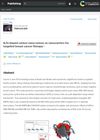
 This study reports that a new boron/nitrogen-doped carbon nano-onion-based delivery system for doxorubicin enhanced its uptake and anticancer effects in specific cancer cell types, while reducing cardiotoxicity in human heart cells.
 April 2024 in “Bioactive materials”
 This study found that a microneedle system delivering VEGF and Ritlecitinib improved hair regeneration in mice with androgenetic alopecia, showing faster anagen onset and better hair quality compared to minoxidil.
 August 2023 in “International Journal of Molecular Sciences”
 In this study, researchers developed a new sodium alginate/chitosan/Zn2+ hydrogel that showed improved physical properties, antibacterial activity, and biocompatibility, and demonstrated enhanced wound healing and skin regeneration in an in vitro model.
18 citations
,
June 2010 in “Cell Stress and Chaperones” This study reported that heat treatment significantly increased the incidence of alopecia areata in C3H/HeJ mice, suggesting a role for induced HSPA1A/B expression in disease development.
 May 2025 in “Journal of Craniofacial Surgery Open”
 This case study observed that high-intensity focused ultrasound treatment significantly improved hair density and reduced hair loss in a female patient with androgenetic alopecia, with no adverse events reported.
 January 2025 in “Advances in Dermatology and Allergology”
 This study found that the Polish version of the AA-QLI questionnaire is a reliable and internally consistent tool for assessing health-related quality of life in Polish-speaking patients with alopecia areata.
 22 citations
,
November 2021 in “Dermatology and Therapy”
22 citations
,
November 2021 in “Dermatology and Therapy” This study found that the Alopecia Areata Patient Priority Outcomes questionnaire is a reliable and valid tool for measuring the severity and impact of hair loss in individuals with alopecia areata.
 5 citations
,
November 2017 in “Asian journal of pharmaceutical and clinical research”
5 citations
,
November 2017 in “Asian journal of pharmaceutical and clinical research” This study found that water fractions of Angiopteris evecta stimulated hair growth in male rabbits, suggesting potential alopecia treatment benefits pending further research in humans.
This study reported that acupuncture combined with topical Aloe vera and celery gel reduced hair loss from alopecia androgenetica after 28 days of treatment.
 March 2025 in “ACS Applied Materials & Interfaces”
 This study found that using an ultrasound hollow microneedle array enhanced transdermal delivery of finasteride, accelerating hair regrowth in mice with androgenetic alopecia compared to other delivery methods.
3 citations
,
May 2025 in “Carbohydrate Polymers” In this study, researchers developed a dissolvable microneedle patch containing baricitinib for alopecia areata treatment, reporting significantly higher hair growth in mouse models compared to controls, suggesting its potential as an effective, pain-free topical therapy.
2 citations
,
January 2023 in “Skin Appendage Disorders” This review discusses the evaluation, diagnosis, and management of beard alopecia areata and reports no new clinical results, though it highlights recent treatment advances with janus kinase inhibitors.
 July 2022 in “Journal of Investigative Dermatology”
 This study suggests that interleukin-15 plays a complex role in alopecia areata, potentially contributing to immune infiltration while also protecting against hair follicle immune privilege collapse and promoting hair growth.
 6 citations
,
June 2018 in “PLOS ONE”
6 citations
,
June 2018 in “PLOS ONE” This study demonstrated that the Alopecia Areata Assessment Tool (ALTO) effectively identifies alopecia areata cases with high sensitivity and specificity in a dermatology clinic setting.
August 2017 in “Seoul National University Open Repository (Seoul National University)” The study investigated the role of Aminoacyl-tRNA synthetase interacting multifunctional protein 1 (AIMP1) in hair follicle stem cell proliferation and its potential as a treatment for alopecia. AIMP1, when dissociated from the multi-tRNA synthetase complex, was found to be secreted by dermal papilla cells in a sonic hedgehog (Shh) signal-dependent manner. This secretion increased the proliferation of CD34+ hair follicle stem cells by promoting the wnt signaling pathway through inhibition of sFRP1, a known wnt antagonist. The research demonstrated that the N-terminal fragment of AIMP1 could be developed into a therapeutic peptide for hair loss. When applied topically to depilated mice, this peptide significantly accelerated hair growth, especially when formulated with carbomer. The findings highlighted a novel mechanism of AIMP1 action and its potential application in alopecia treatment.
In this study, a newly designed protein degrader targeting androgen receptors showed promise in reversing hair regrowth inhibition in a mouse model of androgenetic alopecia, suggesting potential as a novel and safe treatment strategy.
 3 citations
,
May 2015 in “Journal of The American Academy of Dermatology”
3 citations
,
May 2015 in “Journal of The American Academy of Dermatology” Adalimumab significantly improves quality of life for patients with moderate to severe hidradenitis suppurativa.
 11 citations
,
March 2021 in “Dermatology and therapy”
11 citations
,
March 2021 in “Dermatology and therapy” This study developed the Alopecia Areata Patient Priority Outcome (AAPPO), a new tool designed to measure and capture the symptoms and impacts of alopecia areata that matter most to patients.
 July 2026 in “Journal of King Saud University - Computer and Information Sciences”
 This study introduced a novel framework that significantly improves the accuracy of alopecia areata lesion segmentation in semi-supervised scenarios, outperforming existing methods and aiding in the disease's diagnosis, treatment, and staging, which can impact quality of life and mental well-being.
In this study, researchers found that aloe vera hair tonic preparations containing 10% and 15% extract concentrations significantly enhanced hair growth in rats and remained physically stable across various temperature conditions.
January 2026 in “Zenodo (CERN European Organization for Nuclear Research)” This document promotes an Erthwellness discount code that offers a 25% reduction on all their natural health products, without presenting any new research findings.
 1 citations
,
April 2019 in “The journal of investigative dermatology/Journal of investigative dermatology”
1 citations
,
April 2019 in “The journal of investigative dermatology/Journal of investigative dermatology” This study found that anagen stage protein homogenates and specific epitopes from melanogenesis proteins activated CD8 T cells, suggesting alopecia areata is an anagen-specific disease.
This study found that a 10% hibiscus leaf extract hair tonic demonstrated better hair growth activity than 2% minoxidil in rabbits but caused eye irritation.
 4 citations
,
August 2019 in “Journal of Dermatology”
4 citations
,
August 2019 in “Journal of Dermatology” This study found that polyamine levels in hair samples differ between androgenic alopecia and alopecia areata, suggesting potential non-invasive biomarkers to distinguish between these hair loss conditions.