66 citations
,
April 1989 in “Alcoholism Clinical and Experimental Research” This study found that the ethanol patch test effectively indicates the ALDH phenotype in healthy Japanese individuals, suggesting its usefulness for future research.
 January 2019 in “Journal of Case Reports and Scientific Images”
 This case report describes the treatment of a 12-year-old female with Alopecia Areata using oral azathioprine.
May 2009 in “Faculty Opinions – Post-Publication Peer Review of the Biomedical Literature” DHEA therapy improved pubic hair growth and psychological well-being in young females with adrenal insufficiency.
 2 citations
,
August 2024 in “Animal Bioscience”
2 citations
,
August 2024 in “Animal Bioscience” This study suggests that m6A-circHECA may influence the physiology of cashmere goats' SHFs both through miRNA pathways and interactions with target proteins, with promoter methylation potentially inhibiting its gene expression.
 19 citations
,
June 2008 in “Journal of Investigative Dermatology”
19 citations
,
June 2008 in “Journal of Investigative Dermatology” This study found that transgenic mice with expression of HPV16 E6/E7 oncogenes showed improved ear tissue regeneration, including hair follicles and cartilage, without tumor formation.
12 citations
,
May 2016 in “British Journal of Dermatology” This report describes a rare case of epidermolysis bullosa acquisita in a child developing during therapy with squaric acid dibutyl ester for alopecia areata, suggesting a possible link between the medication and disease onset.
 May 2025 in “Journal of Nanobiotechnology”
 This study reported that an ATRA-loaded nanostructured lipid carrier gel (ATRA-NLC-Gel) improved symptoms of alopecia areata in mice by enhancing transdermal drug delivery, reducing skin irritation, and promoting hair regrowth through targeted follicle enrichment and pathway activation.
18 citations
,
June 2010 in “Cell Stress and Chaperones” This study reported that heat treatment significantly increased the incidence of alopecia areata in C3H/HeJ mice, suggesting a role for induced HSPA1A/B expression in disease development.
October 2022 in “Journal of pharmaceutical negative results” This study found that patients with Alopecia areata in Iraq had significantly higher levels of CD4+, CD39+, and FOXP3+ Treg cells in their blood compared to healthy controls.
 47 citations
,
December 2019 in “Frontiers in immunology”
47 citations
,
December 2019 in “Frontiers in immunology” This study identified a novel G207E STING mutation associated with severe inflammatory symptoms and suggested that common polymorphisms in TMEM173 and IFIH1 may modify the phenotype in affected individuals.
 3 citations
,
January 2018 in “Reproduction, Fertility and Development”
3 citations
,
January 2018 in “Reproduction, Fertility and Development” This study concluded that cyproterone acetate alone produced antiandrogenic effects on the female gerbil prostate, while ethinyloestradiol alone stimulated estrogenic activity, and their combination led to prostatic lesions.
 39 citations
,
August 2022 in “Cell Death and Disease”
39 citations
,
August 2022 in “Cell Death and Disease” This study found that a dopamine-methacrylated hyaluronic acid hydrogel enhances the efficacy of adipose-derived stem cells in promoting skin regeneration, potentially involving the Notch signaling pathway.
June 2023 in “Value in Health” Alopecia areata treatments often cause headaches and infections, highlighting the need for safer options.
 February 2023 in “Cosmoderma”
 This study found that combining red light therapy with oral beta-carotene significantly improved photoaging treatment outcomes compared to red light therapy alone, with Group A showing a 56.12% reduction in photoaging scores over 12 weeks versus 44.78% in Group B.
 August 2026 in “Molecules”
 This study found that Eucommia ulmoides bark extract shows potential antioxidant and hair follicle-support properties in vitro and in vivo, but further validation is needed to confirm these effects.
227 citations
,
January 1998 in “Journal of biological chemistry/The Journal of biological chemistry” This study suggests that the residues Val-889 and Arg-752 in the androgen receptor steroid binding domain are crucial for the intermolecular interaction necessary for receptor dimerization and function.
4 citations
,
January 2017 in “Acta dermato-venereologica” A new EDA gene mutation was found in a Chinese family with a specific skin disorder.
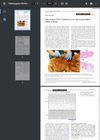 May 2024 in “Animal genetics”
 The researchers investigated a Maine Coon cat with suspected classical Ehlers-Danlos Syndrome and discovered a heterozygous deletion in the COL5A1 gene, underscoring the value of whole-genome sequencing for precise veterinary diagnostics.
May 2025 in “OPAL (Open@LaTrobe) (La Trobe University)” This study revealed that tofacitinib may inhibit CD8+ T cell infiltration in alopecia areata by modulating the linoleic acid metabolism-Mg2+ pathway, providing new insights for potential treatments and diagnosis.
 May 2017 in “Journal of The American Academy of Dermatology”
 LED light helps human hair root cells grow and move by activating certain cell pathways.
August 2026 in “JAMA Dermatology” This study found that upadacitinib significantly improved hair regrowth compared to placebo in adults and adolescents with severe alopecia areata, and demonstrated a positive benefit-risk profile.
July 2024 in “Journal of Investigative Dermatology” Allergic contact dermatitis may promote hair growth by activating hair follicle stem cells.
 1 citations
,
January 2023 in “In vivo/In Vivo”
1 citations
,
January 2023 in “In vivo/In Vivo” This study suggests that the activation of box A in mesenchymal cell models may enhance stem cell properties, increasing the expression of stemness markers like OCT4, NANOG, and SOX2.
 2 citations
,
May 2023 in “Plants”
2 citations
,
May 2023 in “Plants” In this study, Allium hookeri extract increased viability and size of dermal papilla cell spheroids and reduced oxidative stress effects, potentially promoting hair growth by regulating specific protein signaling pathways in human cells.
February 2026 in “International Journal of Dermatology” In a single-center study, adolescents with moderate-to-severe alopecia areata treated with ritlecitinib 50 mg daily for 24 weeks showed significant hair regrowth, with 27.3% achieving near-complete regrowth and 45.5% substantial improvement, without serious safety concerns, according to these researchers.
August 2024 in “Proceeding Cendekia International Conference Health and Technology” In this quasi-experimental study, researchers explored the optimal formulation of a nanoemulsion containing candlenut ethanol extract, finding that specific combinations of tween 80, span 80, and sonication time affected its physical properties and stability, although further activity testing is needed.
May 2025 in “Clinical Proteomics” In this study, researchers identified three proteins, DEFB1, HGFAC, and CYB5D2, as potential drug targets for alopecia areata, and suggested that the traditional Chinese medicine ingredient cimigenol shows promise in interacting with DEFB1 for potential treatment.
 7 citations
,
January 2022 in “Scientific Reports”
7 citations
,
January 2022 in “Scientific Reports” This study found that Acanthus ebracteatus extract and verbascoside induced dermal papilla cell proliferation and reduced inflammatory cytokine release in vitro, suggesting potential for anti-hair loss applications.
February 2024 in “Al-Azhar International Medical Journal /Al-Azhar International Medical Journal” This study concluded that topical betamethasone valerate lotion is more effective than topical 15% lactic acid solution for managing multiple patchy alopecia areata over a 12-week treatment period.
3 citations
,
October 2024 in “The Journal of Clinical Endocrinology & Metabolism” This study found that signs of potential adverse events varied based on demographic and health factors in a large cohort, suggesting the need for more inclusive evaluations to better understand these differences at a population level.