January 2023 in “Zenodo (CERN European Organization for Nuclear Research)” This article reviews the polycystic ovary syndrome as a polyendocrine disease, detailing its etiology, pathogenesis, and research methods, but presents no new clinical results.
October 2025 in “Journal of the Endocrine Society” This case report describes a 36-year-old female patient with panhypopituitarism, experiencing severe adrenal insufficiency and thyroid hormone deficiency, which led to electrolyte imbalance, QT interval prolongation, and ventricular tachycardia; treatment stabilized her condition, underscoring the importance of hormonal evaluation in arrhythmia assessment.
 October 2023 in “IntechOpen eBooks”
 This book chapter reviews the genetic and epigenetic factors influencing PCOS, particularly in a global context and specific to India, and reports no new clinical findings.
 October 2007 in “Postgraduate obstetrics & gynecology”
 This article reviews the unapproved use of testosterone for treating female androgen insufficiency and reports no new clinical results.
 28 citations
,
July 2017 in “Journal of Endocrinological Investigation”
28 citations
,
July 2017 in “Journal of Endocrinological Investigation” This study suggests that early onset androgenetic alopecia in men may indicate a male PCOS equivalent, possibly leading to higher risks of metabolic and cardiovascular disorders later in life.
 1 citations
,
March 2011 in “Infertility”
1 citations
,
March 2011 in “Infertility” This chapter discusses common endocrine disorders affecting the pituitary, thyroid, and adrenal glands, and their impact on human fertility, emphasizing practical evaluation and treatment algorithms.
16 citations
,
May 2020 in “Psychoneuroendocrinology” This study observed that Parkinson’s disease patients had higher hair cortisone, but not cortisol, levels compared to controls, and cortisone was significantly associated with mood-related non-motor symptoms.
 September 2023 in “F&S reports”
 This review examines theories linking PCOS with psychiatric disorders, highlighting dietary interventions like probiotics and nutrients as possible improvements, but reports no new clinical findings and calls for more research.
15 citations
,
August 2022 in “The Application of Clinical Genetics” This review describes the clinical presentation, diagnosis, and management of adrenomyeloneuropathy, including rehabilitative therapies and spasticity management, and reports no new clinical results.
8 citations
,
September 2005 in “Practical diabetes” This article discusses management strategies for polycystic ovary syndrome, emphasizing the role of insulin resistance and the importance of addressing associated cardiovascular risk factors; it reports no new clinical results.
August 2019 in “Repozitorij Farmaceutsko-biokemijskog fakulteta (Sveučilišta u Zagrebu)” This review discusses the pathophysiological characteristics and treatment options for polycystic ovary syndrome, reporting no new clinical results; the authors emphasize combining non-pharmacological measures with pharmacological treatments for optimal patient management.
 11 citations
,
January 2013 in “Indian Journal of Endocrinology and Metabolism”
11 citations
,
January 2013 in “Indian Journal of Endocrinology and Metabolism” This case study describes an extremely rare instance of androgen-secreting adrenocortical carcinoma in a patient with non-classical congenital adrenal hyperplasia.
 7 citations
,
January 2025 in “Archives of Gynecology and Obstetrics”
7 citations
,
January 2025 in “Archives of Gynecology and Obstetrics” In this review, the authors aim to improve the differential diagnosis between hyperandrogenic PCOS and NCAH, which could lead to more personalized treatment strategies for patients experiencing hyperandrogenism.
 38 citations
,
January 2014 in “International Journal of Endocrinology”
38 citations
,
January 2014 in “International Journal of Endocrinology” This review highlights that children with adrenal disorders may experience neurological and psychiatric symptoms, with potential long-term cognitive and behavioral effects from excess glucocorticoids.
 40 citations
,
February 2005 in “Fertility and Sterility”
40 citations
,
February 2005 in “Fertility and Sterility” This study suggests that although the G972R variant of the IRS1 gene might increase AA excess risk in heterozygous carriers with CYP21 mutations, both variations play a limited role in PCOS development.
 20 citations
,
December 2000 in “Fertility and Sterility”
20 citations
,
December 2000 in “Fertility and Sterility” This study found that the N363S variant of the glucocorticoid receptor was rare among women with PCOS and did not significantly contribute to genetic risk for PCOS or adrenal androgen excess.
 1 citations
,
July 2015 in “Cambridge University Press eBooks”
1 citations
,
July 2015 in “Cambridge University Press eBooks” Testosterone therapy can improve sexual function in women but long-term safety is unclear.
 May 2025 in “The Journal of Rheumatology”
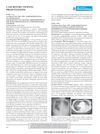
 This case report details a rare instance of primary adrenal insufficiency as a manifestation of antiphospholipid syndrome, with the patient successfully managed through glucocorticoids, warfarin, and hydroxychloroquine.
 223 citations
,
December 2010 in “The Journal of Sexual Medicine”
223 citations
,
December 2010 in “The Journal of Sexual Medicine” This review discusses persistent adverse effects of 5α‐reductase inhibitors, like diminished libido and erectile dysfunction, in some patients and highlights the need for patient discussions before therapy, especially for androgenetic alopecia.
 176 citations
,
June 2017 in “Sexual Medicine Reviews”
176 citations
,
June 2017 in “Sexual Medicine Reviews” This review discusses the increasing prevalence of erectile dysfunction in young men and emphasizes the importance of identifying specific causes for effective management, reporting no new clinical results.
 151 citations
,
December 2004 in “Annals of the New York Academy of Sciences”
151 citations
,
December 2004 in “Annals of the New York Academy of Sciences” This review discusses nonclassical 21-hydroxylase deficiency as the most common autosomal recessive disorder in humans and highlights the effectiveness of glucocorticoid treatment in reversing related symptoms.
 107 citations
,
August 2002 in “Journal of Neurology, Neurosurgery, and Psychiatry”
107 citations
,
August 2002 in “Journal of Neurology, Neurosurgery, and Psychiatry” Women with epilepsy should be monitored for reproductive issues, which can be caused by epilepsy or its treatments, especially when using valproate.
 88 citations
,
April 2017 in “Journal of Pediatric and Adolescent Gynecology”
88 citations
,
April 2017 in “Journal of Pediatric and Adolescent Gynecology” This review discusses the pathophysiology, diagnosis, and treatment of congenital adrenal hyperplasia, but reports no new research results.
 75 citations
,
January 2014 in “Korean Journal of Urology”
75 citations
,
January 2014 in “Korean Journal of Urology” This review discusses the adverse effects of 5α-reductase inhibitors, finasteride and dutasteride, on sexual, psychological, and vascular health, emphasizing the need for physicians to inform patients of these risks.
 66 citations
,
April 2017 in “International Journal of Andrology”
66 citations
,
April 2017 in “International Journal of Andrology” This study found that 5α-reductase inhibitors significantly increase the risk of erectile dysfunction and hypoactive sexual desire in men with benign prostatic hyperplasia, compared to placebo.
 34 citations
,
January 2008 in “International Review of Neurobiology”
34 citations
,
January 2008 in “International Review of Neurobiology” This review discusses the interplay between epilepsy and reproductive endocrine disorders, examining the factors involved and emphasizing the importance of monitoring but reports no new research findings.
 30 citations
,
September 2016 in “BMJ”
30 citations
,
September 2016 in “BMJ” This study found that 5-α reductase inhibitors do not significantly increase the risk of erectile dysfunction in men with benign prostatic hyperplasia or alopecia, although duration of benign prostatic hyperplasia may elevate risk.
 24 citations
,
September 2001 in “Journal of The American Academy of Dermatology”
24 citations
,
September 2001 in “Journal of The American Academy of Dermatology” Women's ovarian hormones and adrenal androgens change throughout life, affecting hair loss and health.
 20 citations
,
June 2017 in “Hormone Molecular Biology and Clinical Investigation”
20 citations
,
June 2017 in “Hormone Molecular Biology and Clinical Investigation” This study found that long-term dutasteride therapy in men with benign prostatic hyperplasia worsened erectile dysfunction, reduced testosterone levels, and increased blood glucose and lipid profile, indicating negative metabolic impacts.
 20 citations
,
June 2015 in “Hormone Molecular Biology and Clinical Investigation”
20 citations
,
June 2015 in “Hormone Molecular Biology and Clinical Investigation” This study found that long-term finasteride therapy in men with BPH worsened erectile dysfunction and reduced testosterone levels, while these effects were not observed with tamsulosin.