7 citations
,
November 2013 in “Journal of aesthetic nursing” This article reviews the use of carboxytherapy for alopecia, sharing the authors' experiences, but reports no new clinical results.
18 citations
,
August 2019 in “Clinical breast cancer” This meta-analysis found that in postmenopausal women with a history of breast cancer, 8 weeks of vaginal estrogen therapy while on aromatase inhibitors did not result in systemic absorption of sex hormones, suggesting potential safety for treating vulvovaginal atrophy in this context.
 1 citations
,
January 2020 in “Surgical & Cosmetic Dermatology”
1 citations
,
January 2020 in “Surgical & Cosmetic Dermatology” This article examines the potential of using oral minoxidil as an adjuvant treatment for patients with severe alopecia areata who do not respond to increased doses of Janus kinase inhibitors, but provides no new clinical results.
6 citations
,
December 2021 in “Journal of Cancer Research and Therapeutics” In this study, induction nab-paclitaxel plus cisplatin, combined with nimotuzumab and IMRT, followed by S-1 adjuvant chemotherapy, showed excellent survival benefits with tolerable toxicities for stage N3 nasopharyngeal carcinoma patients.
 January 2025 in “Journal of Aesthetic Nursing”
 This review discusses the expanding role of microneedling in dermatology, highlighting its enhanced effectiveness when combined with other treatments like minoxidil, platelet-rich plasma, and exosomes, but reports no clinical results.
 February 2016 in “Journal of urology and nephrology open access”
 This review discusses the role of finasteride preoperatively in reducing bleeding and complications during TURP and reports no new clinical results; the authors emphasize its potential benefits based on existing studies.
 19 citations
,
November 2016 in “Dermatology and therapy”
19 citations
,
November 2016 in “Dermatology and therapy” This study describes a case where stopping infliximab and using oral minocycline with topical treatments effectively resolved alopecia and scalp psoriasis in a woman with Crohn's disease.
 17 citations
,
January 2020 in “Skin appendage disorders”
17 citations
,
January 2020 in “Skin appendage disorders” This review suggests that the Mediterranean diet, protein-rich diets, and soy may support hair health in nonscarring alopecias like androgenetic alopecia.
 11 citations
,
May 2023 in “Journal of Cutaneous Medicine and Surgery”
11 citations
,
May 2023 in “Journal of Cutaneous Medicine and Surgery” This study found that combining plasma rich in growth factors with conventional treatment significantly improved hair regrowth and reduced symptoms in patients with frontal fibrosing alopecia compared to conventional treatment alone.
April 2026 in “Frontiers in Medicine” This study observed that 675-nm diode laser therapy may serve as a safe and possibly effective adjuvant treatment for telogen effluvium, showing improvements in hair pull test results, pruritus, and trichodynia among patients. However, controlled studies are needed to confirm its efficacy.
 3 citations
,
July 2018 in “Cureus”
3 citations
,
July 2018 in “Cureus” This case study reports that a woman with breast cancer experienced persistent alopecia after taxane chemotherapy and endocrine therapy, and significant improvement was seen with topical minoxidil.
 279 citations
,
June 1990 in “Journal of Clinical Oncology”
279 citations
,
June 1990 in “Journal of Clinical Oncology” The study found that for positive-node breast cancer patients aged 50 and older, adding chemotherapy to tamoxifen significantly improved disease-free survival compared to tamoxifen alone.
This study suggests that bioactives like Curcumin, Quercetin, and "Tulsi" may relieve chemotherapy-induced adverse drug reactions in cancer patients, potentially reducing resistance and recurrence.
 March 2026 in “Cosmoderma”
 This clinical study found that using a cream or lotion as an additional treatment alongside standard care for atopic dermatitis significantly reduced symptoms and improved skin moisturization and barrier function within 28 days compared to standard care alone in participants with mild-to-moderate eczema.
6 citations
,
January 2021 in “Journal of Cosmetic Dermatology” This study found that combining follicular unit extraction with topical calcipotriol betamethasone dipropionate showed the best repigmentation results in treating stable nonsegmental vitiligo.
1 citations
,
January 2024 in “The Journal of Dermatology” In this study, Asian breast cancer patients undergoing taxane-based chemotherapy in the adjuvant treatment group reported significantly increased hair loss, higher melanin index, and more wrinkles compared to other treatments, while most neoadjuvant group patients saw hair loss reversed six months post-surgery.
18 citations
,
October 2015 in “Journal of the European Academy of Dermatology and Venereology” In this study, topical eflornithine reduced hair regrowth in hirsute patients following intense pulsed light therapy, suggesting it may maintain IPL-induced hair reduction over six months.
 May 2026 in “International Journal of Homoeopathic Sciences”
 This case study reported that individualized classical homeopathic treatment, combined with aesthetic therapy, led to significant and sustained improvement in androgenetic alopecia for a young male patient over 30 months.
 13 citations
,
August 1980 in “Cancer”
13 citations
,
August 1980 in “Cancer” This study found that administering chemotherapy to premenopausal women with Stage II breast cancer significantly improved disease-free intervals and increased survival, while postmenopausal women receiving sufficient doses also saw prolonged disease-free periods.
April 2026 in “Actas Dermo-Sifiliográficas” This study reports that scalp cooling therapies and minoxidil may promote hair regrowth in patients experiencing persistent chemotherapy-induced alopecia, with trichoscopy aiding in treatment assessment.
This case report highlights a potential link between silicone breast implants and autoimmune/inflammatory syndrome induced by adjuvants, suggesting explantation may help improve symptoms.
 9 citations
,
August 2018 in “JAAD Case Reports”
9 citations
,
August 2018 in “JAAD Case Reports” This article discusses alopecia areata, highlighting its autoimmune nature and the lack of FDA-approved treatments, without providing new research findings.
8 citations
,
January 2019 in “Journal of cosmetic dermatology” This study found that six sessions of a modified phenol peel effectively reduced hyperpigmentation in patients with Lichen Planus Pigmentosus, with 76% of treated individuals experiencing at least a 25% improvement, and no serious side effects reported.
7 citations
,
September 2014 in “Journal of the American Academy of Dermatology” This study reports that dermoscopy can improve the diagnosis of epidermal cysts by making small puncta visible, which are often missed during standard visual examinations.
 March 2019 in “Applied sciences”
 This case report suggests that 1064 nm picosecond Nd:YAG laser therapy may effectively improve alopecia totalis when used as an alternative adjuvant treatment, as demonstrated in a split-scalp study showing better results than steroid treatment alone.
 September 2009 in “European Urology Supplements”
 Surgery for high-risk prostate cancer is challenging but doesn't lead to more complications, and additional treatment is often needed.
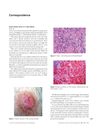 October 2010 in “International Journal of Dermatology”
 An 86-year-old man with prostate cancer was diagnosed with a rare, low-grade breast cancer and underwent surgery but declined additional hormone therapy.
 13 citations
,
July 2019 in “Dermatologic therapy”
13 citations
,
July 2019 in “Dermatologic therapy” This case report describes a 37-year-old woman who developed scalp psoriasis and severe alopecia after taking adalimumab, with complete hair regrowth following treatment change.
 19 citations
,
June 2018 in “Breast Cancer Research and Treatment”
19 citations
,
June 2018 in “Breast Cancer Research and Treatment” This study found that adjuvant docetaxel treatment for breast cancer at cumulative doses of 400 mg/m² or higher is associated with a 10% prevalence of persistent alopecia leading to wig use, but this was completely prevented with scalp cooling.
 9 citations
,
January 2018 in “Plastic and Reconstructive Surgery – Global Open”
9 citations
,
January 2018 in “Plastic and Reconstructive Surgery – Global Open” Using PDRN injections and RF treatments improved revision nose surgery results without major side effects.