33 citations
,
April 2015 in “Cochrane library” This review examined various treatments for hirsutism and found low to very low quality evidence suggesting that flutamide and spironolactone may help reduce hair growth, while metformin was ineffective.
 4 citations
,
May 2019 in “Sultan Qaboos University Medical Journal”
4 citations
,
May 2019 in “Sultan Qaboos University Medical Journal” Tofacitinib helped regrow hair in a patient with severe hair loss and improved their quality of life without side effects.
 5 citations
,
March 2016 in “Drug Development and Industrial Pharmacy”
5 citations
,
March 2016 in “Drug Development and Industrial Pharmacy” This article reviews the promising ease of drug administration via transdermal and other topical routes, highlighting their potential for high patient compliance and reduced side effects but provides no new clinical results.
 10 citations
,
March 2016 in “Journal of The American Academy of Dermatology”
10 citations
,
March 2016 in “Journal of The American Academy of Dermatology” This review discusses the potential usefulness and safety profile of oral antiandrogens for treating frontal fibrosing alopecia, noting possible benefits but acknowledges that finasteride's efficacy remains uncertain.
 185 citations
,
June 2014 in “Journal of Investigative Dermatology”
185 citations
,
June 2014 in “Journal of Investigative Dermatology” This case report describes complete hair regrowth in a patient with alopecia universalis and improved psoriasis after treatment with the oral Janus kinase inhibitor, tofacitinib.
20 citations
,
June 2019 in “JAAD Case Reports” This article reviews the use of tofacitinib for rheumatoid and psoriatic arthritis and alopecia areata, noting potential serious side effects, but reports no cases of palmoplantar pustulosis from the therapy.
 117 citations
,
March 2013 in “Journal of the European Academy of Dermatology and Venereology”
117 citations
,
March 2013 in “Journal of the European Academy of Dermatology and Venereology” This study reported that while no effective treatment exists for frontal fibrosing alopecia, oral 5-alpha-reductase inhibitors showed the most promise, inducing a good clinical response in 45% of patients.
 April 2025 in “Frontiers in Immunology”
 This case report describes significant therapeutic effects from Tofacitinib Citrate Sustained-Release Tablets in a patient with Alopecia Areata, while highlighting the economic burden of long-term treatment.
 1 citations
,
May 2001 in “Pharmacology & Toxicology”
1 citations
,
May 2001 in “Pharmacology & Toxicology” This review discusses the preclinical findings on cyproterone acetate and suggests that while it has a low potential cancer risk for patients, its tumor effects in female rats may involve both genotoxic and mitogenic mechanisms.
 1 citations
,
January 2005 in “Side effects of drugs annual”
1 citations
,
January 2005 in “Side effects of drugs annual” This chapter reviews various dermatological drugs and treatments, highlighting adverse effects, with no new clinical findings reported.
December 2022 in “Zenodo (CERN European Organization for Nuclear Research)” In this report, a 14-year-old female with stubborn alopecia areata was successfully treated with oral tofacitinib, indicating its potential effectiveness for severe cases.
64 citations
,
March 1984 in “Journal of steroid biochemistry/Journal of Steroid Biochemistry” In this study, cyproterone acetate combined with estradiol dramatically improved hirsutism symptoms and significantly reduced plasma testosterone and androstenedione levels in patients over periods of up to three years.
September 2018 in “PubMed” This review discusses various strategies, including vitamin A and dextromethorphan supplementation, to manage methotrexate toxicity and improve adherence in patients with rheumatic diseases, but reports no new clinical results.
7 citations
,
September 1988 in “Baillière's clinical obstetrics and gynaecology” This article discusses the mechanisms of hirsutism and acne in women, highlighting cyproterone acetate with ethinyloestradiol as an effective anti-androgen therapy in the UK, but it reports no new clinical findings.
June 2026 in “JAAD Case Reports” ![The Synthesis of (−)-4-Methyl-8-Chloro-Trans-1,2,3,4,4a,5,6,10b-Octahydrobenzo-[f]-Quinolin-3-One-[3-14C] (LY300502-14C) via a Circuitous Route](/images/assets/73bab8dc-bdf0-45e3-8ef7-73d0d4b93cb1/small/21074.jpg) 3 citations
,
October 1994 in “Journal of Labelled Compounds and Radiopharmaceuticals”
3 citations
,
October 1994 in “Journal of Labelled Compounds and Radiopharmaceuticals” This synthesis report details the successful development of a C-14 labeled isotopomer of LY300502, a 5α-reductase inhibitor, through a multi-step radiochemical process.
This abstract introduces TrichoFoam™, a new foaming vehicle for compounding pharmacies, designed to be a gentle, non-irritating option for alopecia treatment, acknowledging that current topical treatments are limited and oral products may cause adverse effects.
 December 2023 in “Acta dermato-venereologica”
 This retrospective cohort study reported that oral tofacitinib was effective in treating alopecia areata, with 83.2% of patients showing improvement and 16.0% achieving complete remission. Earlier intervention and previous hair regrowth were linked to better outcomes, and no severe adverse events were observed.
November 2015 in “Ankara Medical Journal” This study concluded that weekly 5 mg folate supplementation is adequate for preventing methotrexate toxicity in rheumatoid arthritis patients, with no observed advantage to higher daily dosing after six months.
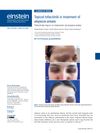 2 citations
,
January 2020 in “Einstein (São Paulo)”
2 citations
,
January 2020 in “Einstein (São Paulo)” This review discusses the potential of Janus kinase inhibitors as a promising new treatment for alopecia areata, suggesting they could become a first-line therapy in the future, but reports no new clinical results.
September 2025 in “HAL (Le Centre pour la Communication Scientifique Directe)” This study, involving a retrospective analysis of 24 patients in France, found that paradoxical psoriasiform alopecic reactions on the scalp associated with TNFα-targeted therapies for inflammatory bowel disease are rare yet non-scarring, with all patients achieving complete hair regrowth within two months after treatment adjustments.
![Influence of FHIT on Benzo[a]pyrene-Induced Tumors and Alopecia in Mice: Chemoprevention by Budesonide and N-Acetylcysteine](/images/assets/f8f56777-f891-4879-8c45-c87d6aa82563/small/35499.jpg) 24 citations
,
May 2006 in “Proceedings of the National Academy of Sciences of the United States of America”
24 citations
,
May 2006 in “Proceedings of the National Academy of Sciences of the United States of America” This study reported that heterozygosity for FHIT affects mice's susceptibility to spontaneous alopecia areata and to certain preneoplastic lesions induced by benzo[a]pyrene, but does not change how they respond to budesonide and N-acetyl-L-cysteine.
 December 2024 in “International Journal of Drug Delivery Technology”
 This study reports that a novel Nano-Structured Lipid Carrier system for delivering dutasteride may enhance its anticancer effects while reducing systemic side effects in clinical settings.
In a proof-of-concept study at Xiangya Hospital, the researchers observed that combining tofacitinib with low-dose interleukin-2 helped maintain remission in refractory alopecia areata patients, with three out of four maintaining complete remission for 11–20 months post-treatment and no adverse events reported.
 7 citations
,
January 1994 in “Annual Reports in Medicinal Chemistry”
7 citations
,
January 1994 in “Annual Reports in Medicinal Chemistry” This review discusses hormonal manipulation for conditions like prostatic disorders and skin issues and highlights promising treatments like casodex and finasteride, but it reports no new clinical results.
May 2025 in “Journal of the American Academy of Dermatology” Bicalutamide shows promise for treating female hair loss.
January 2019 in “프로그램북(구 초록집)” This study reported that oral JAK inhibitors, tofacitinib and ruxolitinib, may effectively promote hair regrowth in alopecia areata patients, though ruxolitinib had fewer adverse events compared to tofacitinib.
4 citations
,
December 2020 This case report describes a woman with frontal fibrosing alopecia who did not improve with hydroxychloroquine and topical minoxidil but achieved clinical stabilization with methotrexate monotherapy.
 7 citations
,
September 2017 in “Pharmacoepidemiology and Drug Safety”
7 citations
,
September 2017 in “Pharmacoepidemiology and Drug Safety” This study observed a strong overall reduction in the use of CPA/EE in the Netherlands, despite similar proportions of users with acne or other hyperandrogenic conditions before and after the referral procedure.
 40 citations
,
September 2018 in “Journal of the American Academy of Dermatology”
40 citations
,
September 2018 in “Journal of the American Academy of Dermatology” This letter discusses the emerging use of Janus kinase inhibitors, specifically oral tofacitinib, for treating alopecia areata in children, but reports no new clinical findings.