 5 citations
,
December 2017 in “The Journal of Dermatology”
5 citations
,
December 2017 in “The Journal of Dermatology” This report describes a unique case of Schöpf–Schulz–Passarge syndrome in a Taiwanese man linked to a previously unreported homozygous WNT 10A mutation, underscoring its role in ectodermal dysplasia.
6 citations
,
December 2022 in “Journal of Infection” In this study, the ACE1 rs1799752 polymorphism was not found to predispose COVID-19 survivors to long-COVID symptoms, supporting previous findings that ACE2 and TMPRSS2 variants also do not influence post-COVID conditions.
26 citations
,
September 2009 in “Clinical genetics” This study identified four novel and one recurrent mutation in the AIRE gene among Arab families with APS1, suggesting these contribute to the disorder.
11 citations
,
May 2018 in “Frontiers in plant science” This study found that overexpressing the PCaP2 protein in Arabidopsis enhanced drought tolerance by influencing ABA and SA signaling pathways and regulating root hair growth, suggesting a key role in water deficit response.
 15 citations
,
November 2012 in “International Journal of Dermatology”
15 citations
,
November 2012 in “International Journal of Dermatology” This case series observed a potential familial link in central centrifugal cicatricial alopecia (CCCA), suggesting a genetic predisposition that may be worsened by hair grooming practices.
29 citations
,
June 2016 in “Experimental Dermatology” This study provides suggestive evidence that duplications in the MCHR2 gene may be involved in the pathogenesis of alopecia areata.
September 2025 in “Animals” This study identified novel genetic variations in the KRTAP22-2 gene among eight sheep breeds but found no association between these genotypes and wool fibre traits, indicating possible species-specific differences compared to goats.
 January 2025 in “bioRxiv (Cold Spring Harbor Laboratory)”
 This study identifies Armadillo Repeat Only proteins as crucial regulators of plant CNGC channels, influencing various plant functions and showcasing a unique plant-specific role in Ca2+ signaling.
June 1985 in “Journal of the American Academy of Dermatology” 23 citations
,
October 2021 in “AAPS PharmSciTech” May 2025 in “International Journal of Women’s Dermatology” This study found that patients with central centrifugal cicatricial alopecia were less likely to report treatment improvement and more commonly associated with certain hairstyling practices compared to those with other scarring alopecias.
March 2026 in “Journal of Investigative Dermatology” This study identified CCCA in 10 children of African descent, highlighting the occurrence of this scarring alopecia in patients under 18 and the importance of early diagnosis for better outcomes.
January 2010 in “Journal of Animal Science” This study demonstrated that transcutaneous vaccination via cyanoacrylate skin surface stripping effectively induced both CD4 and CD8 T cell responses in humans, offering a promising alternative to intramuscular injection.
January 2026 in “Pattern Recognition” This study found that their newly developed ADRL framework significantly improved the accuracy of scalp tissue layer segmentation in HR-MR images compared to existing methods.
 1 citations
,
July 2014 in “Our Dermatology Online”
1 citations
,
July 2014 in “Our Dermatology Online” This article describes a rare case of alopecia with both scarring and non-scarring features, combining histologic signs of central centrifugal cicatricial alopecia with select immunologic features of alopecia areata.
 11 citations
,
January 2020 in “BMC pediatrics”
11 citations
,
January 2020 in “BMC pediatrics” This case report identified two new SLC39A4 mutations in twin patients with acrodermatitis enteropathica, suggesting that different mutations in this gene may lead to varying clinical manifestations of the disorder.
 July 2012 in “European journal of cancer”
 This study demonstrated that switching aE-catenin to aT-catenin in murine skin substantially rescued hyperproliferative and pre-cancerous conditions, but led to partial baldness, indicating potential functional discrepancies.
This study found that mutations in the PADI3 gene, which is important for hair shaft formation, may contribute to central centrifugal cicatricial alopecia among patients.
 19 citations
,
August 2020 in “Gastroenterology report”
19 citations
,
August 2020 in “Gastroenterology report” This review discusses the characteristics and challenges in treating Cronkhite–Canada syndrome but reports no new clinical findings, emphasizing the need for better understanding and uniform treatment approaches.
This study found that the protein Formin 2 helps regulate cell-to-cell transport in thale cress by stabilizing actin filaments at plasmodesmata, with its absence leading to increased permeability and vulnerability to viral infections.
 June 2019 in “Journal of Aesthetic Nursing”
 This article describes Amy Senior's evolving views on the Joint Council for Cosmetic Practitioners and reports no new research findings.
19 citations
,
January 2015 in “Skin appendage disorders” This study identified a new variety of central centrifugal cicatricial alopecia that includes patchy hair loss on the lateral and posterior scalp in African-American women, which could be misdiagnosed as traction alopecia without dermatoscopy and pathology.
43 citations
,
September 2001 in “Annals of Neurology” This study found that somatic mosaic mutations in the doublecortin gene may cause subcortical band heterotopia in male patients, and molecular analysis using hair roots is a useful detection method.
 July 2023 in “British journal of dermatology/British journal of dermatology, Supplement”
 In this study, researchers analyzed skin tumors from patients with CYLD cutaneous syndrome and found that loss of CYLD function is linked to changes in cellular signaling pathways, particularly NF-κB signaling, and leads to increased secretion of specific extracellular matrix proteins.
 3 citations
,
April 2022 in “Cutis”
3 citations
,
April 2022 in “Cutis” This article reviews central centrifugal cicatricial alopecia, particularly in women of African descent, and explains its progression and symptoms but provides no new clinical findings.
 11 citations
,
September 2011 in “British Journal of Dermatology”
11 citations
,
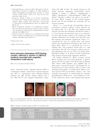
September 2011 in “British Journal of Dermatology” New ABCA12 gene mutations were linked to a skin condition with scaling and hair loss, and a treatment helped with hair loss in a related case.
3 citations
,
April 2018 in “Journal of Investigative Dermatology” CCCA may be a fibroproliferative disorder, and anti-fibrotic therapies could help.
17 citations
,
January 2015 in “JOURNAL OF CLINICAL AND DIAGNOSTIC RESEARCH” This report presents a case of Cronkhite-Canada syndrome in an elderly Indian male, adding to the approximately 450 cases documented worldwide, but introduces no new results about the condition.
 August 2023 in “JAAD international”
 This study, conducted at Montefiore Medical Center, reports that central centrifugal cicatricial alopecia predominantly affects middle-aged Black or African American women, often presenting without symptoms, which may delay diagnosis and treatment. The study underscores the need for a specific ICD-10 code for better epidemiological studies.
July 2026 in “Pediatric Allergy and Immunology”