28 citations
,
June 1998 in “Clinical Genetics” This report describes a case of Ambras syndrome with a chromosomal inversion on chromosome 8, similar to a previous case, but not associated with altered androgen levels.
July 2025 in “Journal of Investigative Dermatology” Complex basal cell carcinomas need personalized treatment due to unique genetic mutations.
21 citations
,
December 1994 in “Journal of Investigative Dermatology” January 2026 in “Medicina” In this study, researchers documented the immunohistochemical distribution of CD34 in basal cell carcinoma and found distinct patterns of CD34 expression, with variations in CD34 positivity between different areas of BCC tumor stroma and adjacent skin regions.
 September 2017 in “Journal of Investigative Dermatology”
 This study found that in AGA, the risk allele at locus 2q35 alters WNT10A expression through EBF1, suggesting a potential androgen-dependent regulatory mechanism.
12 citations
,
July 2004 in “Molecular genetics and genomics” This study identifies a new mutation in the Scd1 gene in a strain of Kunming mice, causing skin and hair defects with the mildest impact among similar mutations.
 December 2022 in “Research Square (Research Square)”
 In this study, the researchers developed a quantum algorithm, QuantAnts machines, which identified complexes of CD9, CD34, and CD74 as potential targets for certain cancers involving the RAS pathway.
 1 citations
,
April 2022 in “The Journal of Family Practice”
1 citations
,
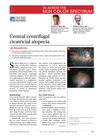
April 2022 in “The Journal of Family Practice” This report describes early and late stages of central centrifugal cicatricial alopecia in two Black women, highlighting progression from a small to a large central patch of hair loss.
 December 2020 in “bioRxiv (Cold Spring Harbor Laboratory)”
 In this study, 25% of CCHCR1-deficient mice exposed to stress developed hair loss similar to human alopecia areata, suggesting CCHCR1 is a susceptibility gene for the disease.
 November 2025 in “PubMed”
 This study identified nine pathogenic variants in the PADI3 gene, and variants in the S100A3 and TCHH genes, which may disrupt protein function and contribute to central centrifugal cicatricial alopecia.
2 citations
,
April 2023 in “American Journal of Dermatopathology” This study suggests that central centrifugal cicatricial alopecia may involve a CD4-predominant T-cell process with potential PD1/PDL1 pathway involvement, indicated by increased caspase 3 expression and loss of PDL1.
 September 2024 in “Genes”
 This study found that overexpressing CRABP1 in dermal papilla cells promotes their proliferation and influences key genes in the Wnt/β-catenin signaling pathway, which may offer insights into mechanisms controlling hair follicle development.
30 citations
,
April 2007 in “Journal of Leukocyte Biology” This study found that anti-CD44 treatment inhibited leukocyte migration in alopecia areata and eczema, suggesting targeted therapies could enhance contact sensitizer treatment for alopecia areata.
 7 citations
,
July 2020 in “Immunological Investigations”
7 citations
,
July 2020 in “Immunological Investigations” This study observed that the rs231775 CTLA4 genetic variant was more prevalent in Alopecia Areata patients than controls, particularly among those with severe disease.
June 2026 in “Journal of Investigative Dermatology” This study reported that the anti-γc antibody hC2 restored hair follicle homeostasis and suppressed hair loss in an AA-like mouse model by inhibiting autoreactive T-cell activity, suggesting that hC2 may offer a safer and more effective treatment for alopecia areata compared to current Jak inhibitors.
62 citations
,
March 2017 in “Journal of Investigative Dermatology” Mutations in the ACTB gene cause Becker’s nevi and may lead to muscle issues in Becker’s nevus syndrome.
 30 citations
,
October 2014 in “PLOS ONE”
30 citations
,
October 2014 in “PLOS ONE” This study found that BAF200, a subunit of the PBAF chromatin remodeling complex, is crucial for heart development and coronary artery formation in mice, as its absence led to embryonic lethality with severe cardiac defects.
2 citations
,
July 2025 in “Scientific Reports” This study identified a novel Acinetobacter species, strain A1-4-2, with exceptional biodegradation abilities and low antibiotic resistance, found in diverse environments and potentially useful for ecological restoration by degrading organic pollutants.
29 citations
,
June 2016 in “Experimental Dermatology” This study provides suggestive evidence that duplications in the MCHR2 gene may be involved in the pathogenesis of alopecia areata.
 1 citations
,
January 2024 in “Wiadomości Lekarskie”
1 citations
,
January 2024 in “Wiadomości Lekarskie” This study evaluated a new computer-aided detection system for identifying Breast Arterial Calcification in mammograms, achieving 70% accuracy, but highlighted the need for a larger dataset to explore its relationship with cardiovascular diseases.
 November 1998 in “Hair transplant forum international”
 This article discusses the American Board of Hair Restoration Surgery certification process and its role in recognizing physicians' knowledge and skills, but it reports no new results.
 25 citations
,
September 2014 in “Dermatologic Surgery”
25 citations
,
September 2014 in “Dermatologic Surgery” This study found that hair transplantation using round grafts improved hair growth in African American women with end-stage CCCA, showing no postoperative scarring in the donor or recipient areas.
 2 citations
,
May 2023 in “JAAD Case Reports”
2 citations
,
May 2023 in “JAAD Case Reports” This article discusses the lack of information on central centrifugal cicatricial alopecia's manifestations in Black men and reports no new clinical findings; the authors emphasize the need for further study in this population.
July 2024 in “Journal of Investigative Dermatology” This study found that in mice with alopecia areata, CD8+ T cells showed clonal expansion and specific regulatory networks, which might help identify new therapeutic targets for patients not responding to JAK inhibitors.
This study identified the Arabidopsis cation chloride cotransporter CCC1 as essential for regulating pH and function in the trans-Golgi network/early endosome, with its absence causing significant growth and stress response defects.
 January 2016 in “Hair transplant forum international”
 This article is an abstract header with author credentials and reports no study findings.
June 2020 in “Journal of Investigative Dermatology” Hair shaft malformation contributes to Central Centrifugal Cicatricial Alopecia.
6 citations
,
March 2018 in “The American journal of dermatopathology/American journal of dermatopathology” This study found that immunohistochemistry can effectively distinguish between tricholemmoma and basal cell carcinoma, with BerEP4 and CD34 serving as key differentiators.
8 citations
,
February 2025 in “Cell Systems” This study developed a genetic toolbox to engineer Cutibacterium acnes for dermal applications, successfully creating a strain that secretes antioxidants to reduce oxidative stress in a UV stress model.
Men with CCCA often face delayed diagnosis and severe hair loss, highlighting the need for earlier recognition and treatment.