37 citations
,
December 2022 in “Acta Pharmaceutica Sinica B” This review discusses the strategies and potential of CRISPR delivery for gene therapy, highlighting the challenges and innovative use of stimuli-responsive nanocarriers, but reports no new experimental results.
1 citations
,
June 2025 in “Stem Cell Reviews and Reports”  May 2026 in “The Journal of Headache and Pain”
 In this study, researchers developed an enhanced rodent model of trigeminal neuralgia, demonstrating that structural and functional changes in the anterior cingulate cortex are linked to chronic pain and emotional disturbances, and chemogenetic inhibition of specific neurons could alleviate symptoms.
 March 2026 in “Journal of Nanotheranostics”
 This review highlights how nanotechnology enhances CRISPR-Cas9's potential for cancer treatment by improving delivery and stability, addressing key challenges like immunogenicity and delivery inefficiencies, and discusses recent advancements in stimuli-responsive nanoplatforms for precise genome editing.
In this study, researchers identified that the oncomodulin protein lineage, specifically the gene pvalb8, plays a crucial role in the development and function of auditory hair cells in zebrafish by promoting cell proliferation through the Wnt signaling pathway.

CaBP1 and CaBP2 are important for continuous hearing by preventing inactivation of calcium currents in ear cells, with CaBP2 also able to restore hearing when reintroduced.

CaBP1 and CaBP2 are important for maintaining hearing by supporting continuous calcium currents and nerve signaling in the ear.
 October 2023 in “Scientific Reports”
 In this study, gene therapy using a VDR-expressing adenoviral vector promoted hair growth in Vdr-KO rats, suggesting its potential for treating alopecia associated with type II rickets.
December 2015 in “PLOS ONE” This content contains no study findings or new results, instead referring only to statistical methods and figure captions.
82 citations
,
January 2011 in “New Phytologist” This study demonstrated that AtVLN4 plays a role in root hair growth by regulating actin organization in a calcium-dependent manner.
November 2006 in “評価・診断に関するシンポジウム講演論文集” This study found that KSR1 is essential for v-Ha-ras-mediated skin tumor formation in mice but not for MT-driven mammary tumor genesis, suggesting its potential as a therapeutic target in Ras/MAPK signaling.
 April 2022 in “Research Square (Research Square)”
 In this case study, a rare scalp arteriovenous fistula developed after hair transplantation in a 29-year-old male was successfully treated using endovascular embolization with platinum coils, resulting in symptom resolution and complete fistula disappearance without complications.
January 2026 in “Pattern Recognition” This study found that their newly developed ADRL framework significantly improved the accuracy of scalp tissue layer segmentation in HR-MR images compared to existing methods.
 September 2024 in “Journal of the American Academy of Dermatology”
 In this study, a novel compound named AH-001 demonstrated effective androgen receptor protein degradation, reducing hair loss progression in a mouse model of androgenetic alopecia, with minimal systemic exposure and side effects, suggesting potential for safer treatment.
20 citations
,
January 2002 in “Laboratory Animals” This study identified a compound heterozygous mutation in a hairless rhesus macaque, which was associated with skin abnormalities similar to those in hairless mice and humans with APL.
 February 2026 in “Journal of Sylva Indonesiana”
 This study found that the heartwood extract of Avicennia marina demonstrated strong antioxidant activity, with an IC50 value of 61.50 µg/mL, suggesting potential for development into supplements or topical applications targeting degenerative diseases related to oxidative stress.
 8 citations
,
January 2016 in “Annals of Dermatology”
8 citations
,
January 2016 in “Annals of Dermatology” This study found that the ALAVAX complex, containing 5-ALA and GHK peptide, may increase hair count in male pattern hair loss patients over 6 months without adverse events.
2 citations
,
October 2000 in “Journal of Investigative Dermatology” AUC and APL are distinct conditions needing careful clinical assessment.
 9 citations
,
October 2014 in “Clinical and Experimental Dermatology”
9 citations
,
October 2014 in “Clinical and Experimental Dermatology” Temporary hair loss can occur after brain AVM treatment but usually regrows in 8 weeks.
 1 citations
,
September 2023 in “Journal of the American Academy of Dermatology”
1 citations
,
September 2023 in “Journal of the American Academy of Dermatology” This abstract introduces baricitinib as an approved treatment for adults with severe alopecia areata in the US, Europe, and Japan, but does not report any specific study results or findings.
This study found that the methanolic heartwood extract of Avicennia marina significantly inhibited the enzyme 5 alpha-reductase type 1 in a cell-based assay, suggesting potential anti-androgenic effects for treating androgenic alopecia.
26 citations
,
September 2009 in “Clinical genetics” This study identified four novel and one recurrent mutation in the AIRE gene among Arab families with APS1, suggesting these contribute to the disorder.
 1 citations
,
March 2024 in “Skin health and disease”
1 citations
,
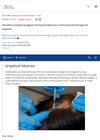
March 2024 in “Skin health and disease” This study found that vibration assisted analgesia reduced pain during intralesional corticosteroid therapy for hair loss, enabling treatment in a broader range of patients, including those with needle phobia.
 9 citations
,
July 2013 in “Clinical Neuroradiology”
9 citations
,
July 2013 in “Clinical Neuroradiology” A man developed a rare blood vessel connection on his scalp after hair transplants, which was successfully treated with surgery.
 February 2024 in “ComFin Research”
 This source describes the traditional uses of Avaram (Senna auriculata) in Ayurveda and Siddha medicine, highlighting its application in treating diabetes, asthma, and skin conditions, with potential benefits for blood sugar, skin tone, and hair growth due to its antioxidant content.
 46 citations
,
December 2010 in “The journal of investigative dermatology/Journal of investigative dermatology”
46 citations
,
December 2010 in “The journal of investigative dermatology/Journal of investigative dermatology” This study found that Acvr1b signaling is crucial for both hair follicle development and cycling in mice, with the genetic disruption leading to hair loss and a thickened epidermis.
86 citations
,
December 2002 in “Tissue Antigens” In this study, researchers found that the AIRE G961C variant is a significant risk factor for severe alopecia areata and early-onset cases, particularly in patients with alopecia universalis.
 5 citations
,
June 2023 in “Engineering Technology & Applied Science Research”
5 citations
,
June 2023 in “Engineering Technology & Applied Science Research” This study developed a new neural network model (AA-GAN-AB-MTEDeep) to enhance Alopecia Areata classification using synthetic scalp images, achieving an accuracy of 96.94%.
 26 citations
,
June 2018 in “The journal of immunology/The Journal of immunology”
26 citations
,
June 2018 in “The journal of immunology/The Journal of immunology” This study demonstrated that AIRE-deficient rats exhibit key symptoms of APECED, making them a relevant model for exploring potential treatments.
 February 2024 in “Archiv EuroMedica”
 This review suggests that annurca apple extract, rich in polyphenols, may be a promising alternative for treating baldness, though further research is needed to clearly assess its effectiveness compared to existing treatments.