May 2024 in “The Journal of Immunology” In a mouse model of alopecia areata, this study found that IL-27 overexpression using an adeno-associated virus protected against disease development, potentially by promoting immunosuppressive T cells and reducing CD8 T cell infiltration into hair follicles.
 12 citations
,
January 2016 in “Journal of Clinical and Investigative Dermatology”
12 citations
,
January 2016 in “Journal of Clinical and Investigative Dermatology” This study examines how the Severity of Alopecia Tool score was used to assess Alopecia Areata in patients while excluding systemic conditions that might affect vitamin D levels, but reports no new clinical results.
 23 citations
,
September 2019 in “Dermatology practical & conceptual”
23 citations
,
September 2019 in “Dermatology practical & conceptual” This study analyzed the features of alopecia areata incognita and diffuse alopecia areata, finding distinct patterns in hair loss regions and trichoscopic signs, and noted a benign course responsive to topical steroid therapy.
 November 2023 in “The journal of investigative dermatology/Journal of investigative dermatology”
 In this study, researchers used a mouse model of alopecia areata to demonstrate that both ruxolitinib and baricitinib, oral JAK inhibitors, reduced hair loss, CD8+ cell infiltration, and expression of disease-related markers, with baricitinib showing greater effectiveness.
Understanding both skin and mental health aspects of alopecia areata is crucial for better patient care.
 March 2024 in “Clinical, cosmetic and investigational dermatology”
 This study found that severe alopecia areata significantly impacts quality of life, mental health, and daily activities, particularly among women and those with a longer disease duration.
1 citations
,
January 2012 This review discusses the therapeutic uses of Indian gooseberry in Ayurveda, including potential benefits for longevity, digestion, and other health conditions, but reports no new clinical findings.
July 2026 in “Journal of the American Academy of Dermatology” 16 citations
,
July 2020 in “JAMA Dermatology” People with alopecia areata may have a higher risk of hearing loss.
 151 citations
,
February 2007 in “International Journal of Dermatology”
151 citations
,
February 2007 in “International Journal of Dermatology” This review explores the causes and mechanisms of alopecia areata and discusses current treatments, reporting no new clinical findings.
 28 citations
,
June 2010 in “European Journal of Cancer”
28 citations
,
June 2010 in “European Journal of Cancer” This study found that androgenic alopecia at an early age was associated with a lower risk of prostate cancer, contrary to assumptions about androgens' role.
 3 citations
,
April 2017 in “Dermatologic Surgery”
3 citations
,
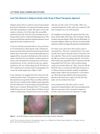
April 2017 in “Dermatologic Surgery” Laser hair removal can be an effective last-resort treatment for men with stubborn Alopecia Areata who want to be uniformly bald.
 August 2025 in “International Journal of Agriculture Extension and Social Development”
 This review discusses the cultivation techniques of Amla (Phyllanthus Emblica), highlighting its high vitamin C content and various health benefits, and emphasizes the importance of sustainable cultivation practices to meet increasing commercial demand.
 July 2026 in “JMIR Dermatology”
 This study analyzed online discussions and search behavior in Gulf countries, uncovering significant engagement and identifying gaps in awareness and understanding of alopecia areata among patients and healthcare professionals, suggesting a need for targeted educational initiatives to enhance support and reduce stigma.
 95 citations
,
November 2018 in “Australasian journal of dermatology”
95 citations
,
November 2018 in “Australasian journal of dermatology” This consensus statement outlines a treatment algorithm for alopecia areata, discussing when to consider systemic treatment and how to assess outcomes, without providing new clinical results.
 March 2025 in “Journal of Education Health and Sport”
 This review, drawing on scientific literature, explores alopecia areata's pathogenesis and treatment, noting that while therapies like JAK inhibitors show promise, there remains a significant need for more effective and targeted solutions, and a better understanding of the disease mechanisms.
 1 citations
,
August 2013 in “Journal of the National Cancer Institute”
1 citations
,
August 2013 in “Journal of the National Cancer Institute” The abstract reports no new results but discusses Berry's belief that most changes in breast cancer incidence are due to screening, measurement adjustments, or hormone use.
July 2026 in “Journal of Investigative Dermatology” Alopecia totalis/universalis involves more intense immune activity and inflammation than patchy alopecia areata.
January 2025 in “Journal of Dermatology & Dermatologic Surgery” This study reports a unique case of identical twins experiencing alopecia areata at the same time, suggesting potential environmental triggers for this polygenic autoimmune condition.

This review summarizes methods for creating alopecia areata animal models and reports no new results, emphasizing that improved evaluation and combined disease models are needed for future research.
January 2026 in “Journal of Cosmetic Dermatology” In this 10-patient exploratory study, the researchers found that topical application of 4-aminopyridine 5% combined with microneedling did not improve hair density or quality in men with androgenetic alopecia, suggesting limited efficacy in this context despite promising results in animal wound models.
 November 2025 in “Frontiers in Medicine”
 In this prospective cohort, baseline severity, disease activity, and relapse history were identified as key factors influencing response and recurrence in alopecia areata, suggesting that implementing standardized assessments could enhance risk stratification and personalized care approaches.
 40 citations
,
August 2022 in “Frontiers in immunology”
40 citations
,
August 2022 in “Frontiers in immunology” This review discusses the potential of JAK inhibitors as a promising treatment strategy for alopecia areata, highlighting their mechanism and recent FDA approval based on clinical trial efficacy.
37 citations
,
November 2011 in “Photodermatology Photoimmunology & Photomedicine” This study found that narrowband UVB phototherapy alone is not very effective for severe alopecia areata, with improved responses noted primarily in patients also receiving corticosteroid injections.
1 citations
,
June 2023 in “British Journal of Dermatology” In this study, individuals with alopecia areata in the UK incurred significant costs for managing their condition, with those experiencing more severe symptoms and lower disposable income facing higher financial burdens.
 July 2018 in “Hair transplant forum international”
 This abstract contains only author affiliations and mentions the Asian Association of Hair Restoration Surgeons, without presenting any new research findings.
 June 2026 in “Zenodo (CERN European Organization for Nuclear Research)”
 This source reviews alopecia areata, highlighting its epidemiology, immune-related causes, diagnostic methods, and the shift in treatment with JAK inhibitors like baricitinib and ritlecitinib, marking the first disease-modifying options for this hair loss condition.
 33 citations
,
December 2005 in “Archives of dermatology”
33 citations
,
December 2005 in “Archives of dermatology” This study presents case reports of four patients with alopecia areata or alopecia universalis, highlighting varied responses to treatments like prednisone, intralesional triamcinolone, and squaric acid dibutyl ester.
January 2026 in “Case Reports in Dermatological Medicine” In this case study, a young female with aseptic and alopecic nodules of the scalp achieved full resolution without recurrence using intralesional steroids.
 January 2024 in “JEADV clinical practice”
 This study reported high patient satisfaction with multidisciplinary shared medical appointments for alopecia areata and frontal fibrosing alopecia, with participants appreciating the educational and supportive group environment.