 October 2024 in “Journal of the Endocrine Society”
 This study examined uncharacterized CYP21A2 gene variants related to non-classic congenital adrenal hyperplasia and found that several mutations reduce enzyme activity, which may help improve diagnostic and treatment strategies.
 8 citations
,
October 2019 in “Immunological investigations”
8 citations
,
October 2019 in “Immunological investigations” This study suggests that the rs2075876 variant in the AIRE gene may significantly increase susceptibility to alopecia areata in the examined male population.
May 2026 in “ACS Catalysis” In this study, researchers using QM/MM simulations identified key molecular motions and residue interactions in the enzyme SRD5A2 that significantly influence its catalytic efficiency, demonstrating that specific residues play critical roles in stabilizing transition states and reducing activation barriers.
 January 2024 in “Archives of Endocrinology and Metabolism”
 In this case report, a novel heterozygous mutation in the insulin receptor gene was identified in an adolescent girl with type A insulin resistance syndrome, characterized by excessive hair growth and skin changes, and her mother.
75 citations
,
October 1999 in “Differentiation” This study suggests that mouse keratin 6 isoforms, K6a and K6b, have overlapping but distinct expression profiles, differing notably in their expression in suprabasal cells and response to phorbol esters.
6 citations
,
December 2022 in “Journal of Infection” In this study, the ACE1 rs1799752 polymorphism was not found to predispose COVID-19 survivors to long-COVID symptoms, supporting previous findings that ACE2 and TMPRSS2 variants also do not influence post-COVID conditions.
 13 citations
,
August 1995 in “The Journal of Steroid Biochemistry and Molecular Biology”
13 citations
,
August 1995 in “The Journal of Steroid Biochemistry and Molecular Biology” This study found that the pH dependency of rat steroid 5α-reductase type II isozyme significantly affects its kinetic properties, including Vmax and Km, suggesting past discrepancies in literature may arise from these pH variances during assays.
 510 citations
,
August 2006 in “Endocrinology”
510 citations
,
August 2006 in “Endocrinology” This minireview discusses a proposed model of the vitamin D receptor that explains how 1alpha,25(OH)2D3 can mediate both genomic and rapid responses through different ligand shapes and cellular locations, without presenting new research findings.
 17 citations
,
April 2007 in “Kidney international”
17 citations
,
April 2007 in “Kidney international” This study found that 1,25 dihydroxyvitamin D3 significantly increased the expression and activity of vasculoprotective natriuretic peptide receptor-A in cultured inner medullary collecting duct cells, suggesting a potential mechanistic role in cardiovascular and renal benefits.
April 2026 in “Human Genome Variation” This study identified a specific hemizygous intronic variant in the MBTPS2 gene associated with IFAP syndrome in a patient, revealing exon skipping and reduced normal transcript expression through long-read RNA sequencing.
 January 2020 in “bioRxiv (Cold Spring Harbor Laboratory)”
 This study identified novel genetic variants in APOE ε4 non-carriers associated with Alzheimer's disease age-of-onset, linking them to regulatory mechanisms like the unfolded protein response in the pathology of Alzheimer's and other degenerative diseases.
118 citations
,
June 1993 in “Journal of Biological Chemistry” This study found that mouse and human protransglutaminase 3 enzymes require calcium-regulated activation for their role in later stages of cell envelope formation in the epidermis and hair follicle.
62 citations
,
January 2009 in “Biochemistry” This study found that both the natural ligand 1alpha,25(OH)(2)D(3) and the synthetic agonist LG190178 bind similarly to the vitamin D receptor's coregulator motifs, suggesting similar biological functions.
 3 citations
,
January 2008 in “Endocrine journal”
3 citations
,
January 2008 in “Endocrine journal” In this case report, the authors describe a partial androgen insensitivity syndrome patient with a novel AR gene mutation, highlighting challenges in gender assignment decisions for infants with partial AIS.
 42 citations
,
July 2007 in “Journal of Biological Chemistry”
42 citations
,
July 2007 in “Journal of Biological Chemistry” This study found that most pathogenic HR mutants associated with atrichia with papular lesions had abolished corepressor activity due to defective interactions with histone deacetylases.
August 2024 in “Latin American Journal of Development” In this review, the authors highlight the involvement of the 5α-reductase enzyme family in androgen-dependent disorders, noting the discovery of a novel isoform, SRD5A3, which is overexpressed in cancers with poor prognosis.
 3 citations
,
January 1992 in “Clinical Pediatric Endocrinology”
3 citations
,
January 1992 in “Clinical Pediatric Endocrinology” This study observed wide clinical diversity among five patients with the same VDR gene mutation causing vitamin D-dependent rickets type II, suggesting involvement of a nuclear accessory factor and a nongenomic action of the vitamin.
 3 citations
,
August 2021 in “Research Square (Research Square)”
3 citations
,
August 2021 in “Research Square (Research Square)” This study found that increased mRNA expression of the Ectodysplasin-A2-Receptor, observed across multiple species and tissues, may exacerbate inflammation during aging, suggesting potential benefits of blocking EDA2R/EDA-A2 signaling.
 57 citations
,
November 2006 in “International Journal of Cancer”
57 citations
,
November 2006 in “International Journal of Cancer” This study found that the SRD5A2 A49T A variant is associated with an increased risk of prostate cancer, lower circulating 3α‐diolG levels, and a decreased risk of baldness.
 April 2010 in “The Journal of Urology”
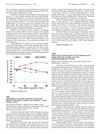
 Human prostate cells produce more WISP1/CCN4 when there's not enough oxygen.
4 citations
,
January 2021 in “Current Research in Physiology” This study found that high levels of μ-crystallin in skeletal muscle are associated with greater fat metabolism and a shift in gene expression towards slower muscle function.

This review summarizes the proposed model that describes how different shapes of 1alpha,25(OH)2D3 ligands interact with the vitamin D receptor to mediate genomic and rapid responses in cells.
This study found that targeting S1PR1 signaling in mouse aortic endothelial cells helps suppress inflammation-related gene expression while revealing diverse and spatially distinct endothelial cell subtypes.
 April 2026 in “Human Genome Variation”
 In this study, researchers identified a recurrent MBTPS2 splice-site variant as a mutational hotspot in IFAP syndrome across diverse families, with phenotype severity suggesting the influence of additional modifiers.
26 citations
,
March 2006 in “Endocrine, metabolic & immune disorders. Drug targets” This article discusses the functions of the enzyme 17beta-HSD10, including its role in steroid metabolism and potential links to Alzheimer's disease, but reports no new experimental findings.
 2 citations
,
May 2022 in “Research Square (Research Square)”
2 citations
,
May 2022 in “Research Square (Research Square)” This study demonstrates that the amino-terminally shortened KGF-1 variant with 135 residues maintains biological activity, suggesting it may serve as an alternative to the original KGF-1 for certain therapeutic applications.
13 citations
,
February 2016 in “Journal of steroid biochemistry and molecular biology/The Journal of steroid biochemistry and molecular biology” In this study, researchers observed that the absence of the vitamin D receptor or its ligand-activated transcription in mice did not affect glucose homeostasis or gene expression in islets.
January 2003 in “Hepatology” This study identified a new isozyme, 5α-reductase-3, at the mRNA level in human prostate tissue, but its protein expression and cellular localization remain unclear.
This study found that S1PR1 signaling in mouse aortic endothelial cells varied by location and subtype, influencing inflammatory and lymphangiogenic gene expression through distinct molecular pathways.