42 citations
,
August 2012 in “Psychoneuroendocrinology” Finasteride reduces certain behaviors caused by D1-like receptor agonists but not by D2-like receptor agonists in mice.
 15 citations
,
February 2021 in “Scientific Reports”
15 citations
,
February 2021 in “Scientific Reports” This study found that novel RNA aptamers specifically inhibited FGF5-induced cell proliferation, suggesting their potential as candidates for treating FGF5-related diseases or hair disorders.
7 citations
,
January 2025 in “Journal of Experimental & Clinical Cancer Research” This study found that PRMT5 inhibitors showed potent anti-tumor activity in models of adenoid cystic carcinoma and that combining these inhibitors with lenvatinib may have additional growth-inhibitory effects.
 20 citations
,
March 2017 in “Reproductive Biology and Endocrinology”
20 citations
,
March 2017 in “Reproductive Biology and Endocrinology” Women with PCOS have higher 5α-reductase activity, which may be linked to insulin resistance.
April 2026 in “The Journal of Steroid Biochemistry and Molecular Biology” 1 citations
,
November 2024 in “Archives of Dermatological Research”  5 citations
,
January 2001 in “Advances in protein chemistry”
5 citations
,
January 2001 in “Advances in protein chemistry” This chapter reviews recent advances in 5α-reductase inhibitors for treating disorders mediated by dihydrotestosterone and reports no new clinical findings.
 January 2020 in “Nihon Yakuri Gakkai nenkai yoshishu”
 This study suggests that 5α-reductase-mediated metabolism of progesterone contributes to the differentiation of endometrial stromal cells, potentially influencing progesterone levels and promoting cell differentiation.
8 citations
,
January 2012 in “General and Comparative Endocrinology” 5α-Reductase helps regulate hormone action in toad testes, especially during breeding season.
93 citations
,
September 2014 in “Diabetes” This study found that male 5αR1 knockout mice and obese Zucker rats treated with finasteride showed increased insulin resistance and hepatic steatosis, potentially implicating 5α-reductase activity in metabolic liver disease development.
 42 citations
,
September 2015 in “Gene”
42 citations
,
September 2015 in “Gene” This study demonstrated that FGF5s acts as an inhibitor of FGF5 in regulating hair growth cycles in cashmere goat dermal papilla cells.
 30 citations
,
October 2020 in “Nature Communications”
30 citations
,
October 2020 in “Nature Communications” This study provides the first crystal structure of the human SRD5A2 enzyme, revealing key insights into its function and inhibition which may aid future drug development.
 January 2025 in “PLoS ONE”
 This study identified the transcription factor Elf5 as a novel regulator of keratinocyte proliferation and differentiation in skin, with expression elevated in stem/progenitor cell populations, suggesting its potential role in determining cell fate during skin and hair development.
 October 2017 in “The Journal of Urology”
 This review discusses the impact of 5α-reductase inhibitors on sexual function and presents results from a meta-analysis of randomized controlled trials, without reporting new clinical findings.
 4 citations
,
August 2019 in “General and Comparative Endocrinology”
4 citations
,
August 2019 in “General and Comparative Endocrinology” This study found that in male yaks, 5α-red1 may play a crucial role in synthesizing DHT to promote hair follicle growth, while E2 synthesized by epithelial cells may inhibit this growth through ERα.
 July 2026 in “Current Issues in Molecular Biology”
 This study found that Plerixafor, a CXCR4 antagonist, promotes melanogenesis in melanocytes by increasing MITF and tyrosinase expression and enhancing melanocyte migration, and it effectively restores pigmentation in a mouse depigmentation model without toxicity, highlighting its potential for treating pigmentary disorders.
This study found that 2-hydroxy-1,4-naphthoquinone was the most effective inhibitor of steroid 5α-reductase, showing stronger inhibition than avicequinone C in HaCaT cell assays.
July 2025 in “Journal of Investigative Dermatology” 2 citations
,
January 2023 in “PubMed” This review discusses the potential role of FGF5 as a therapeutic target in prostate cancer and other conditions but reports no new results, highlighting a need for further research on FGF5 inhibitors.
 July 2023 in “Dermatology and Therapy”
 This review analyzed the use of 5-alpha reductase inhibitors (5ARIs) for treating various dermatological conditions such as androgenetic alopecia, acne, and hirsutism, emphasizing their efficacy and safety profile.
 124 citations
,
September 1992 in “Endocrinology”
124 citations
,
September 1992 in “Endocrinology” This article discusses the structure of the human type II 5 alpha-reductase gene and reports no new experimental results.
 March 2026 in “Preprints.org”
 In this study, plerixafor was found to enhance melanogenesis and promote repigmentation by engaging a β-arrestin–β-catenin–MITF signaling axis in melanocytes, and showed effectiveness in restoring depigmentation in a murine model without causing systemic toxicity.
 24 citations
,
September 2005 in “Journal of Cellular Biochemistry”
24 citations
,
September 2005 in “Journal of Cellular Biochemistry” This study found that all-trans and 9-cis retinoic acids increase steroid sulfatase activity in HL60 cells through mechanisms involving RARα/RXR heterodimers and multiple signaling pathways.
 6 citations
,
August 2013 in “한국응용생명화학회지”
6 citations
,
August 2013 in “한국응용생명화학회지” This study found that among eleven tested polymethoxyflavones, 5-hydroxy-7,4′-dimethoxyflavone was the strongest steroid 5α-reductase inhibitor and suggests potential use for benign prostatic hyperplasia treatment.
 3 citations
,
October 2010 in “Wiley-VCH Verlag GmbH & Co. KGaA eBooks”
3 citations
,
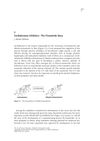
October 2010 in “Wiley-VCH Verlag GmbH & Co. KGaA eBooks” Finasteride safely treats enlarged prostate and male-pattern baldness.
1 citations
,
February 2023 in “Russian Journal of Bioorganic Chemistry” In an animal study, researchers observed that a newly synthesized deoxycholic acid derivative showed similar prostate protection effects to finasteride in Wistar rats while being less toxic.
 September 2021 in “Clinical research in dermatology”
 This review discusses frontal fibrosing alopecia and reports no new clinical results; the authors highlight the need for randomized controlled trials on 5AR inhibitors to assess their efficacy and safety.
 8 citations
,
January 1991 in “European Urology”
8 citations
,
January 1991 in “European Urology” This study found that the 5α-steroid metabolite profile in men with inherited 5α-reductase deficiency is similar to those taking the drug finasteride, suggesting the gene affects multiple steroid substrates.
3 citations
,
May 2014 in “Urologia Journal” This review discusses how 5α-reductase inhibitors affect PSA levels in benign prostatic hyperplasia treatment and their role in prostate cancer screening, but reports no new clinical findings.
 21 citations
,
January 2015 in “The Journal of Steroid Biochemistry and Molecular Biology”
21 citations
,
January 2015 in “The Journal of Steroid Biochemistry and Molecular Biology” In this study, researchers demonstrated that in a mouse model, the stimulation of mammary tumor growth due to progesterone is primarily caused by its metabolite, 5αP, not progesterone itself.