 November 2021 in “Pharmaceutical Sciences”
 This study found that the compound androstane-17-carboxamide 6 may serve as a lead for new drugs to treat BPH and prostate cancer by reducing the weight of androgen-dependent glands.
 19 citations
,
September 2011 in “Journal of Dermatological Science”
19 citations
,
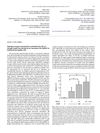
September 2011 in “Journal of Dermatological Science” TGF-β1 increases androgen receptor activity in hair loss, but Hic-5/ARA55 can counter this effect.
This study will explore whether combination therapy with either dutasteride or finasteride and an α1 blocker is more effective than monotherapy for treating BPH, but it reports no new results.
3 citations
,
May 2017 in “Bioorganic & medicinal chemistry letters” This study identified compounds 11d and 11k as potential dual 5α-reductase inhibitors and AR antagonists with significant anti-proliferative effects on prostate cancer cell lines, suggesting they may offer therapeutic value.
July 2026 in “Journal of Craniofacial Surgery” This study found that silencing SRD5A2 and applying melatonin significantly boosted proliferation and migration of human hair follicle stem cells without causing differentiation, while increasing MT1 expression and reducing 5-alpha-reductase levels.
19 citations
,
July 2005 in “Steroids” In this study, researchers developed a sensitive LC–MS–MS assay to measure 3α-androstanediol levels in rat plasma and observed that testosterone raises these levels via a 5α-reductase pathway.
13 citations
,
September 2017 in “Life sciences” This study suggests that androgen receptor signaling might regulate cellular behavior in bladder urothelial carcinoma, with decreased receptor and enzyme presence potentially linked to tumor progression.
![Discovery of (2S)-N-(6-Cyano-5-(Trifluoromethyl)Pyridin-3-Yl)-3-(6-(4-Cyanophenyl)-3,6-Diazabicyclo[3.1.1]Heptan-3-Yl)-2-Hydroxy-2-Methylpropanamide as a Highly Potent and Selective Topical Androgen Receptor Antagonist for Androgenetic Alopecia Treatment](/images/assets/693e7bf6-2325-4ddc-a20f-3470db9f4516/small/25627.jpg) December 2023 in “Journal of Medicinal Chemistry”
December 2023 in “Journal of Medicinal Chemistry” In this study, researchers identified compound 30a as a promising topical androgen receptor antagonist that promoted hair growth in mouse models of androgenetic alopecia without noticeable toxicity, suggesting its potential for treating this hair loss condition.
 1 citations
,
October 2020 in “Current Drug Discovery Technologies”
1 citations
,
October 2020 in “Current Drug Discovery Technologies” This study investigated various synthesized 5-reductase inhibitors and found that compound 6 had the highest anti-androgenic activity and receptor affinity compared to finasteride, showing potential due to its improved efficacy and bioavailability for further research in treating lower urinary tract symptoms.
 63 citations
,
November 1999 in “British journal of dermatology/British journal of dermatology, Supplement”
63 citations
,
November 1999 in “British journal of dermatology/British journal of dermatology, Supplement” This study observes the expression of mRNA for androgen receptor, 5α‐reductase, and 17β‐hydroxysteroid dehydrogenase in human dermal papilla cells.
 100 citations
,
September 2017 in “Molecular and Cellular Endocrinology”
100 citations
,
September 2017 in “Molecular and Cellular Endocrinology” This review discusses the molecular mechanisms of androgens and androgen receptors in skin disorders, particularly androgenetic alopecia, and reports no new clinical results; it highlights potential areas for future treatment development.
 29 citations
,
July 2009 in “BJU international”
29 citations
,
July 2009 in “BJU international” This review examines the pharmacological properties and potential clinical benefits of 5α‐reductase inhibition in prostate cancer but reports no new research findings.
23 citations
,
July 1979 in “Canadian journal of biochemistry” This study found that administering spironolactone or canrenone to castrated male rats significantly decreased the availability of cytoplasmic androgen receptor binding sites, suggesting canrenone mediates spironolactone's antiandrogenic effects in skin.
 4 citations
,
September 2024 in “BMC Cancer”
4 citations
,
September 2024 in “BMC Cancer” In this prospective phase II clinical trial, researchers are investigating whether adding dutasteride to combined androgen blockade can improve the response rate and clinical outcomes for patients with androgen receptor-positive recurrent or metastatic salivary duct carcinoma.
 July 2026 in “Zenodo (CERN European Organization for Nuclear Research)”
 This study evaluated Korean herbal compounds in silico and identified Biochanin A, Saponin Re, and Emodin as potential topical treatments for androgenetic alopecia, each with specific safety and efficacy considerations.

This study found that supraphysiological and physiological androgen levels inhibited U937 macrophages' phagocytosis of MRSA compared to untreated controls, but AR antagonism reversed this effect, suggesting targeting AR or using 5alpha-reductase inhibitors might aid bacterial clearance in elderly males' chronic wounds.
 July 2025 in “Reproductive Biology and Endocrinology”
 This study found that early postnatal androgen activity affects the long-term expression of hormone receptors differently in female Wistar rats, influencing neural system programming during development.
 November 2023 in “Bioorganic Chemistry”
 This review provides an overview of clinically approved small molecule drugs targeting androgen receptors and discusses therapeutic applications, without presenting new experimental results.
May 2023 in “Blood cancer discovery” This study found that Finasteride significantly reduced the proliferation of acute myeloid leukemia cell lines by inhibiting androgen receptor activity.
 11 citations
,
May 2009 in “Medical Hypotheses”
11 citations
,
May 2009 in “Medical Hypotheses” This paper proposes a theory explaining how the normal anabolic effects of androgens lead to structural changes and hair follicle miniaturization, contributing to androgenic alopecia.
 February 2024 in “International Journal of Molecular Sciences”
 This review outlines the functional anatomy, pathology, and molecular mechanisms of androgenetic alopecia, emphasizing the need for multi-omics approaches to better understand this condition's biology.
12 citations
,
January 2018 in “Pharmacology & pharmacy” This study found that components derived from Uromedic® pumpkin seeds, especially Δ7-sterols, may inhibit DHT production and AR binding, potentially benefiting prostate and bladder health by moderating these mechanisms.
July 2024 in “Fitoterapia” This study found that Camellia oleifera seed shell polyphenols and 1,3,6-tri-O-galloylglucose improved androgenetic alopecia symptoms in mice by reducing DHT levels and activating specific hair growth pathways.
August 2024 in “Cosmetics” This review discusses genetic and pharmacogenetic insights, along with RNA interference technologies, for developing personalized therapies for androgenetic alopecia, yet presents no new clinical results.
24 citations
,
January 2018 in “Indian Journal of Dermatology, Venereology and Leprology” This review discusses advances in molecular biology and genetics related to androgenetic alopecia and reports no new clinical results.
 1 citations
,
August 2020 in “Food Research”
1 citations
,
August 2020 in “Food Research” This review discusses management strategies for androgenic alopecia using plant derivatives and highlights the need for prolonged efficacy but reports no new clinical findings.
 14 citations
,
November 2006 in “Current Medicinal Chemistry”
14 citations
,
November 2006 in “Current Medicinal Chemistry” This review discusses recent developments in α1-adrenoceptor antagonists and 5α-reductase inhibitors for treating benign prostatic hyperplasia, reporting no new clinical results while identifying potential areas for future drug development.
 20 citations
,
February 2009 in “Chemistry & Biodiversity”
20 citations
,
February 2009 in “Chemistry & Biodiversity” This study found that Ganoderma lucidum extracts showed weak 5alpha-reductase inhibition but significantly inhibited prostate cell proliferation and testosterone-driven prostate growth in rats, suggesting potential as an ingredient for treating androgen-induced diseases.
 2 citations
,
July 2018 in “Journal of Cosmetic Dermatology”
2 citations
,
July 2018 in “Journal of Cosmetic Dermatology” This commentary discusses how common latent viruses might contribute to male-pattern baldness through mechanisms involving transcription factor deficiency and overexpression of specific proteins, based on a concept called microcompetition; it reports no new research results.
 December 2023 in “Scientific Reports”
 In this study, researchers successfully established immortalized human frontal and occipital scalp dermal papilla cell lines from androgenetic alopecia patients, observing distinct gene expression, androgen receptor levels, and hair follicle growth effects between these regions, which may help advance hair loss research and therapeutic development.