73 citations
,
April 1999 in “Journal of steroid biochemistry and molecular biology/The Journal of steroid biochemistry and molecular biology” This study found that the vitamin D-VDR system is crucial for mineral and bone metabolism post-weaning and identified missense mutations in 1alpha-hydroxylase causing type I rickets.
 6 citations
,
July 2007 in “Organic Process Research & Development”
6 citations
,
July 2007 in “Organic Process Research & Development” This study optimized the reaction conditions for the stereoselective hydrogenation of a compound used in manufacturing finasteride and dutasteride, improving the selectivity for the desired isomer.
 3 citations
,
December 2000 in “International Journal of Cosmetic Science”
3 citations
,
December 2000 in “International Journal of Cosmetic Science” This study established that a human epidermal model can be utilized to assess 5alpha-reductase activity and evaluate enzyme modulators, such as finasteride, for dermatological applications.
July 2024 in “International Journal of Molecular Sciences” This study explored the effects of DPP, a 15-PGDH inhibitor, on human follicle dermal papilla cells damaged by dihydrotestosterone and observed that DPP enhanced wound healing, reduced reactive oxygen species, and increased hair growth in ex vivo human hair follicle cultures.
 25 citations
,
December 2005 in “Molecular Genetics and Metabolism”
25 citations
,
December 2005 in “Molecular Genetics and Metabolism” This study reports that riboflavin may increase enzymatic activity in a GCDH-deficient patient with specific mutations, but doesn't fully normalize urinary organic acid levels.
 76 citations
,
September 1992 in “Endocrinology”
76 citations
,
September 1992 in “Endocrinology” This study details the isolation and characterization of the human type II 5 alpha-reductase gene, which may play a role in male pseudohermaphroditism, prostate cancer, and benign prostatic hyperplasia.
 November 2022 in “Journal of the Endocrine Society”
 In this case study, a woman with high 25(OH)D levels and persistent symptoms showed decreased parathormone after transdermal estrogen therapy, highlighting the importance of assessing both parathormone and estrogen levels in similar patients.
 23 citations
,
June 2006 in “Journal of Investigative Dermatology”
23 citations
,
June 2006 in “Journal of Investigative Dermatology” Men with baldness have higher levels of specific proteins, suggesting local hormone production may play a role in hair loss.
 218 citations
,
December 2011 in “Advances in Urology”
218 citations
,
December 2011 in “Advances in Urology” This review discusses the biochemical properties and clinical significance of 5 alpha-reductase isozymes and reports no new clinical results.
 82 citations
,
January 2000 in “Hormone Research in Paediatrics”
82 citations
,
January 2000 in “Hormone Research in Paediatrics” This study describes the enzymatic processes through which DHEA is converted to active sex steroids in human skin, highlighting an androgenic effect on sebaceous glands and estrogenic effects in the vagina.
10 citations
,
January 2014 in “Journal of Pediatric Endocrinology and Metabolism” This study identified three new mutations in the VDR ligand-binding domain that may cause dysfunction, and noted that oral calcium and calcidol treatment was effective, but only one patient experienced hair growth.
91 citations
,
March 2021 in “Molecular and Cellular Endocrinology” CYP11A1 is crucial for skin health and disease by producing important steroids.
 14 citations
,
February 2018 in “Psychoneuroendocrinology”
14 citations
,
February 2018 in “Psychoneuroendocrinology” This study found that male 5α-reductase 2 knockout mice showed deficits in social dominance behaviors and reduced dopamine receptor binding in a brain region related to social ranking.
232 citations
,
January 2002 in “Mechanisms of development” This study reports that the differential expression patterns of three retinaldehyde dehydrogenases suggest a regulated need for retinoic acid synthesis in various organs during late mouse organogenesis.
 11 citations
,
January 2017 in “Oxidative medicine and cellular longevity”
11 citations
,
January 2017 in “Oxidative medicine and cellular longevity” This study found that antroquinonol inhibited CD8+ T cell proliferation and reduced proinflammatory cytokine secretion in vitro, while also ameliorating H2O2-induced depigmentation and resisting reductions in hair follicle length, skin thickness, and tyrosinase expression in mice.
 44 citations
,
July 2012 in “Endocrine Practice”
44 citations
,
July 2012 in “Endocrine Practice” This review highlights the need for a deeper understanding of 5alpha-reductases and neuroactive steroids to reduce potential adverse effects of 5alpha-reductase inhibitors used for conditions like benign prostatic hyperplasia and androgenic alopecia, but reports no new clinical results.
37 citations
,
August 2011 in “Journal of Bone and Mineral Research” This study reported a case of hereditary vitamin D–resistant rickets caused by a single heterozygous missense mutation in the VDR gene, showing dominant-negative effects and reduced response to 1,25-dihydroxyvitamin D3.
17 citations
,
September 1953 in “Journal of Cell Science” This study found that the tetrazolium salt INT is the most effective for revealing dehydrogenase activity and certain histological structures in sheep and other mammals' skin.
 3 citations
,
March 2014 in “Journal of Industrial Microbiology & Biotechnology”
3 citations
,
March 2014 in “Journal of Industrial Microbiology & Biotechnology” This study identified a cytochrome P450 enzyme, CYP-pa1 from Pseudonocardia autotrophica, as responsible for the specific hydroxylation of cyclosporin A at the 9th N-methyl leucine, suggesting potential for biotechnological applications.
 August 2022 in “Frontiers in genetics”
 This study identified a novel bi-allelic missense variant in the DSC3 gene linked to severe Hypotrichosis with Recurrent Skin Vesicles in a Saudi child, supporting its role in the condition.
 April 1992 in “Current opinion in therapeutic patents”
 This study reports the development of novel 4-amido-Δ4,6-steroids as potential inhibitors of 5α-reductase, showing promising in vitro results for conditions like acne and benign prostatic cancer.
13 citations
,
July 2009 in “Pediatrics in Review” This review discusses the diagnosis and treatment of 21-hydroxylase deficiency in congenital adrenal hyperplasia and emphasizes the need for earlier detection and proper management; it reports no clinical results.
37 citations
,
October 2006 in “Archives of Biochemistry and Biophysics” This study describes a patient with hereditary vitamin D resistant rickets (HVDRR) who, despite having a truncated vitamin D receptor, did not exhibit typical hair or skin abnormalities, suggesting possible compensation via interactions with other proteins.
 September 2017 in “The journal of investigative dermatology/Journal of investigative dermatology”
 In this study, the reconstructed skin epidermal model derived from hair follicles showed gene expression and enzyme functionality consistent with native human skin, suggesting its viability for studying skin metabolism and potential toxicity of dermo-cosmetic ingredients.
 13 citations
,
August 2007 in “Bioorganic & medicinal chemistry letters”
13 citations
,
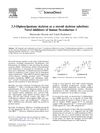
August 2007 in “Bioorganic & medicinal chemistry letters” This study developed a new competitive 5alpha-reductase inhibitor with an IC(50) of 0.84 microM using a novel chemical structure.
21 citations
,
January 2006 in “Hormone Research in Paediatrics” In this case study, a girl with hereditary vitamin D resistant rickets had a novel mutation in the VDR gene that affected hair cycling without causing total alopecia, suggesting ligand-independent VDR function in hair cycling.
22 citations
,
January 2017 in “Journal of steroid biochemistry and molecular biology/The Journal of steroid biochemistry and molecular biology” This study developed and validated a mass spectrometric method to measure hydroxy-androgens in serum, which aids in understanding androgen synthesis in castration resistant prostate cancer.
August 2024 in “Latin American Journal of Development” In this review, the authors highlight the involvement of the 5α-reductase enzyme family in androgen-dependent disorders, noting the discovery of a novel isoform, SRD5A3, which is overexpressed in cancers with poor prognosis.
50 citations
,
September 2009 in “Molecular Genetics and Metabolism” This study identified a novel V26M mutation in the vitamin D receptor as the cause of hereditary vitamin D resistant rickets in a patient, characterized by severe rickets and an unusual pattern of alopecia.
14 citations
,
April 2024 in “The Journal of Steroid Biochemistry and Molecular Biology” This study found that epitestosterone, a stereoisomer of testosterone, is metabolized to 5α-dihydroepitestosterone by human 5α-reductase enzymes, which enhances its androgenic activity and reduces its antagonistic effect on testosterone-driven androgen receptor signaling.