October 2025 in “International Journal of Research in Dermatology”
 This clinical study found that a three-month Ayurvedic leave-on treatment significantly improved hair density and reduced hair fall in healthy Indian adults experiencing hair loss, with efficacy supported by increased VEGF expression in dermal papilla cells, promoting follicular angiogenesis.
 September 2025 in “JMIR Dermatology”
 This narrative review reported that direct-to-consumer teledermatology improves access to care, adherence, and patient satisfaction for treating male androgenetic alopecia, but may lead to higher drug costs.
This study reported that Soulflower Rosemary Redensyl Hair Growth Serum (Tetragain™) significantly improved hair growth, increased hair thickness, reduced hair fall, and decreased graying over 120 days, with participants rating the treatment as effective and experiencing no adverse effects.
January 2025 in “Dermatologic Therapy” This review article reports that oxidative stress is a key mechanism in the development of androgenetic alopecia, interacting with genetic and hormonal factors to damage hair follicle cells and potentially informing future treatment strategies.
 January 2025 in “International Journal of Trichology”
 This review highlighted the hype surrounding topical hair growth ingredients such as Redensyl, Procapil, and others, noting promising results but also emphasizing the limitations of existing studies, including small sample sizes and lack of standard therapy comparisons.
41 citations
,
June 2024 in “Journal of Cellular and Molecular Medicine” This study reviews how oxidative stress affects hair follicle development and hair growth, discusses antioxidant-based treatments for hair loss, and evaluates natural antioxidant products that promote hair growth, emphasizing the need for further research due to existing limitations.
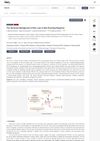 February 2024 in “Biomedicines”
 This review examines the hormonal causes of hair loss, noting how androgen excess can lead to follicle miniaturization and linking estrogen deficiency and thyroid dysfunction to common alopecia types. It further discusses hormonal treatments such as finasteride, dutasteride, and spironolactone.
This study found a high prevalence of stress-related hair loss in Al Majma'ah, Saudi Arabia, particularly among females and individuals aged 31-40, with significant associations between hair loss and stress, psychosocial challenges, and sociodemographic factors.
7 citations
,
August 2023 in “Ageing Research Reviews” More research is needed to understand hair aging and develop effective treatments.
 1 citations
,
January 2023 in “AYUSHDHARA”
1 citations
,
January 2023 in “AYUSHDHARA” This paper reviews the Ayurvedic formulation Nilibhringadi Taila, which is claimed to improve hair quality and treat issues such as split hairs, premature greying, and baldness, and emphasizes the need for further research on its uses and effectiveness.
September 2021 in “IP Indian Journal of Clinical and Experimental Dermatology” In this study, Diabliss Hair Water was found to improve hair growth rate, density, and quality while reducing hair fall in healthy adults experiencing hair thinning concerns.
11 citations
,
May 2021 in “Asian Journal of Pharmaceutical and Clinical Research” This review summarizes the phytomedicinal importance of Eclipta alba in Ayurvedic and folk medicine, particularly its use for hair growth and various biological properties, without reporting new clinical results.
 4 citations
,
May 2020 in “Dermatologic Therapy”
4 citations
,
May 2020 in “Dermatologic Therapy” In this study, a topical lotion containing Redensyl and Sepicontrol A5 demonstrated effectiveness for treating androgenetic alopecia over 24 weeks, with 73.1% of users seeing moderate improvement and notable increases in hair cycle ratios, alongside enhanced quality of life and satisfaction.
 40 citations
,
May 2020 in “Cureus”
40 citations
,
May 2020 in “Cureus” This review discusses the causes, diagnosis, and treatment of telogen effluvium and reports no new clinical findings; the authors underscore the importance of identifying and eliminating causative factors.
 2 citations
,
December 2018 in “KSBB Journal”
2 citations
,
December 2018 in “KSBB Journal” In this study, researchers observed that amla extract promoted hair growth by enhancing cell proliferation and reducing 5α-reductase expression in human dermal papilla cells, suggesting it may be effective in preventing hair loss.
10 citations
,
January 2018 in “JOURNAL OF CLINICAL AND DIAGNOSTIC RESEARCH” In this community-based study, the researchers found high prevalence rates of hair loss, baldness, dandruff, and greying among men aged 18-50 in Thiruvallur district, India.
 33 citations
,
August 2015 in “F1000Research”
33 citations
,
August 2015 in “F1000Research” This study presents a new model for androgenetic alopecia progression, explaining diffuse hair loss in women through 3D reconstructions of the arrector pili muscle and its relationship with the hair follicle stem cell niche.
 32 citations
,
April 2015 in “British Journal of Dermatology”
32 citations
,
April 2015 in “British Journal of Dermatology” This article discusses hair shedding in women and does not offer new research results; it highlights the need for objective criteria to define excessive hair shedding.
 70 citations
,
February 2015 in “Expert Opinion on Drug Discovery”
70 citations
,
February 2015 in “Expert Opinion on Drug Discovery” This review discusses current knowledge on the biological mechanisms of different types of alopecia but reports no new clinical findings; the authors highlight future research directions, especially regarding epidermal stem cells and immune pathways.
 24 citations
,
December 2014 in “International Journal of Molecular Medicine”
24 citations
,
December 2014 in “International Journal of Molecular Medicine” In this study, researchers found that petroleum ether extract of Eclipta alba significantly stimulated follicular keratinocyte proliferation and reduced TGF-β1 expression in nude mice, suggesting potential use for certain types of alopecia.
 88 citations
,
January 2013 in “Indian Journal of Dermatology, Venereology and Leprology”
88 citations
,
January 2013 in “Indian Journal of Dermatology, Venereology and Leprology” This article reviews recent advancements in understanding and treating androgenetic alopecia, focusing on new genetic insights, stem cell roles, and diagnostic tools, without reporting new clinical results.
 126 citations
,
January 2009 in “International Journal of Trichology”
126 citations
,
January 2009 in “International Journal of Trichology” This review discusses the potential role of oxidative stress in hair graying and age-related alopecia, emphasizing the need for new strategies to counteract these effects, but reports no new results.
 10 citations
,
January 2009 in “Elsevier eBooks”
10 citations
,
January 2009 in “Elsevier eBooks” This review discusses the structure, functions, and growth cycle of human hair, emphasizing its reduced growth and protective roles, and reports no new research findings.
 91 citations
,
January 2009 in “International Journal of Trichology”
91 citations
,
January 2009 in “International Journal of Trichology” This review discusses the advantages and limitations of various hair loss evaluation methods but reports no new results; it emphasizes the importance of cautious interpretation for these diagnostic tools.
 108 citations
,
November 2006 in “Phytomedicine”
108 citations
,
November 2006 in “Phytomedicine” This study found that EGCG from green tea may stimulate human hair growth by promoting the proliferation and anti-apoptotic activity in dermal papilla cells.
 20 citations
,
October 2006 in “Skin Research and Technology”
20 citations
,
October 2006 in “Skin Research and Technology” This study found that in women with androgenetic alopecia, hair density is lower, and thin and non-growing hair are more common on the midscalp compared to the occiput.
 199 citations
,
January 2004 in “The International Journal of Developmental Biology”
199 citations
,
January 2004 in “The International Journal of Developmental Biology” This review discusses advances in understanding hair and hair follicle structure, gene expression, and molecular signals in hair formation, without reporting new clinical findings.
 520 citations
,
February 2001 in “Journal of Clinical Investigation”
520 citations
,
February 2001 in “Journal of Clinical Investigation” This study found that VEGF significantly enhances perifollicular vascularization during the hair growth phase, accelerating hair regrowth and increasing follicle and hair size, while its inhibition retards hair growth.
135 citations
,
January 1996 in “Journal of Investigative Dermatology”  222 citations
,
October 1993 in “Journal of The American Academy of Dermatology”
222 citations
,
October 1993 in “Journal of The American Academy of Dermatology” This study found that androgenetic alopecia causes significant psychological distress, particularly in women, who exhibit a more negative body image and less adaptive functioning compared to controls.