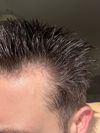
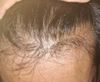
Histological Features of Peripilar Signs Associated with Androgenetic Alopecia

    Claire Deloche, Olivier De Lacharriere, Cosimo Misciali … Antonella Tosti
    Studysummary This study found that peripilar signs on the scalp are linked to perifollicular lymphocytic infiltrates in early androgenetic alopecia, detectable even in areas with high hair density.
    Automatically generated from the study's abstract, not written by a person, and not a review of the full paper. Not medical advice or a treatment recommendation. Read the original study, and consult a qualified healthcare professional before changing treatment. Full disclaimer
    Read the full study on link.springer.com →
    Discuss this study in the Community →

    Research cited in this study 10

    1. Hair Diameter Diversity: A Clinical Sign Reflecting Follicle Miniaturization PubMed · 2001
    2. Androgenetic Alopecia and Microinflammation International Journal of Dermatology · 2000
    3. Immunohistochemical Analysis of Tissue Remodeling During the Anagen-Catagen Transition of the Human Hair Follicle British Journal of Dermatology · 1997
    4. Diagnostic and Predictive Value of Horizontal Sections of Scalp Biopsy Specimens in Male Pattern Androgenetic Alopecia Journal of The American Academy of Dermatology · 1993
    5. Cutaneous Immunopathology of Androgenetic Alopecia PubMed · 1991
    6. The Transverse Anatomy of Androgenic Alopecia The Journal of Dermatologic Surgery and Oncology · 1990
    7. The Comparative Histopathology of Male-Pattern Baldness and Senescent Baldness Clinics in Dermatology · 1988
    8. Histologic Response to Topically Applied Minoxidil in Male-Pattern Alopecia Clinics in Dermatology · 1988
    9. Classification of the Types of Androgenetic Alopecia (Common Baldness) Occurring in the Female Sex British Journal of Dermatology · 1977
    10. Male Pattern Alopecia: A Histopathologic and Histochemical Study Journal of Cutaneous Pathology · 1975