 145 citations
,
November 2018 in “Nature Communications”
145 citations
,
November 2018 in “Nature Communications” This study found that activating the Sonic hedgehog pathway in scarring wounds can remodel the dermis to promote hair follicle regeneration, highlighting a potential new approach to enhance healing.
90 citations
,
May 2018 in “Molecular Cell” Caspase-3 helps control cell growth and organ size by activating YAP.
13 citations
,
May 2017 in “Current Protocols in Stem Cell Biology” This study outlines a method to isolate hair follicle stem cells from mouse skin using fluorescence activated cell-sorting for use in research models, but reports no experimental findings.
 78 citations
,
June 2013 in “Science”
78 citations
,
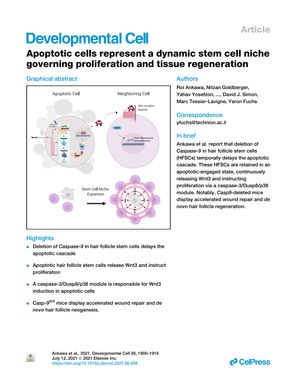
June 2013 in “Science” This study found that mice lacking the Sept4/ARTS gene had more hair follicle stem cells and improved wound healing, suggesting apoptosis regulation as a potential target in regenerative medicine.
 1039 citations
,
February 2009 in “Nature Reviews Molecular Cell Biology”
1039 citations
,
February 2009 in “Nature Reviews Molecular Cell Biology” This review discusses the reuse of molecular mechanisms involved in embryonic skin development for maintaining adult epidermal homeostasis and reports no new results.
 829 citations
,
May 2007 in “Nature”
829 citations
,
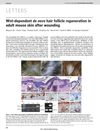
May 2007 in “Nature” Hair follicles can regrow in wounded adult mouse skin using a process like embryo development.
 375 citations
,
February 2006 in “Journal of Cell Science”
375 citations
,
February 2006 in “Journal of Cell Science” This article reviews the stages and regulation of the hair cycle, highlighting molecular regulators involved, but it does not present new research findings.
1279 citations
,
November 2005 in “Nature Medicine”  271 citations
,
March 1999 in “Developmental biology”
271 citations
,
March 1999 in “Developmental biology” This study reveals that overexpression of Wnt3 in transgenic mouse skin leads to a short-hair phenotype and cyclical balding due to structural defects in hair shafts, highlighting a role for WNT signaling in hair growth regulation.