 9 citations
,
January 2008 in “Medical mycology”
9 citations
,
January 2008 in “Medical mycology” In this study, ketoconazole treatment successfully cured a dog with erythematous epilation caused by Chaetomium globosum, with new hair growth observed 9 weeks later.
1 citations
,
April 2013 in “Journal of Investigative Dermatology” August 2026 in “Pakistan Journal of Pharmaceutical Sciences” In rats with cyclophosphamide-induced hair loss, this study found that applying cetirizine HCl-loaded emulgel with microneedling stimulated hair growth, suggesting a potentially safer alternative to minoxidil for treating chemotherapy-induced alopecia.

In this retrospective case series, therapeutic responses to immunomodulatory and incretin-based therapies for Dercum's disease showed considerable individual variation, suggesting these treatments might be exploratory options when surgery isn't feasible, though further controlled studies are needed for definitive conclusions.
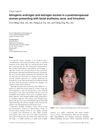 August 2009 in “International Journal of Dermatology”
 This case report describes a postmenopausal woman who experienced facial erythema, acne, and hirsutism due to excess androgen and estrogen levels.
67 citations
,
January 1992 in “Journal of Investigative Dermatology”  35 citations
,
January 2006 in “Journal of Dermatological Treatment”
35 citations
,
January 2006 in “Journal of Dermatological Treatment” This review found little evidence supporting zinc as a first-line treatment for dermatological conditions, except in cases of systemic zinc deficiency, and suggests further research is needed.
6 citations
,
March 2005 in “Journal of the American Academy of Dermatology” Follicular dystrophy in immunocompromised patients may be linked to medication or viral factors and can improve with treatment changes.
9 citations
,
January 1999 in “Dermatology” Acyclovir can prevent rejection of skin grafts in herpes-related lip leucoderma.
 March 2024 in “EMBO molecular medicine”
 This study found that the antiviral drug daclatasvir significantly improved fibrosis and quality of life in a mouse model of recessive dystrophic epidermolysis bullosa, suggesting potential for treating this and other fibrotic diseases.
18 citations
,
January 2021 in “Theranostics” This study found that actively targeted AN2728-loaded nanocarriers reduced inflammation and improved skin condition in a mouse model of psoriasiform inflammation compared to free drug and non-targeted nanoparticles.
 18 citations
,
January 1990 in “Journal of The American Academy of Dermatology”
18 citations
,
January 1990 in “Journal of The American Academy of Dermatology” This study found that dexamethasone effectively suppressed DHEAS levels in women with elevated levels using much lower doses than previously thought, without significant adverse effects.
 March 2025 in “JDDG Journal der Deutschen Dermatologischen Gesellschaft”
 In this case report, the authors found that pigmented demodicosis, caused by Demodex mites, led to facial hyperpigmentation in a 16-year-old male and showed significant improvement with oral isotretinoin and topical ivermectin treatment.
 1 citations
,
January 2023 in “Cutis”
1 citations
,
January 2023 in “Cutis” This report discusses two cases where patients continued EGFR inhibitor therapy while receiving topical treatments for SDRIFE, highlighting the importance of dermatologists in managing such cutaneous adverse events without stopping cancer treatment.

In this case study, a 12-year-old boy with alopecia totalis experienced hair regrowth on the side of his scalp treated with a combination of systemic steroids and dithranol, suggesting a potential synergistic effect that may help manage severe alopecia areata with minimal side effects.
195 citations
,
November 2001 in “The Journal of Cell Biology” This study found that desmocollin 1 is crucial for strong adhesion and barrier maintenance in the mouse epidermis, with its absence leading to skin and hair issues resembling chronic dermatitis.
 5 citations
,
October 2015 in “The American journal of pathology”
5 citations
,
October 2015 in “The American journal of pathology” This study found that a spontaneous deletion in the Dsg3 gene of mice leads to hypomorphic desmoglein 3 expression, resulting in severe immunodeficiency, cyclic hair loss, and wasting disease, without causing the blistering typical of pemphigus vulgaris.
 April 2012 in “Journal of the American Academy of Dermatology”
 In this survey of dermatologists, pimozide was most commonly identified as the preferred first-line antipsychotic for treating delusions of parasitosis, followed by risperidone.
2 citations
,
December 2021 in “BMC veterinary research” This study found that long-term use of difluprednate ophthalmic emulsion in dogs can lead to HPA axis suppression and potentially cause iatrogenic hyperadrenocorticism, with localized alopecia suspected due to dermal absorption.
November 2024 in “Journal of Investigative Dermatology” 28 citations
,
September 1986 in “Pediatric dermatology” In this study, hair anomalies associated with acrodermatitis enteropathica in a young girl improved significantly after two years of zinc therapy.
60 citations
,
September 2001 in “British journal of dermatology/British journal of dermatology, Supplement” This review discusses the use of contact sensitizers in topical immunotherapy for conditions like alopecia areata and viral warts, focusing on treatment methods, efficacy, and potential adverse effects, and reports no new clinical results.
 9 citations
,
April 1987 in “International Journal of Dermatology”
9 citations
,
April 1987 in “International Journal of Dermatology” This article reviews rosacea and rosacea-like demodicidosis, discussing historical findings, but provides no new clinical results; the authors highlight the role of Demodex in related skin conditions.
July 2025 in “Burns & Trauma” In this study, researchers developed a new SFL-3D system to produce extracellular vesicles from rejuvenated dermal papilla cell spheroids, which demonstrated significant antifibrotic effects in reducing hypertrophic scarring, highlighting their potential for precision-targeted scar management.
July 2023 in “Journal of personalized medicine” This study reports that a single intradermal injection of autologous adipose-derived stem cells improved visible aging signs such as wrinkles and pore size on facial skin for over a year in eight patients, with in vitro data suggesting muscle involvement in the rejuvenation process.
 May 2015 in “Journal of The American Academy of Dermatology”
 A heart transplant patient developed a skin condition called epidermodysplasia verruciformis after taking immune-suppressing drugs.
 January 2018 in “Springer eBooks”
 PDE inhibitors, especially PDE4 inhibitors like apremilast, are effective for certain inflammatory skin conditions but have side effects and can be costly.
 16 citations
,
December 2008 in “Journal of The American Academy of Dermatology”
16 citations
,
December 2008 in “Journal of The American Academy of Dermatology” This study found that adherence to topical hydrocortisone in adults with atopic dermatitis was inconsistent and not significantly different across different medication vehicles, though disease severity improved markedly within 2 weeks.
September 2008 in “Faculty Opinions – Post-Publication Peer Review of the Biomedical Literature” Loss of Dsc3 function in the epidermis impaired cell adhesion, leading to blistering and hair loss, which suggests a potential cause of PV-like skin diseases according to this study.
 August 2025 in “International Journal of Research in Dermatology”
 This study found that adding cyclophosphamide to glucocorticoid treatment for pemphigus patients led to earlier remission, with 89.5% achieving remission within 4 months compared to 73.9% with glucocorticoids alone, suggesting significant steroid-sparing effects and improved clinical outcomes.