 April 2023 in “Journal of Investigative Dermatology”
 In this study, Nd:YAG picosecond lasers using fractional micro-lens array were found to have a comparable effect to ablative fractional Er:YAG lasers in treating atrophic acne scars, with better safety profiles but slightly less patient satisfaction.
 April 2022 in “Research Square (Research Square)”
 In this study, both topical clobetasol propionate and fractional Er: YAG laser followed by topical steroids demonstrated significant improvement in patients with alopecia areata, but the combined laser and steroid treatment was found to be more effective and safe.
 September 2021 in “Medical lasers”
 Laser treatment followed by a special hair growth solution increased hair count and thickness without side effects.
 March 2019 in “Applied sciences”
 This case report suggests that 1064 nm picosecond Nd:YAG laser therapy may effectively improve alopecia totalis when used as an alternative adjuvant treatment, as demonstrated in a split-scalp study showing better results than steroid treatment alone.
 May 2015 in “Journal of The American Academy of Dermatology”
 The Nd:YAG laser is a successful and safe way to treat ingrown and pincer nails.
January 2014 in “Belarusian State Pedagogical University repository (Belarusian State Pedagogical University)” Laser treatment can improve the delivery of hair loss drugs into the skin and hair follicles.
 May 2005 in “Seminars in Plastic Surgery”
 This article shares the authors' experiences with the erbium YAG laser in hair restoration surgery, noting improved graft yield and reduced thermal damage compared to traditional methods.
 June 1999 in “Proceedings of SPIE”
 The study suggests that CO₂ laser creates hair transplant channels with significantly less lateral thermal damage than Ho:YAG laser in the human scalp.
 June 2022 in “International Journal of Biomedicine”
 In this study, a 3-month treatment with a 2940 nm Er:YAG laser, combined with conventional therapy, effectively reduced microfibrosis around hair follicles and increased hair growth in the anagen stage among 85 men with androgenetic alopecia.
 January 2021 in “Dermatologic Therapy”
 Channels stay open for 24 hours, making laser treatment potentially effective for hair loss.
 December 2020 in “Lasers in Surgery and Medicine”
 In this study, using a 1064 nm picosecond Nd:YAG laser effectively removed undesirable scalp micropigmentation in four patients within 1–3 treatment sessions, with no unexpected adverse events reported.
68 citations
,
January 2012 in “Lasers in surgery and medicine” This study found that combining microdermabrasion, a topical regimen, and low-fluence QS Nd:YAG laser treatment effectively cleared melasma in women, with 81% of participants achieving over 75% clearance and minimal side effects.
11 citations
,
January 2014 in “PubMed” This study found that patients with high androgen levels due to PCOS required more sessions of Nd-YAG laser therapy for hair reduction compared to those with normal or low hormone levels.
1 citations
,
July 2024 in “Journal of lasers in medical sciences” This case study reports that treating a female patient with facial partial unilateral lentiginosis using a 532-nm Nd:YAG fractional picosecond laser resulted in significant improvement in pigmentation without notable side effects, indicating it may be an effective and well-tolerated treatment option.
1 citations
,
March 2018 in “Journal of lasers in medical sciences” This study found that combining topical capislow with laser hair removal significantly enhanced hair reduction compared to laser alone, although the beneficial effects lasted only while capislow was applied.
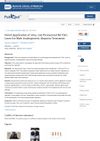
In this pilot study, researchers found that fractional picosecond laser therapy may promote hair regrowth in men with mild-to-moderate androgenetic alopecia, with significant improvements in expert assessments and patient satisfaction observed over a four-month period, though further research is needed to confirm these findings.
 February 2009 in “Journal of The American Academy of Dermatology”
 Fractional infrared technology is effective and safe for treating cervical laxity.
September 1998 in “Journal of the European Academy of Dermatology and Venereology” August 2022 in “Dermatologic Therapy” This letter discusses the use of the 2940 nm Er: YAG fractional laser for male androgenetic alopecia but provides no new clinical findings.
54 citations
,
November 2014 in “JEADV. Journal of the European Academy of Dermatology and Venereology/Journal of the European Academy of Dermatology and Venereology” This study found that combining low-fluence Q-switched Nd: YAG laser and intense pulsed light led to faster and more effective melasma treatment compared to using the laser alone, though recurrence still occurred.
6 citations
,
March 2022 in “IET Image Processing” This study utilized ultrasound biomicroscopy to evaluate the anterior chamber in angle closure glaucoma patients, revealing that the anterior chamber angle is wider on the downside than the upside and identifying important parameters for potential laser surgery.
 4 citations
,
August 2022 in “Lasers in medical science”
4 citations
,
August 2022 in “Lasers in medical science” In this study, both 1565-nm non-ablative fractional laser and long-pulsed 1064-nm Nd:YAG laser effectively reduced enlarged facial pores, with no significant difference in efficacy and minimal side effects, though the Nd:YAG laser had less severe side effects.

This study found that 1064 nm QS Nd:YAG laser treatment effectively lightens hair and improves skin appearance in Indian subjects with minimal adverse effects, offering a safer alternative to chemical lightening products.
3 citations
,
January 2018 in “Cirugía Plástica Ibero-Latinoamericana” This study found that intradermal PRP injections may reduce hair loss and increase hair density in patients with non-scarring alopecia, with differences in the response time between men and women.
September 2023 in “Journal of the American Academy of Dermatology” 
This study assessed the effects of a formulation containing millet extract, wheat germ oil, L-cystine, and calcium pantothenate on women with telogen effluvium using Digital Phototrichogram, but it reports no new results.
81 citations
,
January 2000 in “American journal of clinical dermatology” Various treatments can improve post-acne scars, but results vary.
1 citations
,
September 2021 in “Rossijskij žurnal kožnyh i veneričeskih boleznej” This review discusses osteoma cutis, a rare benign condition involving bone formation in the skin, covering its potential origins, diagnostic methods, and treatment options, without presenting new clinical findings.
1 citations
,
November 2010 in “Obstetrics and gynecology clinics of North America” This article discusses the potential for gynecologists to enhance their practice by incorporating laser hair removal services, but it reports no new clinical findings.
143 citations
,
January 2013 in “Dermatologic surgery” This review reports that current in-office laser hair removal devices, particularly the Nd:YAG system for pigmented skin, effectively provide long-term hair removal, though more research on home-use devices is needed.