 4 citations
,
January 2015 in “Dermatology”
4 citations
,
January 2015 in “Dermatology” This study concluded that using an erbium:YAG laser for calvarium trepanation and granulation tissue induction is comparable to the rose head burr, offering a beneficial alternative method.
April 2024 in “Dermatology The American Medical Journal” This study developed expert consensus guidelines on the safe and effective prescription of low-dose oral minoxidil for treating hair loss by engaging 43 dermatologists from 12 countries in a structured Delphi process, yielding 78 consensus items on safety, efficacy, dosing, and monitoring.
294 citations
,
August 1999 in “Journal of the American Academy of Dermatology” This study observed that the majority of side effects from laser-assisted hair removal were associated with ruby and alexandrite lasers, particularly in patients with tanned or darker skin types.
53 citations
,
October 2012 in “Journal of dermatological treatment” This study found that low-fluence 1064 nm Q-switched Nd:YAG laser treatment effectively improved melasma in Asian patients without serious side effects, achieving an average improvement rate of 50-74%.
36 citations
,
June 2016 in “Journal of dermatological treatment” This study found that a combination of low-fluence Q-switched 1064 nm Nd:YAG laser, hydroquinone cream, and oral tranexamic acid showed promising results for Riehl’s melanosis in Asian patients, with no serious adverse events reported.
 31 citations
,
April 1999 in “Dermatologic Clinics”
31 citations
,
April 1999 in “Dermatologic Clinics” This article reviews the use of the Nd:YAG laser for hair removal and reports no new research findings.
27 citations
,
July 2013 in “Journal of dermatological treatment” This report describes a case where a recalcitrant folliculitis decalvans was successfully treated with a long-pulsed Nd:YAG laser.
 19 citations
,
January 2001 in “Journal of cutaneous laser therapy”
19 citations
,
January 2001 in “Journal of cutaneous laser therapy” This study found that the long-pulse Nd:YAG laser effectively reduces unwanted facial hair across various skin types, with hair regrowth delayed significantly longer than with self-applied methods.
13 citations
,
December 2005 in “Dermatologic surgery” In this study, Er:YAG laser therapy initially improved the appearance of eruptive vellus hair cysts but was ultimately ineffective due to early recurrence and concerns about atrophy or scarring.
12 citations
,
May 2018 in “Journal of Cosmetic and Laser Therapy” This study found that Er:YAG laser treatment resulted in a statistically significant reduction in papules, plaques count, size, and consistency in men with acne keloidalis nuchae, showing slightly more improvement than long-pulsed Nd:YAG laser therapy.
11 citations
,
January 2015 in “PubMed” This study found that the 2,940 nm erbium: YAG laser may promote hair growth in C57BL/6 mice by speeding up transitions in the hair cycle and increasing hair follicle numbers.
 10 citations
,
January 2010 in “Indian journal of dermatology, venereology, and leprology”
10 citations
,
January 2010 in “Indian journal of dermatology, venereology, and leprology” This study found that long pulsed Nd: YAG laser is a safe and effective method for hair reduction in individuals with skin types IV and V, with significant improvements observed over six sessions.
 8 citations
,
April 2024 in “Cureus”
8 citations
,
April 2024 in “Cureus” This review compares the CO2 and Er:YAG laser treatments for acne scars, noting that while CO2 lasers offer deeper tissue penetration for severe scars, Er:YAG lasers pose a lower risk of post-inflammatory hyperpigmentation, and recommends personalizing treatments and considering combination therapies.
7 citations
,
June 2024 in “Skin Research and Technology” Combining treatments significantly reduces dark circles and wrinkles better than nanofat alone.
 5 citations
,
June 2024 in “Archives of Dermatological Research”
5 citations
,
June 2024 in “Archives of Dermatological Research” This study found that fractional Er:YAG laser combined with platelet-rich plasma resulted in greater skin repigmentation in patients with localized stable vitiligo compared to microneedling with platelet-rich plasma, with fewer side effects reported in the laser group.
5 citations
,
March 2013 in “Journal of cosmetic and laser therapy” This case report describes an 8-year-old girl who developed fronto-temporal hypertrichosis from 2% minoxidil solution and achieved complete resolution after two Nd:YAG laser hair removal sessions.
3 citations
,
August 2021 in “Journal of Cosmetic Dermatology” This study found that non-ablative Er:YAG laser treatment, alone or combined with other therapies, effectively improved hair quality and reduced AGA grade in patients, with high satisfaction reported and no adverse reactions.
3 citations
,
September 2001 in “Dermatologic Surgery” This study found that adding a 5 W CO2 laser to an Er:YAG laser improved hemostasis without significantly affecting mean hair counts or increasing lateral thermal damage in men with androgenetic alopecia.
1 citations
,
November 2024 in “Journal of Investigative Dermatology” Er:YAG laser therapy effectively treats Hailey-Hailey disease, leading to long-term remission and improved quality of life.
 1 citations
,
November 2020 in “Journal of Cosmetic Dermatology”
1 citations
,
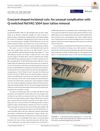
November 2020 in “Journal of Cosmetic Dermatology” This letter to the editor discusses an unusual complication, crescent-shaped incisional cuts, observed with Q-switched Nd:YAG 1064 laser tattoo removal and reports no new clinical results.
 1 citations
,
January 2020 in “ARC Journal of Dermatology”
1 citations
,
January 2020 in “ARC Journal of Dermatology” This study observed that five cases of primary cicatricial alopecia showed an excellent response to a combination of oral zinc and long-pulsed Nd:YAG 1064-nm laser treatment, suggesting this approach may be beneficial for certain types of this condition.
1 citations
,
September 2001 in “Dermatologic Surgery” This study found that adding a low-power CO2 laser to Er:YAG laser improves hemostasis in hair transplantation without significantly affecting hair counts or increasing thermal damage.
In this review, researchers highlighted the use of essential oils, praised for their antimicrobial and anti-inflammatory effects, in treating a variety of conditions, and noted their emerging role in dermocosmetics for issues like hyperpigmentation, acne, and skin aging.
 May 2025 in “Lasers in Medical Science”
 In this study, 13 androgenetic alopecia patients receiving Er: Yag laser treatment showed a significant increase in Staphylococcus spp. three days post-treatment, suggesting the laser may help modulate scalp microbiota balance.
 January 2025 in “Dermatologic Therapy”
 This study found that nonablative Er:YAG laser therapy effectively improved hair appearance for patients with androgenetic alopecia, with most participants reporting increased satisfaction and no adverse reactions, following six biweekly sessions.
 January 2025 in “Surgical & Cosmetic Dermatology”
 In this case study, a 35-year-old man with recalcitrant folliculitis decalvans was successfully treated with Erbium-YAG laser, showing rapid improvement without hair loss, though further clinical studies are needed to define its benefits more comprehensively.
 May 2024 in “Lasers in medical science”
 In this retrospective study, a combined therapy of ablative fractional Er: YAG laser and medication was more effective in treating male androgenetic alopecia than medication alone, without causing serious adverse effects, as evaluated over 24 weeks.
 April 2024 in “European Journal of Dermatology”
 This study suggests that the PPP2R3C gene may confer susceptibility to psoriatic arthritis and psoriasis vulgaris in Chinese patients, with additional possible associations involving IL-23R, ERN1, IFIH1, and KIF3A genes.
 August 2023 in “Journal of Cosmetic Dermatology”
 This study found that combining fractional ablative erbium YAG laser with minoxidil led to slightly better dermoscopy scores than minoxidil alone in male patients with moderate to severe androgenetic alopecia, although no significant difference was observed in photography scores between the two groups.
This article describes the significant emotional and psychological impact of female pattern hair loss on menopausal women, leading many to seek medical treatment to improve their quality of life and self-esteem.