147 citations
,
August 2005 in “The Plant Cell” This study identified a key Arabidopsis thaliana gene, TIP1, whose product is involved in S-acylation crucial for normal plant cell growth, particularly affecting root hair development.
 3 citations
,
January 2018 in “Postępy Dermatologii i Alergologii”
3 citations
,
January 2018 in “Postępy Dermatologii i Alergologii” This study suggests that SRD5A2 polymorphisms may increase the risk of acne in individuals with normal serum testosterone levels, particularly in the Chinese population.
4 citations
,
August 2024 in “Non-coding RNA Research”  September 2023 in “Jurnal MIPA (edisi elektronik)”
 This study formulated and evaluated the physical stability of hair tonic preparations using lime extract (Citrus aurantifolia) at varying concentrations. The researchers found that the tonics exhibited good physical stability, as indicated by meeting Indonesian National Standards, even after undergoing temperature cycling tests.
January 2020 in “AYBU AVESIS” This study found no significant difference in 2D:4D ratios and autism questionnaire scores between acne vulgaris patients and healthy controls, despite investigating potential links in this novel context.
 3 citations
,
July 2020 in “Frontiers in Cell and Developmental Biology”
3 citations
,
July 2020 in “Frontiers in Cell and Developmental Biology” This study found that the purified compound VB1 from Vitex negundo seeds may reduce UVA-induced skin aging by targeting MAPK1 and demonstrated its potential in mice.
January 2009 in “Chemical Reagents” The method produces finasteride with a 92% yield.
June 2025 in “Healthy-Mu Journal” The optimized Cinchonine gel effectively fights acne bacteria and is safe for twice-daily use.
November 2020 in “Universal Journal of Pharmaceutical Research” In this study, tacrolimus-based treatment was found to result in fewer overall side effects compared to cyclosporine among Yemeni kidney transplant patients, although tacrolimus was associated with a higher incidence of diabetes.
 September 2022 in “Piretc”
 This review discusses the evolution of holding systems in Azerbaijan post-independence, with no new results reported, and highlights the expansion of enterprise consolidation due to economic restructuring and strategic business needs.
July 2025 in “Journal of Investigative Dermatology”  October 2024 in “Cermin Dunia Kedokteran”
 This article discusses the surveillance and spread of hand, foot, and mouth disease in China, Singapore, and Indonesia, and reports no new results, emphasizing the need for improved prevention and management strategies.
September 2022 in “Pharmacy Today” December 2025 in “The Journal of Cell Biology” This study found that keratin 15 lacks the ability to sequester YAP1 in keratinocytes effectively, unlike keratin 14, and suggests that a higher K15:K14 ratio may promote a progenitor state and inhibit differentiation in epidermal keratinocytes.
 January 2018 in “International Journal of Advances in Scientific Research and Engineering”
 This study presents a new automated method for measuring total phenolic compounds in Ziziphus Jujuba fruit extract, showing high precision and potential applications in health and environmental sciences.
1 citations
,
January 2015 In this study, gel containing apigenin and celery herb extract was observed to effectively stimulate hair growth and did not cause skin irritation in male Sprague-Dawley rats.
4 citations
,
January 2019 in “Evidence-based Complementary and Alternative Medicine” This study found that the Yangyin Qingre Huoxue Prescription effectively reduced the progression of atherosclerosis in mice, with lipid-regulating and anti-inflammatory functions and lower hepatotoxicity than simvastatin.
3 citations
,
March 2019 in “European Journal of Dermatology” A specific gene mutation (Y449H in K10) was found in a patient with severe skin disorder.
September 2025 in “Stem Cell Research & Therapy” This study found that TAZ promotes adipogenesis in goat adipose-derived mesenchymal stem cells by enhancing PI3K/AKT pathway activity, with overexpression boosting adipocyte formation and knockdown inhibiting it.
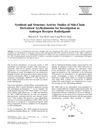 18 citations
,
April 2001 in “Bioorganic & Medicinal Chemistry Letters”
18 citations
,
April 2001 in “Bioorganic & Medicinal Chemistry Letters” This study identified the N-(iodopropenyl) derivative 13 as a promising candidate for development as a radioiodinated androgen receptor ligand due to its binding affinity.
13 citations
,
April 2024 in “International Journal of Molecular Sciences” This literature review highlights the importance of understanding the mechanisms behind the gradual mosaic loss of the Y chromosome (mLOY) in men, its association with various health conditions like cardiovascular diseases and cancer, and its potential as a marker for age inference.

This study investigated the effects of ethanol leaf extracts from Ziziphus jujuba and Eclipta alba on cognitive impairments in diabetic rats, finding significant improvements in learning and memory with these treatments, along with decreased blood glucose levels over 21 days.
1 citations
,
April 2020 in “Journal of the Endocrine Society” This case report describes a 19-year-old patient with microsatellite stable adrenocortical carcinoma who showed a promising 36-month response to pembrolizumab, including structural and biochemical improvements, with primary adrenal insufficiency as a major side effect.
 7 citations
,
March 2022 in “Frontiers in Genetics”
7 citations
,
March 2022 in “Frontiers in Genetics” This study identified genetic loci and pathways associated with long hair growth in the Tianzhu white yak, providing new insights into the genetic mechanisms of this trait.
 1 citations
,
April 2016 in “Journal of The American Academy of Dermatology”
1 citations
,
April 2016 in “Journal of The American Academy of Dermatology” Ixekizumab helps improve life quality, physical ability, and work performance in patients with psoriatic arthritis who haven't used biologic drugs before.
 January 2026 in “Frontiers in Bioscience-Landmark”
 This study reported that, in a laboratory setting, araliadiol derived from Centella asiatica activated antioxidant pathways, mitigating urban particulate matter-induced oxidative stress and skin damage.

This animal study found that YH0618 may alleviate doxorubicin-induced alopecia and affects proteins like keratin and Smad3, suggesting potential therapeutic targets. The researchers analyzed protein expression changes to understand YH0618's effects in treating chemotherapy-related hair loss.
 56 citations
,
December 2011 in “The Plant Journal”
56 citations
,
December 2011 in “The Plant Journal” AGD1 is important for root hair development in Arabidopsis, working with phosphoinositide signaling and the actin cytoskeleton.
 1 citations
,
July 2022 in “The journal of investigative dermatology/Journal of investigative dermatology”
1 citations
,
July 2022 in “The journal of investigative dermatology/Journal of investigative dermatology” In this open-label trial, Tofacitinib was well tolerated and improved IFN and cytokine scores, as well as overall skin pathology, in individuals with Down syndrome and immune skin conditions.
July 2022 in “Siriraj Medical Bulletin” This study developed a hair conditioner incorporating shogun orange peel extract, which was found to strengthen and smooth hair, enhance elasticity, and was well-received by users, as evidenced by a high satisfaction rating of 4.40 out of 5.